

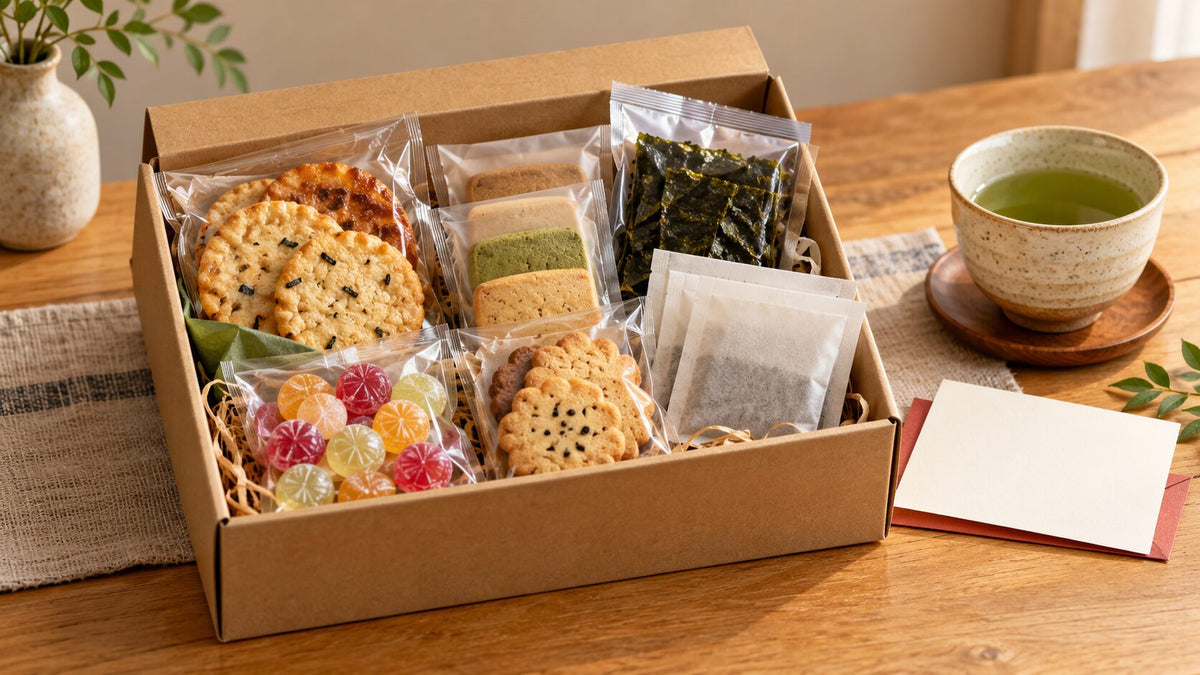
The best Japanese snack gift is not necessarily the rarest or largest. It is the one that suits the recipient, arrives in good condition, and provides enough ingredient information for them to enjoy it confidently.
Start with flavor and sharing habits, then check allergens, packaging, storage, dates, and delivery. This practical order keeps an attractive gift from becoming an inconvenient one.
Choose for the recipient first
Before comparing boxes, answer a few simple questions:
- Sweet, savory, or mixed? A balanced assortment is useful when preferences are uncertain, but a focused box feels more personal when you know what they enjoy.
- One person or a group? Individually wrapped portions work well for families, hosts, and offices.
- Familiar or adventurous? Some recipients enjoy strong matcha, seafood seasoning, or regional fruit flavors; others prefer approachable cookies, rice crackers, and candy.
- Tea or coffee drinker? A drink pairing can create a coherent gift instead of a random collection.
- Any dietary restrictions? Ingredients and cross-contact information should narrow the choice before presentation or price.
A small assortment with a clear flavor idea is often better than a crowded box in which few items suit the recipient.
Useful Japanese snack categories
| Category | Best for | Check carefully |
|---|---|---|
| Senbei, arare, and okaki | Savory snack lovers and shared gifts | Wheat in soy sauce, sesame, soy, and seafood seasoning |
| Baked biscuits and cookies | Cautious eaters, families, and colleagues | Wheat, milk, egg, peanuts, and tree nuts |
| Matcha or tea-flavored sweets | Tea drinkers and curious food lovers | Bitterness, dairy, and heat-sensitive coatings |
| Fruit candy and gummies | Bright, shareable gifts | Gelatin, allergens, and whether “fruit” is flavoring or an ingredient |
| Seaweed and savory snacks | Recipients who prefer less-sweet options | Seafood extracts, soy, sesame, and strong flavors |
| Tea or coffee | A slower, focused gift | Preparation method, caffeine, and included quantity |
Fresh mochi, cream-filled sweets, and delicate cakes may be appealing for hand delivery, but they require more careful timing and storage. Sealed dry snacks are usually easier to manage for international gifts.
Build a balanced assortment
A simple four-part structure works well:
- One familiar anchor: such as a cookie, plain cracker, or fruit candy.
- One distinctive Japanese flavor: such as matcha, nori, sesame, soy sauce, or a regional fruit.
- One texture contrast: pair crisp crackers with a chewy candy, or light wafers with a firmer baked snack.
- One optional drink: add tea or coffee only if it fits the recipient.
This gives the recipient variety without turning the box into a collection of unrelated novelties. If the gift is for a group, check that there are enough portions and that people can identify each item without opening everything.
Check ingredients item by item
A mixed snack box can contain many different recipes. A general description of the box does not confirm that every item suits the same diet.
- Read the current ingredient and allergen information for each product.
- Do not assume a rice-based snack is gluten-free; seasoning may contain wheat.
- Do not assume a fruit sweet is vegetarian or vegan; gelatin may be present.
- Check savory items for fish, bonito, shrimp, crab, or other animal-derived flavorings.
- Review milk, egg, soy, sesame, peanuts, tree nuts, buckwheat, and cross-contact statements where relevant.
- Keep original packaging so the recipient can review labels, dates, and storage instructions.
If essential information is missing or cannot be translated reliably, choose another product rather than making an allergy or dietary promise.
Match the format to the occasion
| Situation | Useful direction | Why |
|---|---|---|
| One friend | Small themed assortment | Easy to match with a known preference |
| Host family | Mixed sweet and savory box | Offers choices without requiring preparation |
| Office or team | Clearly labeled individual portions | Simple to share over several days |
| Casual thank-you | Compact, approachable snacks | Thoughtful without unnecessary formality |
| Client or formal gift | Polished packaging with transparent contents | Presentation and clarity both matter |
Japanese gift traditions can offer inspiration, but an international recipient does not need a performance of formal etiquette. Give the gift at a natural moment, include a short explanation, and avoid broad claims about what every Japanese person does.
Plan for shipping
For cross-border delivery, the gift must survive processing, transit, customs, and the recipient’s schedule.
- Dates: Use the earliest date in the assortment and leave a comfortable buffer.
- Storage: Avoid mixing room-temperature and refrigerated products unless the shipping method supports both.
- Heat: Chocolate and coated sweets can soften or bloom in warm weather.
- Fragility: Thin crackers and delicate cookies need protective packaging.
- Import rules: Check the destination country’s current requirements for food.
- Tracking: Make sure the recipient can receive the package promptly.
See International Shipping Terms Explained for Gift Buyers and confirm the current Gift Me Japan shipping policy before ordering.
What to avoid
- Choosing only by box size or decorative packaging.
- Assuming a product photograph guarantees the current contents.
- Calling a mixed box allergy-friendly without checking every item.
- Promising gift wrapping or a message card unless the listing includes it.
- Sending heat-sensitive or refrigerated sweets without suitable delivery.
- Adding several unfamiliar flavors when the recipient prefers simple snacks.
Catalog note
The rice-cracker assortments referenced in the original version of this article are currently Draft, not active products. This guide therefore does not present them as available or reuse their catalog images. Check the live store for future snack availability and verify each listing’s current contents before purchasing.
Make it personal
Add a short note explaining why you chose the assortment: “I included a few savory crackers because you enjoy salty snacks,” or “I paired the sweets with tea for a relaxed afternoon break.” A specific sentence about the recipient is more meaningful than generic language about Japanese culture.
For more ideas, see the Japanese snack gift-box guide, the rice-cracker guide, and the Japanese snack care-package guide.
Final checklist
- Match flavors and textures to the recipient.
- Confirm the exact current contents.
- Review ingredients and allergens item by item.
- Check dates, storage, destination rules, and delivery timing.
- Verify what wrapping or presentation extras are included.
- Add a brief personal note.
A thoughtful Japanese snack gift should be easy to understand, safe for the recipient to assess, and suited to the journey. Those details matter more than novelty alone.
Share:
Traditional Japanese Rice Crackers: A Practical Guide
Sweet and Savory Japanese Snack Box: A Practical Guide