

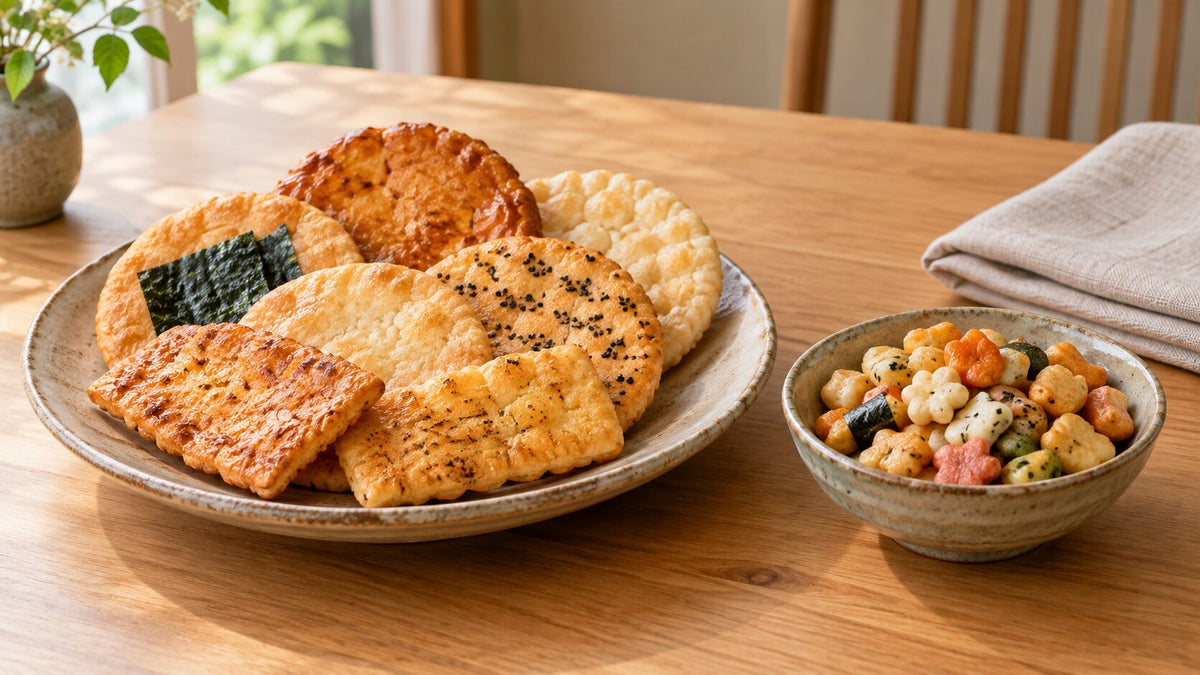
Senbei and arare are both Japanese rice crackers, but they are not interchangeable. Senbei are usually larger and easier to recognize as individual crackers. Arare are smaller, bite-sized pieces that often come in mixed shapes, colors, and seasonings. Knowing the difference makes it easier to choose a gift that suits the recipient and the occasion.
Senbei vs Arare at a Glance
| Senbei | Arare | |
|---|---|---|
| Typical size | Large individual crackers | Small bite-sized pieces |
| Common rice base | Often non-glutinous rice | Often glutinous rice |
| Texture | From crisp and light to firm and crunchy | Usually crisp, airy, or crunchy |
| Presentation | Good for individually wrapped assortments | Good for mixed bags, tins, or small packets |
| Best gift fit | A structured assortment with distinct flavors | A casual, colorful snack mix for sharing |
These are useful tendencies, not absolute rules. Recipes and regional styles vary, so the product description and ingredient list are more reliable than shape alone.
What Is Senbei?
Senbei are generally made as larger crackers that can be round, square, or irregularly shaped. Many are grilled or baked and finished with soy sauce, salt, seaweed, sesame, or other seasonings. Some are thin and delicate; others have a firm crunch that makes them feel substantial.
Because each piece is relatively large, senbei work especially well in gift boxes where the recipient can compare individual flavors. Individually wrapped pieces are also convenient for offices, families, and hosts who want to share them over several days.
What Is Arare?
Arare are small rice crackers, often made with glutinous rice and sold as a mixture of shapes and seasonings. They may be savory, mildly sweet, coated, puffed, or wrapped with small strips of seaweed. Their compact size makes them easy to serve in a bowl and sample by the handful.
Arare suit recipients who enjoy variety and informal sharing. A mixed assortment can offer more visual and textural contrast than a box of large crackers, though the small pieces make clear allergen labeling especially important: different coatings may contain soy, wheat, sesame, seafood, dairy, or nuts.
How to Choose Between Them
Start with the recipient rather than the most decorative box.
- Choose senbei for someone who enjoys distinct, full-sized crackers and wants to compare flavors one piece at a time.
- Choose arare for someone who likes snack mixes, small bites, and a broader variety of shapes and textures.
- Choose an assortment of both when you know the ingredient information is clear and want the gift to feel like a tasting experience.
- Choose individually wrapped pieces for offices, larger households, travel, or slower snacking.
Texture deserves special attention. “Crunchy” can describe everything from a light, crisp bite to a very firm cracker. If the recipient has dental sensitivities or prefers delicate snacks, look for clear texture descriptions rather than assuming all rice crackers are easy to bite.
Flavor and Allergen Checks
Soy sauce and seaweed are familiar rice-cracker flavors, but gift assortments may also include sesame, shrimp, squid, wasabi, chili, cheese, sugar, or sweet glazes. A varied box can be fun, but it also creates more opportunities for allergens to appear.
Read the current ingredient and allergen label before ordering. Rice crackers are not automatically gluten-free: soy sauce and other seasonings may contain wheat. They are not automatically vegetarian either, since seafood powders, bonito, or animal-derived ingredients may be used. If the recipient has dietary restrictions, choose a product that states suitability clearly instead of relying on the general category.
Packaging, Freshness, and Sharing
Rice crackers lose their best texture when exposed to moisture. For a gift that will be shared slowly, individually wrapped pieces or several small sealed packets are more practical than one large bag. Check the quantity and package format carefully; a product photo can make an assortment look larger than it is.
For overseas delivery, review the package dimensions, best-before information, and current import rules for the destination. Avoid promising arrival by a particular date until the store’s current processing and shipping estimates are confirmed.
Serving Ideas
Senbei and arare need little preparation. Serve them with unsweetened green tea, hojicha, or another simple drink that will not overpower the seasonings. For a tasting, move from lightly salted crackers to soy sauce, seaweed, spicy, and sweet varieties. Small labels can help guests keep track of favorites and allergens.
Arare are convenient in small bowls for casual sharing. Senbei can be arranged on a plate with wrappers left nearby so guests can check ingredients. Do not transfer mixed crackers into an unlabeled container when allergen information matters.
Buying Rice Crackers as a Japanese Gift
Gift Me Japan does not currently have an active senbei, arare, okaki, rice-cracker, or snack product to recommend, so this guide does not link to Draft or unavailable catalog items. When an active assortment is available, the useful details to check will be its exact contents, flavor list, piece count, individual wrapping, allergens, and best-before guidance.
For related advice, see the guides to traditional Japanese rice crackers, individually wrapped Japanese snacks, and choosing Japanese snacks as gifts. Before sending food overseas, check Gift Me Japan’s current shipping policy.
Final Choice
Choose senbei for a more structured assortment of large individual crackers. Choose arare for bite-sized variety and easy sharing. If you are unsure, a clearly labeled mixed selection can introduce both styles without forcing the recipient into one texture or flavor. The best gift is the one whose contents, allergens, packaging, and serving style match the person receiving it.
Share:
Japanese Soy Sauce Gift Set Guide for Food Lovers
Japanese Incense Gift Sets for Thoughtful Gifting