

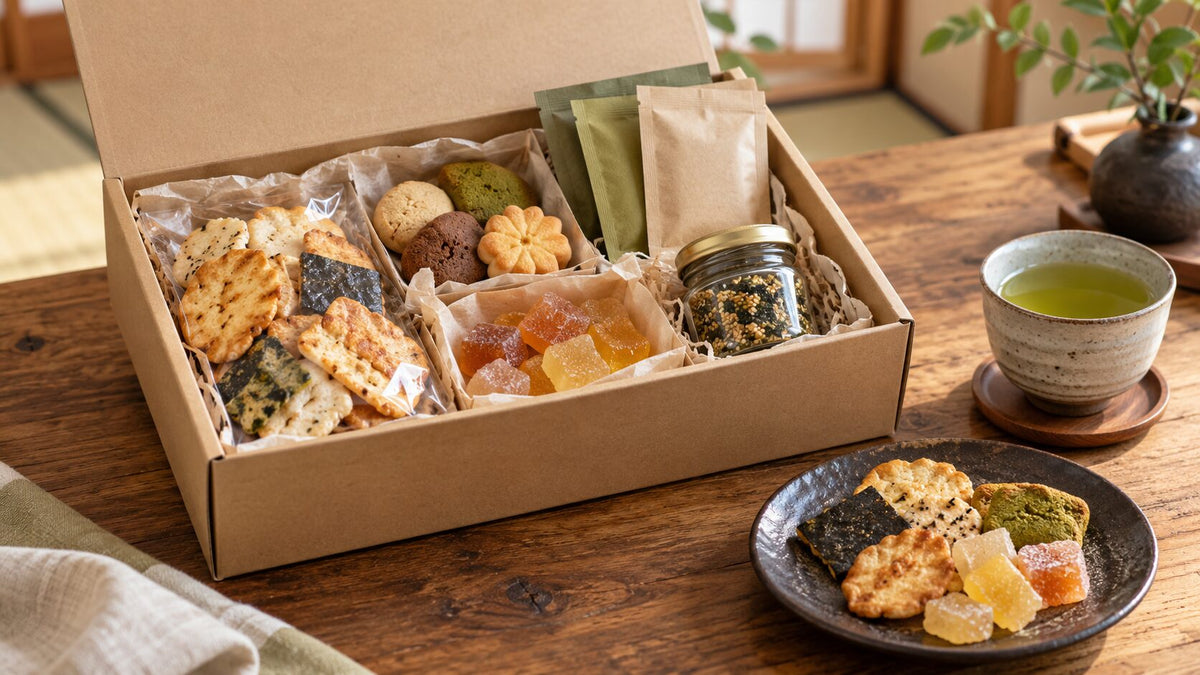
A good Japanese food gift should feel chosen for the person receiving it. A large box can be impressive, but a smaller assortment with a clear idea—one region, a sweet-and-savory tasting, or a tea pairing—often creates a better experience.
Start with the recipient’s tastes and dietary needs. Then consider storage, shelf life, and international shipping. Presentation matters, but it should support the food rather than distract from vague contents or missing information.
Start With the Recipient
“Foodie” can describe very different people. One person may enjoy unfamiliar regional flavors; another may care most about craftsmanship, tea, or traditional sweets. A home cook may appreciate seasonings and ingredients, while someone who prefers ready-to-eat gifts may enjoy a tasting assortment.
Before choosing anything, answer four questions:
- How adventurous are they? Decide whether the box should feel approachable, exploratory, or somewhere between.
- Do they prefer sweet or savory food? Avoid buying a balanced-looking box that leans heavily in the wrong direction.
- Are there allergies or dietary restrictions? Verify each current label rather than relying on assumptions.
- Will the gift be shared? Individually wrapped portions can be useful for families, hosts, or workplaces.
Choose a Clear Theme
A coherent gift is easier to understand and enjoy than a random collection. Useful themes include:
- A regional tasting: Foods connected to one prefecture or area, with the producer and origin clearly identified.
- Sweet and savory: Rice crackers or other crisp snacks paired with contrasting sweets.
- Tea and snacks: A tea selected to accompany rather than merely fill out the box.
- Texture-focused: Crisp, chewy, soft, and delicate items that create a varied tasting sequence.
- A pantry gift: Shelf-stable seasonings or ingredients for a recipient who enjoys cooking.
You should be able to explain the theme in one or two sentences. If the only description is “a lot of Japanese food,” the assortment probably needs more focus.
Build the Flavor Balance
For a ready-to-eat assortment, give each item a different role. A simple structure is one savory anchor, one textural contrast, one familiar sweet, and one discovery item.
The savory anchor might be a soy-, seaweed-, sesame-, or mushroom-led snack. The familiar item gives the recipient an easy starting point, while the discovery item can introduce a regional flavor, roasted tea, citrus note, or traditional confection.
Avoid unnecessary repetition. Two products that deliver the same flavor at the same intensity and in the same texture rarely improve the box. For help comparing the savory side, see our guide to traditional Japanese rice crackers.
Regional Gift or National Sampler?
A regional gift suits someone who enjoys provenance and wants to understand where food comes from. Look for a named producer, clear place of manufacture, and a genuine connection between the region and the featured ingredient or style.
A national sampler is useful when the recipient is new to Japanese food or when their preferences are uncertain. It can offer broader variety with less risk, but it still needs a clear balance of flavors and textures.
Do not treat famous landmarks, decorative motifs, or vague phrases such as “Japanese style” as proof of origin. Product and producer information are more meaningful than packaging imagery.
Check Allergens and Dietary Needs Carefully
Japanese food is not automatically vegetarian, vegan, gluten-free, or low-allergen. Fish-based dashi can appear in crackers, soups, and seasonings. Gelatin may be used in jellies or sweets. Soy, sesame, wheat, dairy, egg, peanuts, tree nuts, seafood, alcohol-derived ingredients, and buckwheat are also possible.
| Check | Why it matters |
|---|---|
| Full ingredient list | Flavor names and product photos do not reveal every ingredient. |
| Allergen statement | Different items in one assortment may have different risks. |
| Shared-facility warning | Important for recipients with severe allergies. |
| Current formulation | Ingredients can change, so old listings may no longer be accurate. |
| Original packaging | Lets the recipient check the official label directly. |
If suitability cannot be confirmed, do not describe the product as appropriate for a particular diet. For a serious allergy, choose another gift rather than relying on incomplete information.
Shelf Life, Storage, and Packaging
Check the shortest-dated item in the assortment, not the average. Allow enough time for processing, international transit, customs, and unhurried enjoyment after arrival.
Ambient-stable, sealed products generally travel more predictably than refrigerated or highly perishable food. Crisp items need protection from humidity and crushing; chocolate and some sweets can suffer in hot weather.
Individually wrapped portions are helpful when a gift will be shared or eaten gradually, but they also use more packaging. Choose that format when portioning and protection serve a real purpose. Keep the outer box with the gift because small inner wrappers may not include complete ingredient or storage information.
Three Practical Gift Formulas
For a curious home cook
Choose one clearly labeled seasoning or pantry item, one savory snack, one tea, and one small sweet. Include a note explaining a simple pairing or tasting order without making unsupported preparation claims.
For a regional-food enthusiast
Commit to one place and choose two or three items with clear producer and origin information. A focused gift tells a stronger story than a national assortment presented as regional.
For a host or workplace
Favor individually wrapped, ambient-stable items that are easy to share. Keep the full ingredient and allergen information visible beside the assortment. For additional guidance, see Individually Wrapped Japanese Snacks.
International Shipping
Food import rules, taxes, and customs procedures vary by destination. Keep products in their original sealed packaging and use accurate descriptions for any required paperwork.
Before ordering, review Gift Me Japan’s current shipping policy and the destination country’s official import guidance. Check the delivery estimate at checkout and leave extra time around holidays.
Final Checklist
- Does the assortment match the recipient’s tastes?
- Can you explain its theme clearly?
- Does every item add a distinct flavor, texture, or purpose?
- Have the current labels and dietary details been checked?
- Will the products remain suitable through shipping and storage?
- Does the recipient have enough time to enjoy the shortest-dated item?
The best Japanese food gifts for foodies are not defined by size or novelty. They combine clear provenance, thoughtful contrast, accurate information, and practical delivery into a gift that feels intentionally chosen.
Share:
Individually Wrapped Japanese Snacks: A Practical Guide
Japanese Soy Sauce Gift Set Guide for Food Lovers