

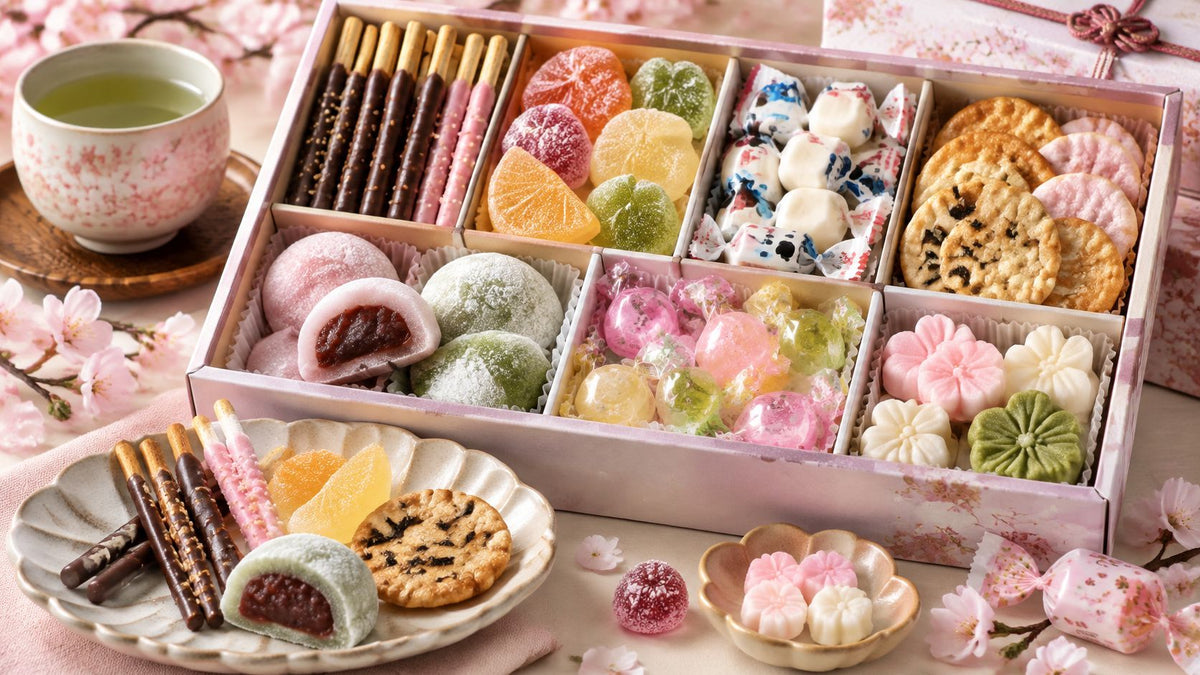
You're standing in a shop, or more likely scrolling a store page at 11pm, and you need a small gift. A thank-you for the colleague who covered your shift. A parcel for a friend who has talked about Japan for two years straight. A host gift for Saturday. It has to be light enough to post, easy to hand over, and interesting enough that the person remembers who gave it.
Japanese candy handles that better than almost any other small gift. The range runs from chocolate-coated biscuit sticks sold in every convenience store to regional souvenirs that travelers carry home and distribute to an entire team. What separates a good pick from a forgettable one isn't brand fame. It's format (shareable or single-serve), flavor (familiar or adventurous), and how well the sweet survives a journey.
Below are eight widely known Japanese treats, each framed by the gifting job it does best: the office share, the regional souvenir, the savory counterweight, the small luxury. One practical note before you order. Many of these products are manufactured for the Japanese domestic market, so outer packaging and printed labels may be in Japanese only, and allergen details should be checked on the current pack rather than assumed from a photo or an older review.
1. Pocky
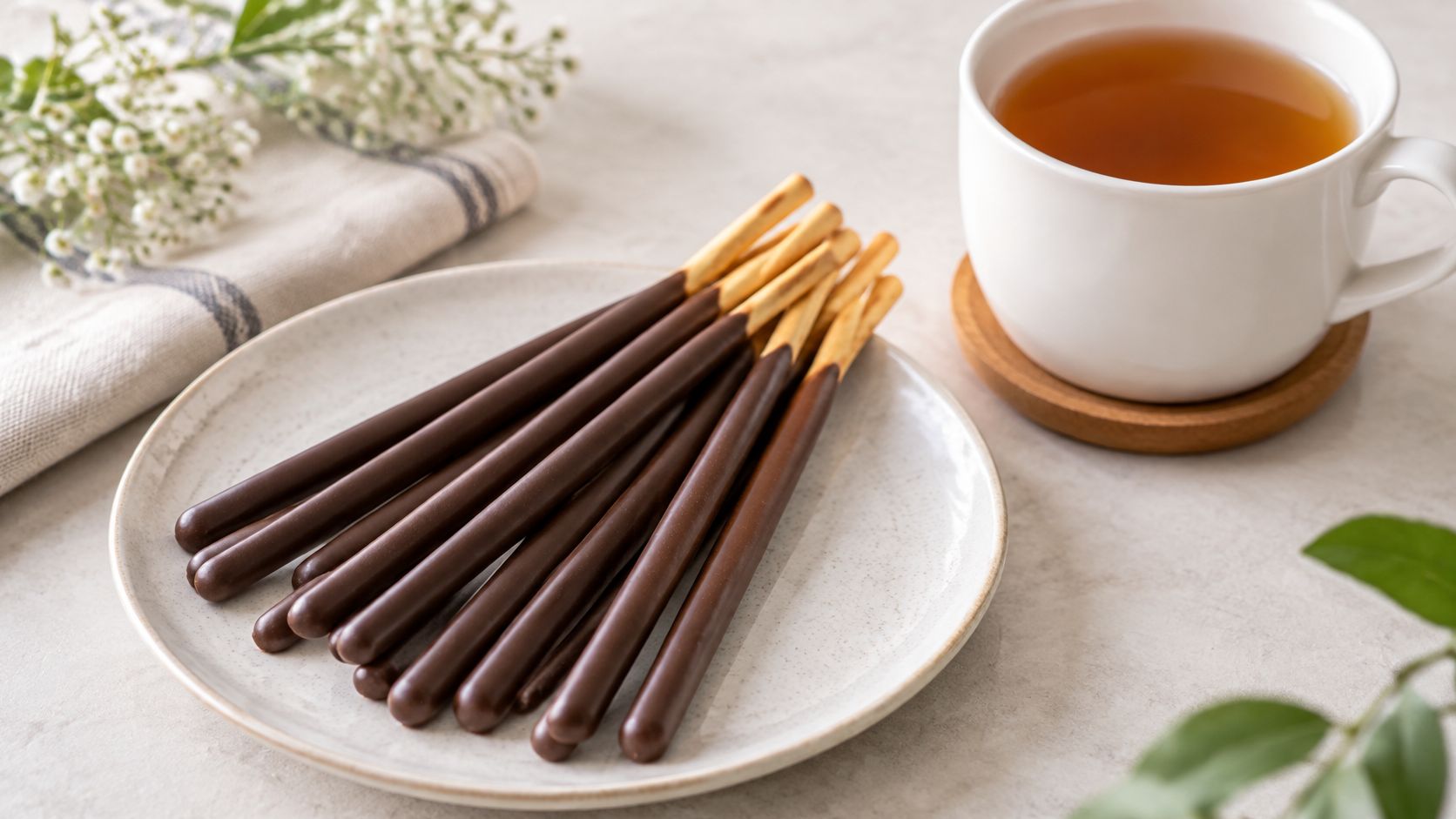
Pocky is the safest first pick on this list, because it solves the hardest gifting problem: the present that has to be split among people you don't know well. Glico's chocolate-coated biscuit stick is recognizable on sight, needs no explanation, and doesn't ask for a plate or a knife.
Ezaki Glico launched it in 1966 with a bare section left at one end so fingers stay clean. The company moved to the vertical box format in 1976, which made the pack easier to carry and to display, and Pocky entered the U.S. market in 2003. By 2019, Glico's Pocky product history put estimated global sales at US$589.9 million.
Why the Format Does the Work
It travels. Rigid sticks in a sealed inner bag survive a suitcase better than loose chocolate.
It splits cleanly. One box serves a whole desk without anyone hunting for a knife.
It invites comparison. Matcha, strawberry, crushed almond and seasonal editions turn a snack into a five-minute conversation.
Buy two boxes for the office and one for the person who actually did you the favor. The second box is what makes it a gift.
For context on where snack culture sits in Japanese food, the Gift Me Japan guide to popular food in Japan is worth reading before you build a box.
The flavor choice changes what you need to check. Plain chocolate Pocky is the lowest-risk variant for a mixed group. Crushed almond announces its tree nuts in the name, and the strawberry and matcha editions use coatings built on different ingredients than the original, so read the ingredient panel on each flavored box rather than assuming the whole range shares one recipe.
2. Kit Kat Japanese Flavors
The flavor range is easier to see than to describe, so start here.
Kit Kat sold in Japan comes from Nestlé Japan and behaves like a regional product rather than a global one. Wafer bars get editions tied to prefectures, fruit harvests and tourist destinations, which is why the shelf looks nothing like the two-finger packs sold elsewhere. That variety is the whole gift: a recipient who has eaten Kit Kat their whole life meets a version they can't place.
What the Market Behind It Looks Like
The habit of buying candy as a considered product, not a filler, goes back decades. A U.S. Department of Agriculture report on Japan's confectionery sector recorded total sales of ¥546 billion in 1997, approximately US$4.5 billion at the exchange rate it used, with candy alone at ¥111.5 billion. Domestic production supplied 93% of the country's total confectionery that year, and Mini Kit Kat appeared among the popular products the overview singled out.
A mature, mostly domestic market explains the limited-edition habit. Makers compete on novelty and packaging because the base product is already everywhere.
- Pick a pair, not a pile. One familiar flavor and one odd one gives range without overwhelming.
- Write the origin down. Two lines about where a regional flavor comes from turn a wafer into a story.
- Read the current label. Allergen declarations differ between editions.
Before you commit to a flavor set, the Gift Me Japan guide to Japanese candy and chocolate explains the styles worth starting with.
3. Hi-Chew
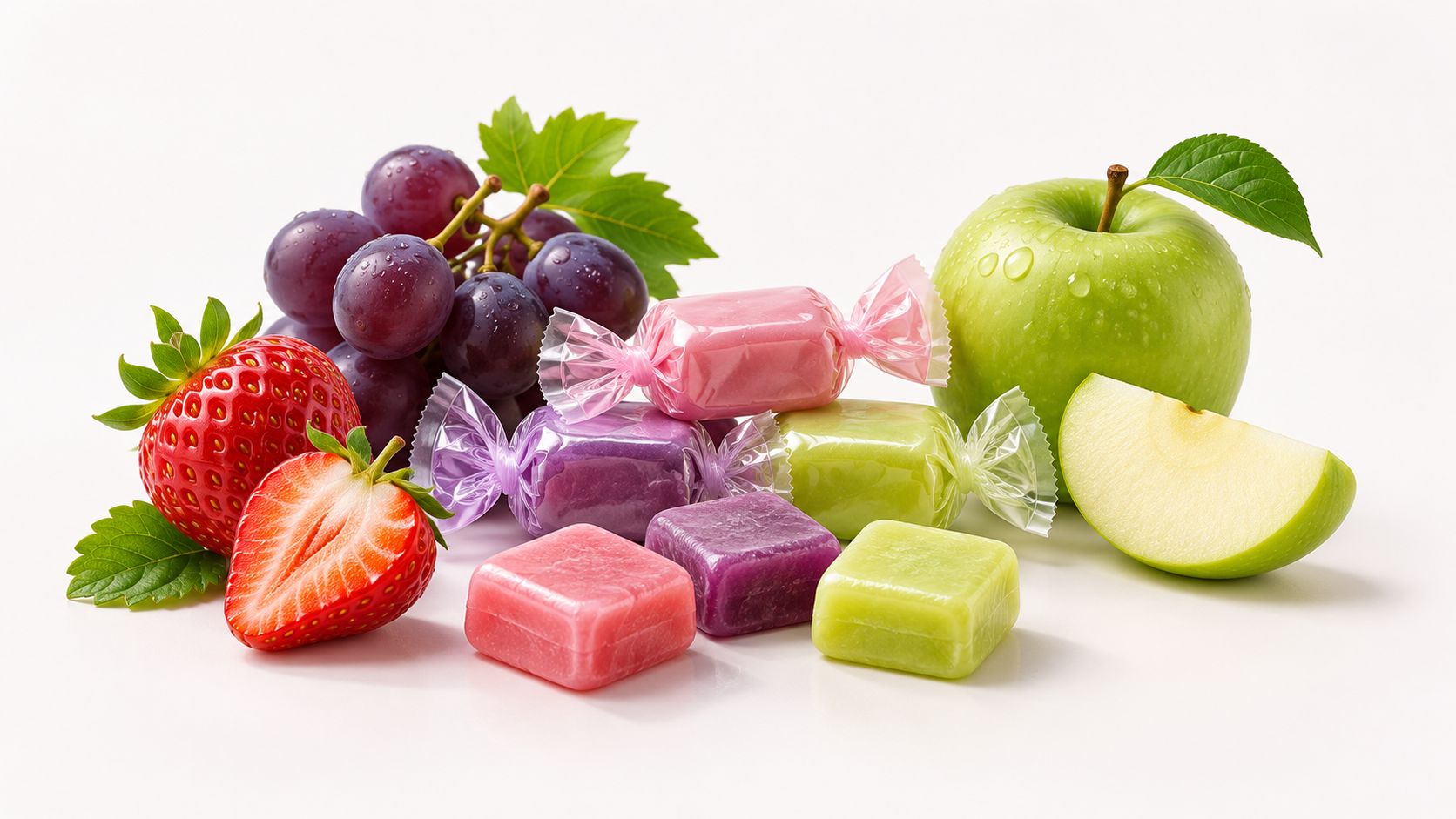
Some recipients sidestep chocolate entirely, and a long train ride calls for something you can chew rather than crunch. Hi-Chew covers both cases. Morinaga's fruit chew is soft, individually wrapped and easy to describe in one sentence, which matters when a gift arrives with no explanation attached.
Why Chewy Candy Earns Box Space
Agriculture and Agri-Food Canada's confectionery trends analysis projects Japan's sugar-confectionery sales rising from ¥3,809.0 billion in 2023 to ¥4,771.4 billion in 2027, with pastilles, gummies, jellies and chews forecast to climb from ¥1,075.4 billion to ¥1,416.2 billion, a 7.1% annual rate and the fastest of the listed subcategories.
That projection supports one packing decision: reserve a slot in a mixed box for chewy formats instead of building everything around hard candy and chocolate. A chew also stretches the eating time compared with a hard candy, so a handful of pieces serves a group better than the same count of something finished in a single bite.
Say what it is in the gift note. "Soft fruit chew" prevents the polite confusion of a recipient expecting something to crunch.
- Match the count to the box. A handful of pieces adds texture variety without crowding the other items.
- Confirm the flavor list. Ranges change with the season and the market.
- Check the label. Gelatin and fruit-derived ingredients vary by flavor.
For the softer, fruit-forward end of this category, the Gift Me Japan notes on real fruit gummy styles show how texture and juice content differ between products.
4. Hello Panda
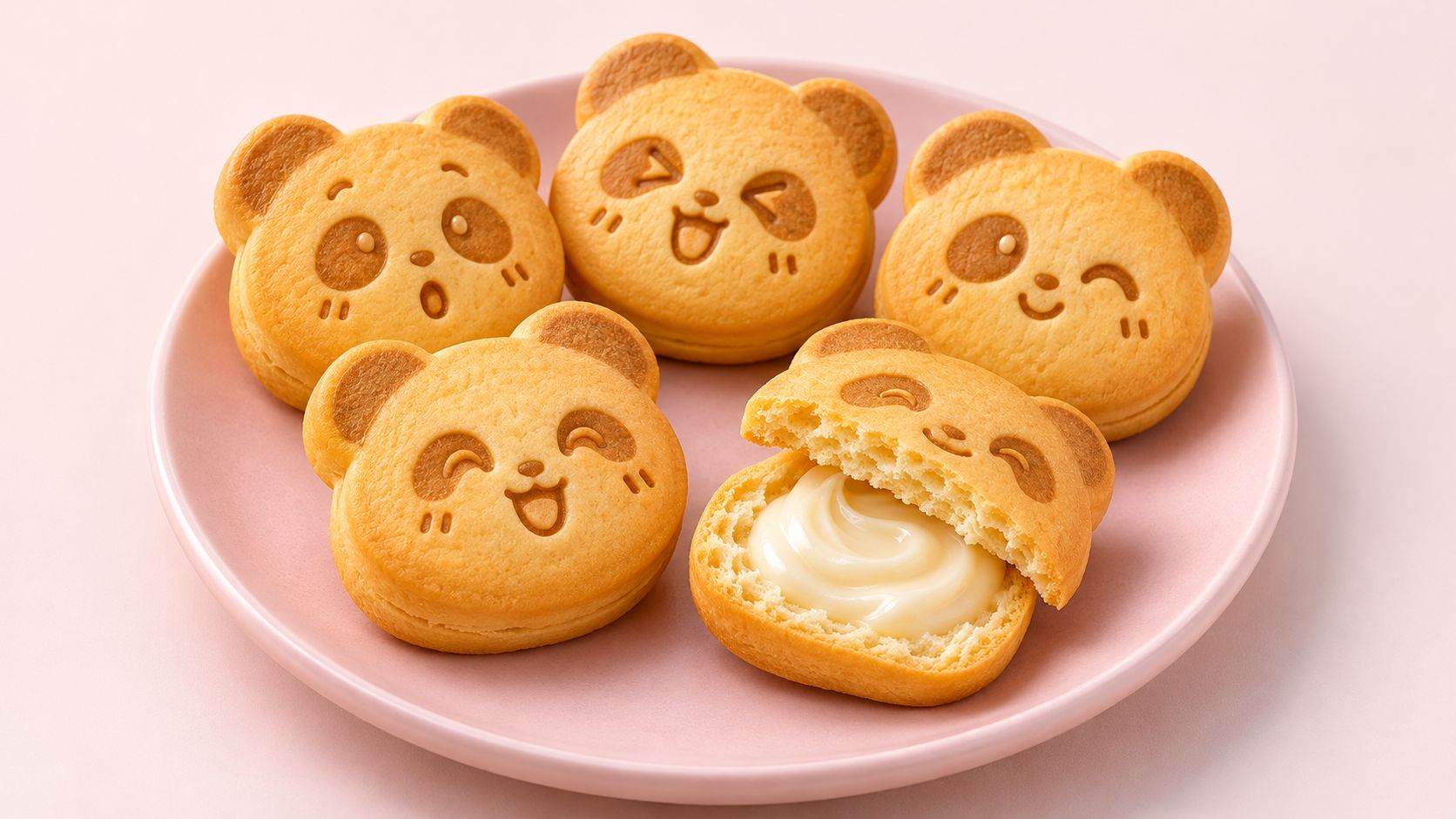
A box of Hello Panda solves the awkward gift that has to work for children, coworkers and cautious eaters at the same table. Meiji's panda-embossed biscuit holds a cream filling, and the faces make the choice feel friendly before anyone bites in. I would pick it when the room is mixed and the safer win is a small, crisp sweet rather than a premium box.
Format matters once the parcel leaves Japan. Japanese exports of candies, sweets and other non-chocolate confectionery reached approximately 15,000 metric tons in 2024, up 4.7% year over year and about US$142 million in value, according to IndexBox's Japan candy market overview. The gifting read is narrower: biscuit-and-cream pieces tolerate travel better than soft chocolate or fragile wafers, and they need no refrigeration after arrival.
Pack it as the crunchy counterweight. Set the bags inside a rigid box or inner tray, fill gaps with paper so the pandas cannot rattle into crumbs, and keep it beside darker, less sweet items so it reads as one part of a selection. Check the current pack for wheat, milk and soy declarations before it goes to a classroom or office. Served in a small bowl, it is the piece people open on the spot.
5. Shiroi Koibito
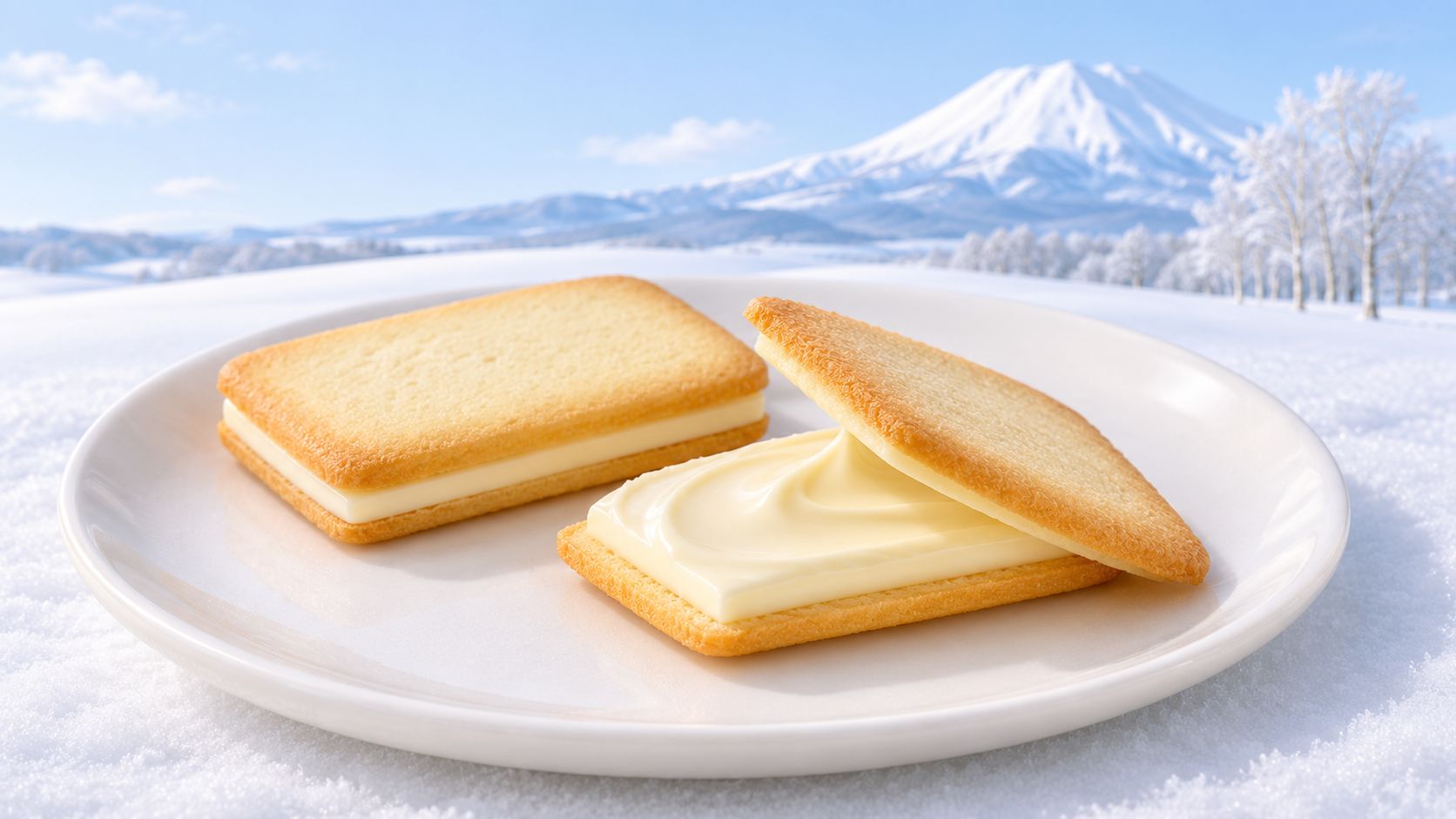
Ishiya bakes Shiroi Koibito in Sapporo, and the name translates as White Lover. It is a butter cookie sandwiching white chocolate, built around Hokkaido's dairy reputation, in packaging that does most of the talking before anyone opens it.
Where Premium Souvenirs Fit
Japanese confectionery exports reached a record ¥50.5 billion in 2025, up 6.0% year over year, with chocolate confectionery exports up 23.9% to ¥10.8 billion, according to a Commercial Appeal report on Japanese confectionery exports. Place-branded sweets like this one are exactly what that growth describes: a recipient who has never been to Hokkaido still recognizes that the box came from somewhere specific.
The tradition behind it is deep. The Japan National Tourism Organization notes that Japan has thousands of regional wagashi varieties, built around sugar, azuki-bean paste, fruit, sweetened mochi and nuts. Shiroi Koibito is a modern, Western-style heir to that instinct, a sweet that belongs to one place.
- Name the origin. A note saying "from Hokkaido, made with local dairy" doubles the perceived thought behind it.
- Check the dairy declaration. This is a butter-and-cream product, so verify the current label for anyone avoiding dairy.
- Build a tasting pair. A tea or coffee item alongside it turns two purchases into one small ceremony.
For more on the biscuit-and-sandwich end of the Japanese snack aisle, the Gift Me Japan guide to Japanese biscuit snacks covers the formats worth comparing.
6. Tokyo Banana
Some gifts are chosen for the recipient. Tokyo Banana is chosen for the occasion, which is usually a return from Tokyo with six people to thank. The sponge cake with banana-flavored cream is soft, mild and almost universally acceptable, and the individual wrapping is the reason it works.
The Omiyage Logic
Omiyage is the custom of bringing edible souvenirs back from a trip and distributing them to family, friends and coworkers. The Japan National Tourism Organization notes that travelers moving between Japanese cities find beautifully packed boxes of crackers and local sweets, and that these are popular souvenirs. Individually wrapped pieces exist for precisely that distribution moment.
A souvenir is judged by how easily it divides. Six wrapped cakes for six people beats one beautiful cake nobody wants to cut.
Place-linked sweets also carry history. The Government of Japan describes Akafukumochi, a specialty of Ise in Mie Prefecture, as a confection with approximately 300 years of history, made from soft pounded-rice mochi topped with smooth an, a sweet azuki paste boiled and strained, and long favored by visitors to Ise Jingu shrine. A sweet with a named place behind it gives the recipient something to look up.
- Check best-before and storage. Sponge cakes are fresher, shorter-life items than biscuits.
- Choose the individually wrapped format. It's the only version that distributes properly.
- Verify the ingredient label. Banana-flavored cream and sponge carry dairy, egg and wheat.
For more on why wrapping changes gifting outcomes, see the Gift Me Japan notes on individually wrapped Japanese snacks.
7. Jagariko
A box of only chocolate lands on a desk shared by two people who avoid sugar, and half the gift sits untouched. One savory item fixes that math. Eight sugary items read as a care package. Seven sweets plus Calbee's short, crunchy potato sticks read as a decision someone made, and the sticks do the job without competing with the chocolate.
Building a Savory Balance
Japanese confectionery has always thought in this direction. Japan's Ministry of Agriculture, Forestry and Fisheries classifies sweets whose fillings are built from azuki beans, green peas, chestnuts, sesame, yuzu, matcha and miso, with outer layers of wheat or rice flour. Sweetness is one note in that tradition, not the whole scale. A savory item belongs in a Japanese sweet box because the tradition already mixes fillings like miso and sesame.
- One savory to six sweets. Any more and the box stops reading as a treat.
- Pack it rigid. Crushed potato sticks look like an afterthought. An inner tray or tin prevents that.
- Check the seasoning label. Soy, wheat and fish-derived seasonings are common in savory Japanese snacks.
Timing is the other reason to include one. Chocolate gets eaten in the first ten minutes. A savory snack gets opened later, when the recipient is hungry, which extends the life of the gift.
8. Meltykiss
A box of Meltykiss can sit on an office desk for a week and still look intentional on day seven. Meiji wraps each bite-sized piece individually, so a recipient can take one, pocket one for later, and pass the rest around without the box collapsing into a single softened mass. That makes it the pick for small gifts and group sharing, provided it stays cool on the way there.
Texture, Heat and Honest Labels
Value in Japanese confectionery is rising faster than volume, and that changes what a "popular" product means. IMARC Group's Japan confectionery market report estimates 2025 production at 1.968 million tonnes, down 0.83%, while retail value rose 5.7%. Growth is coming from premium pricing and reformulation, with the amount of candy being eaten staying roughly flat.
That shift shows up on the shelf as softer, less sweet chocolates sold as treats rather than bargains. Read the label before deciding what that positioning means: compare grams and pieces per pack, and check the sugar line. Seasonal and regional variants also rotate through the range, so the same size box can carry a different flavor depending on when you buy.
Before you ship: soft chocolate and warm weather don't mix. If the destination is hot, ask about transit conditions before ordering, and choose a firm-textured item instead.
- Store cool. Keep the box away from radiators and car boots.
- Pick one variant, or two at most. A clean single flavor presents better than a mixed jumble.
- Read the label for dairy, nuts and alcohol. Seasonal chocolate flavors occasionally include them.
How the Eight Popular Japanese Candies Compare for Gifting
Different formats fail in different ways, so the container has to match the shape. These packing moves protect the product and the presentation.
| Item | Format | Gifting Job | Packing Move |
|---|---|---|---|
| Pocky | Chocolate-coated biscuit sticks | Casual sharing | Sleeve the sticks so they cannot roll or knock together |
| Kit Kat Japanese Flavors | Individually wrapped wafer bars | Flavor assortments | Band the bars by flavor so the selection stays easy to read |
| Hi-Chew | Individually wrapped chewy candy | Compact treats | Use a divided insert so pieces do not gather in a corner |
| Hello Panda | Panda-shaped filled biscuits | Family gifting | Give the pack its own cushioned cavity |
| Shiroi Koibito | White-chocolate butter-cookie sandwiches | Formal regional gifts | Keep the biscuits flat in a firm tray |
| Tokyo Banana | Individually wrapped sponge cakes | Group souvenirs | Separate the cakes with paper and keep them flat |
| Jagariko | Seasoned potato sticks | Savory counterweight | Keep the pack upright and brace it on every side |
| Meltykiss | Individually wrapped soft chocolates | Small luxuries | Seat the pieces in a shallow insert so they stay separate |
Choosing the Right Japanese Treat for Your Recipient
Each treat on the list earns its spot by solving a different gifting problem, so match the role to the person first and worry about the specific flavor after that.
- For the desk share: Pocky and Hi-Chew. Both are individually portioned, need no explanation, and vanish quickly in a group. Every piece has its own wrapper, so colleagues can take one without touching the rest.
- For the curious traveler: Kit Kat Japanese Flavors and Shiroi Koibito. Both reward someone who likes a story with their snack, one through regional editions, the other through a specific place and its dairy tradition.
- For a playful or compact treat: Hello Panda and Meltykiss. One is a cheerful shape for a household with children, the other a small, soft luxury for an adult who'll eat one piece at a time.
- For classic souvenir gifting: Tokyo Banana. It's designed to be divided among colleagues, and the wrapping is half its purpose.
- For balance: Jagariko. One savory item stops a sweet selection from becoming monotonous.
If two candidates fit the same role, let flavor make the call. A recipient who skips dessert will get more from the savory option than from a second chocolate, and a cautious eater is better served by a familiar format than by the most unusual flavor on offer.
One expectation is worth setting before you hand anything over. Many of these products are made for the Japanese domestic market, so the box and the printed text may be in Japanese, with English information limited or absent. A short handwritten note saying what each item is and what it contains covers that gap better than any translation app.
If you'd rather start from a ready-made selection than build one item by item, the All Products page at Gift Me Japan shows what is currently available across snacks, beauty and lifestyle pieces.
Gift Me Japan assembles curated Japanese gift sets that combine snacks, skincare, beauty and lifestyle goods, with products sourced in Japan and shipped from Japan. If this list gave you a shortlist, a snack assortment is the quickest way to turn it into something ready to hand over. Visit Gift Me Japan to browse the current sets and find one that fits the person and the occasion.
Share:
Japan Eyelash Serum: What It Is and What to Check
White Kojic Acid Soap: What It Is and How to Use It Safely