

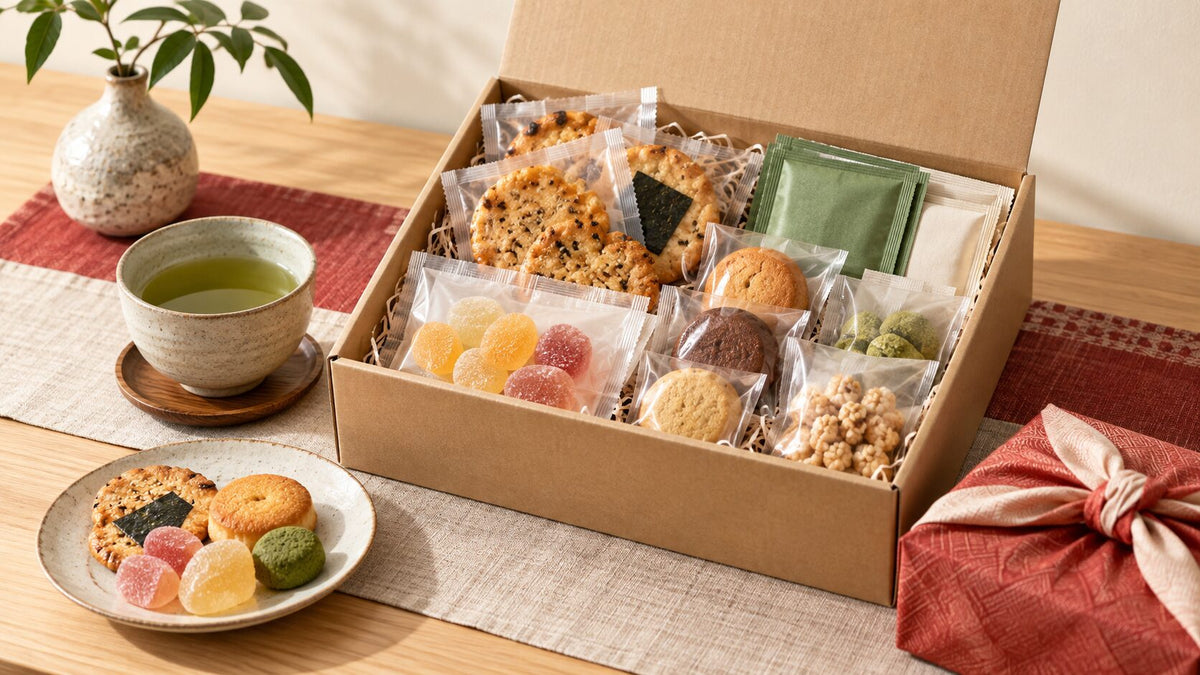
A good Japanese snack gift box is less about quantity than fit. The best choice matches the recipient’s tastes, makes ingredients easy to check, and contains items that can handle the journey to their door.
Use this guide to compare assortments by flavor, format, dietary information, and shipping practicality. Product contents and availability can change, so always treat the current listing and package labels as the final reference.
Start with the recipient
Before comparing box sizes, think about how the recipient actually snacks:
- Sweet, savory, or mixed: A varied box is useful when you know they enjoy both; a focused box is safer when they have a clear preference.
- Familiar or adventurous: Some people enjoy unusual regional flavors, while others prefer recognizable cookies, crackers, chocolate, or fruit candy.
- Solo or shared: Individually wrapped portions are convenient for families, offices, and anyone who likes to spread tasting over several days.
- Tea or coffee drinker: Drink pairings can make sense, but only when the recipient will use them.
- Dietary needs: Allergies and restrictions should narrow the choice before presentation or price enters the decision.
A coherent assortment usually feels more thoughtful than the largest available box. If preferences are uncertain, choose approachable flavors with a few distinctive items rather than filling the entire gift with surprises.
Choose a clear type of snack box
Broad tasting assortment
This format mixes several textures and flavor families—perhaps rice crackers, baked sweets, candy, and chocolate. It works well as an introduction to Japanese snacks, provided the contents are clearly identified.
Sweet-focused box
A dessert-led assortment suits someone who already enjoys cookies, chocolate, gummies, or fruit flavors. Check for heat-sensitive items when shipping in warm weather.
Savory-focused box
Rice crackers and seasoned snacks can be a good alternative to a candy-heavy gift. Review the labels carefully: wheat, soy, seafood ingredients, sesame, and other allergens can appear in seasonings even when they are not obvious from the front of the packet.
Tea-break box
A small selection of sweets paired with tea or coffee creates a slower, more deliberate gift. This format is especially useful when the recipient prefers a few complementary items over a large novelty assortment.
Check every item, not just the box description
Mixed boxes can contain products with very different ingredient lists. A general statement about the assortment is not enough for someone with allergies or a strict diet.
- Read the current ingredient and allergen information for each item.
- Do not assume a rice cracker is wheat-free or a fruit-flavored sweet is vegetarian.
- Check for milk, egg, wheat, peanuts, tree nuts, soy, sesame, seafood, buckwheat, and other ingredients relevant to the recipient.
- Keep original packaging so the recipient can review labels, dates, and storage instructions.
- If essential information is missing or cannot be understood reliably, choose a different gift rather than making a safety claim.
For a serious allergy, the recipient’s own guidance and the current manufacturer label matter more than a translated marketing summary. “Japanese,” “traditional,” “natural,” and “rice-based” are not dietary guarantees.
Look for practical packaging
Presentation matters, but it should support the food rather than hide important details. Useful snack-gift packaging has intact seals, protects fragile items, and lets the recipient identify what is inside.
Individually wrapped portions are helpful when the box will be shared or opened gradually. They do not automatically mean the product is suitable for long international transit, so dates and storage conditions still need to be checked.
Plan for international shipping
Snack boxes are easier to send when the contents have compatible storage needs. A single refrigerated item can complicate an otherwise shelf-stable assortment.
Before ordering, verify:
- Destination: The store currently ships to the recipient’s country and the address is complete.
- Import rules: The destination permits the included food products.
- Storage: Every item can travel under the available shipping conditions.
- Dates: The earliest date leaves enough time for processing, transit, customs, and the recipient to enjoy the gift.
- Weather: Chocolate and other heat-sensitive foods may need extra consideration.
- Tracking: The recipient can follow the shipment and bring it inside promptly.
For delivery terminology and customs responsibilities, see International Shipping Terms Explained for Gift Buyers. Always confirm the current Gift Me Japan shipping policy before checkout.
A quick decision table
| Recipient | Useful format | Check first |
|---|---|---|
| New to Japanese snacks | Approachable mixed assortment | Clear item descriptions and balanced flavors |
| Enjoys sweets | Cookies, chocolate, gummies, or fruit candy | Heat sensitivity and dairy, egg, or nut allergens |
| Prefers savory food | Rice crackers and seasoned snacks | Wheat, soy, sesame, and seafood ingredients |
| Office or family | Individually wrapped portions | Quantity, labeling, and easy sharing |
| Tea or coffee enthusiast | Small pairing box | Whether drinks are included and how they are prepared |
What to avoid
- Choosing by box size alone.
- Assuming the photograph shows the exact current contents.
- Calling a box allergy-friendly without item-level confirmation.
- Promising gift wrap, a message card, or accessories unless the listing includes them.
- Buying a large assortment when only one or two flavors suit the recipient.
- Sending fragile or heat-sensitive snacks without considering the route and season.
Make the gift feel personal
A short note can do more than extra filler. Mention why you chose the flavor profile or how the recipient might enjoy the box: during a movie night, with afternoon tea, or shared with colleagues. Keep the message about them rather than relying on broad claims about Japanese culture.
If you are assembling a broader comfort gift, read the Japanese Snacks Care Package Guide. For one specific category, the Japanese Fruit Gummy Guide explains how texture and flavor can differ across products.
Final checklist
- Match the flavor mix to the recipient.
- Confirm the exact current contents.
- Review ingredients and allergens item by item.
- Check dates, storage, destination rules, and delivery timing.
- Verify what presentation extras are actually included.
- Add a brief personal note.
The best Japanese snack gift box is not necessarily the biggest or most elaborate. It is the one the recipient can understand, safely enjoy, and share—or keep entirely for themselves.
Share:
Japanese Haircare Gifts for Women: A Thoughtful Guide
Traditional Japanese Rice Crackers: A Practical Guide