

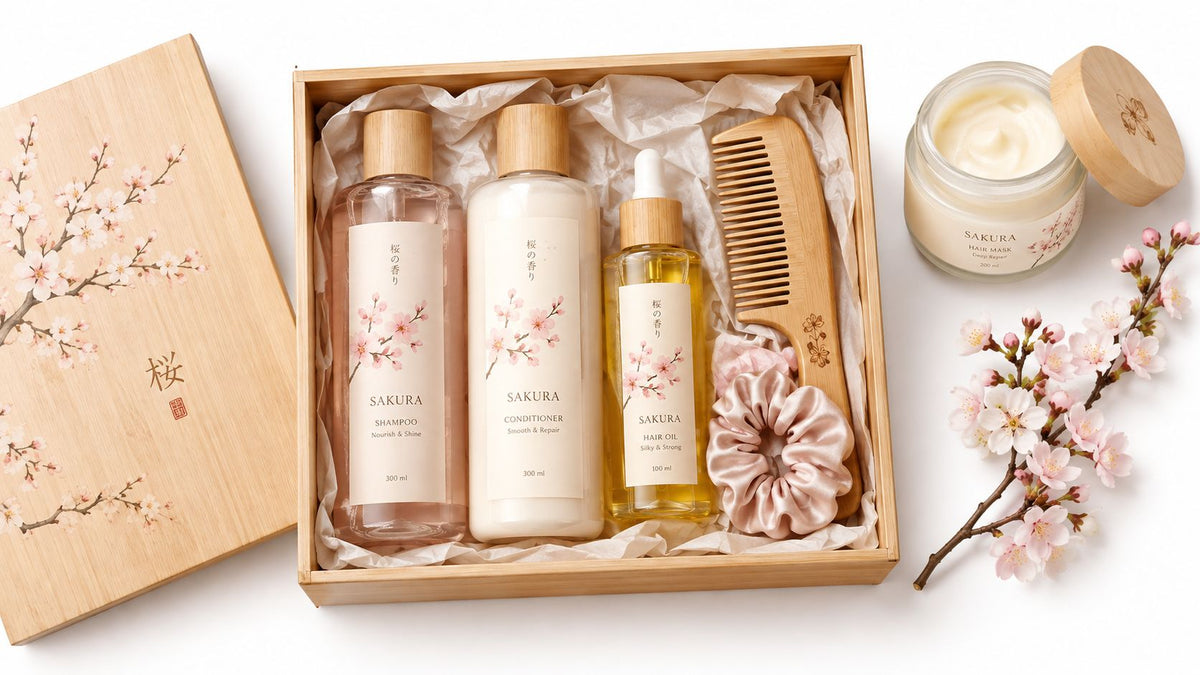
You're choosing a present for someone who already has a routine, so another attractive bottle isn't enough. The thoughtful choice is a Japanese haircare gift that fits how she washes, detangles, styles, and looks after her hair. A coordinated set can feel luxurious while still serving a practical purpose, especially when it combines a cleanser with conditioning and finishing care.
Japanese haircare gifts for women also carry cultural meaning. They reflect Japan's long shift from traditional grooming practices to modern, carefully developed daily routines. With the right match for her hair texture, scalp preferences, and the occasion, a shampoo, conditioner, treatment, or oil becomes more than a beauty product. It becomes a useful ritual with a story behind it.
The Evolution of Japanese Haircare Gifting
Japanese haircare didn't become meaningful because of a single ingredient or trend. Its appeal comes from the way hair washing and grooming developed alongside changing ideas about hygiene, presentation, fragrance, and everyday self-care.
Historical records summarized by Kao's history of Japanese haircare describe a striking progression. During the Edo period, women typically washed their hair about once or twice a month. Around 1955, washing had risen to approximately once every five days. By the 1980s, washing two or three times per week was common, and by the mid-1990s, women in their teens and twenties were washing their hair almost daily. Kao reports that this near-daily pattern extended across women aged 10–50 by 2015.
Product development followed those changes. Powdered shampoo appeared in 1955, liquid shampoo in 1960, and household rinse products emerged during the 1960s. Direct-application rinse arrived in 1975, while the 1986 “morning shampoo” boom linked haircare with freshness, fragrance, appearance, and the start of the day.
Why this history matters to a gift shopper
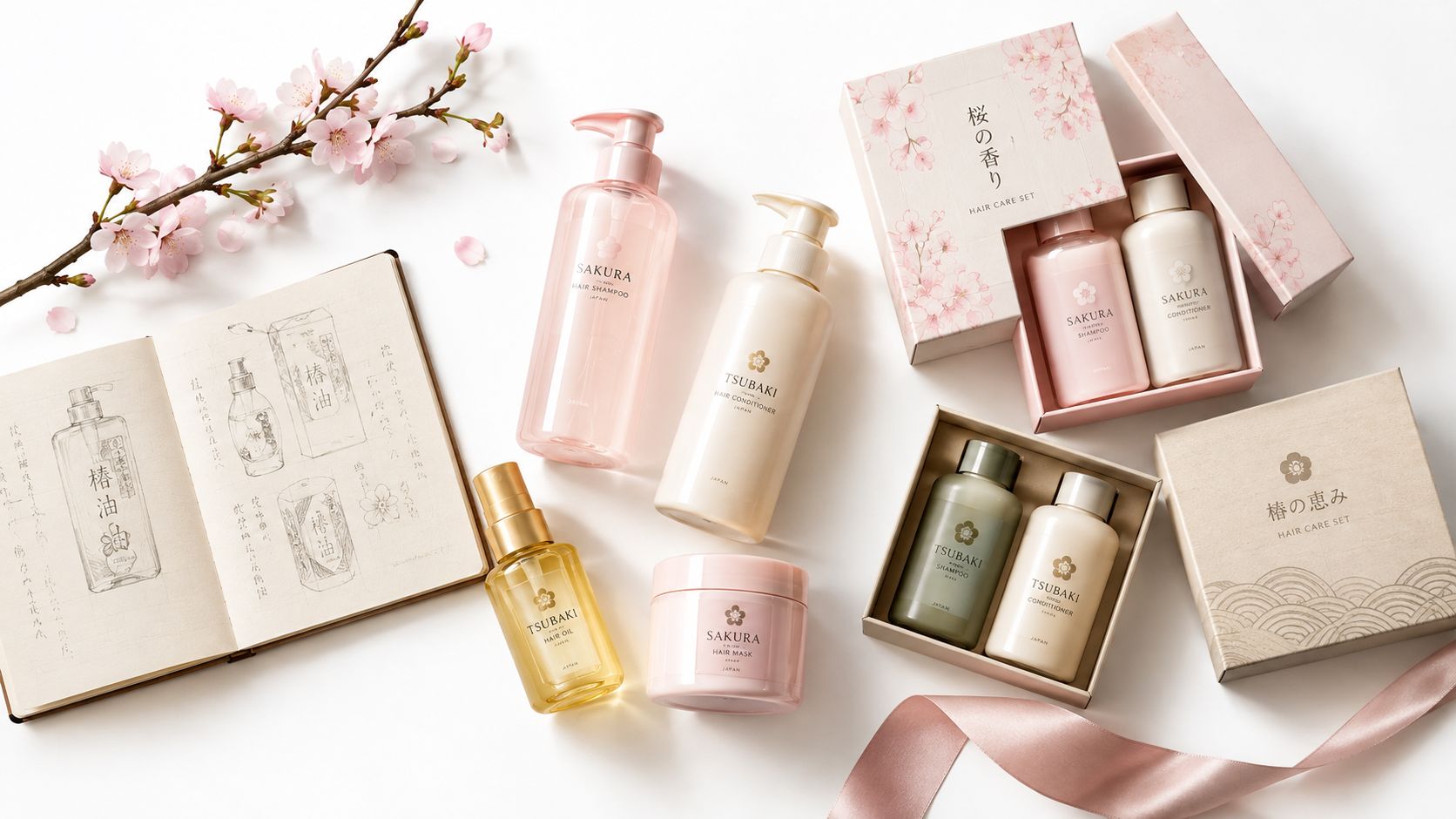
This timeline shows that Japanese haircare is more than a narrow cosmetic category. It reflects a postwar transformation in hygiene, self-presentation, and women's everyday routines. A gift set can therefore acknowledge both tradition and modern life, particularly when it includes products designed to be used together.
The idea also fits Japanese gifting culture, where the thought behind an item matters as much as its appearance. Customs such as ochugen, oseibo, omiyage, temiyage, senbetsu, okaeshi, and iwai cover seasonal, travel-related, thank-you, farewell, return, and celebratory gifts. This guide to Japanese gift-giving offers useful context for choosing an appropriate moment without assuming that every custom must be copied exactly abroad.
A coordinated haircare set can suit a birthday, graduation, promotion, thank-you gesture, welcome-home present, or seasonal package. It's especially appealing for someone who values products with cultural context rather than generic personal-care items.
A thoughtful principle: Choose a haircare gift as a small piece of daily life, not just as a decorative collection of Japanese products.
Building a Coordinated Haircare Set
A shampoo on its own cleanses, but it doesn't complete the care cycle. Shampooing can remove surface lipids from the hair fiber and gradually affect the cuticle. Conditioning products address what happens next by reducing friction, improving slip, and making wet hair easier to handle.
The technical explanation is straightforward. Conditioning agents, including cationic molecules, polymers, oils, and hydrolyzed amino acids, can reduce interfiber friction, lower combing forces, neutralize the hair fiber's negative charge, and help restore hydrophobicity. These effects matter because wet hair is vulnerable to mechanical stress, particularly during brushing and knot removal. The relevant evidence is summarized in this review of hair cosmetics and grooming damage.
The practical three-step structure
A useful Japanese haircare gift usually follows this sequence:
- Cleanser: Shampoo removes sweat, oil, styling residue, and environmental buildup from the scalp and hair.
- Conditioner or treatment: A rinse-out product adds slip and helps reduce friction during combing.
- Leave-in finish: A serum, milk, or oil can support manageability and surface smoothness after washing.
The third step is most relevant for long, bleached, colored, curly, or frequently heat-styled hair, where detangling and surface wear may be recurring concerns. It shouldn't be presented as a medical treatment or a guarantee of repair. Its value is practical: it can make the lengths feel easier to comb and style.
Experimental grooming data reported in this study of hair damage found that ordinary shampooing, towel drying, and wet detangling can abrade approximately 1 to 2.5 cuticle layers per 50 treatments. When performed twice weekly, the researchers calculated that this could theoretically correspond to loss of the normal 6-to-10-layer cuticle range over roughly 14 to 60 months. Conditioner reduced grooming-related damage by approximately 13% in one hair sample and up to 82% in another, showing that results vary with hair characteristics and formulation.
Pair the products with gentler handling
The set can include a wide-tooth comb if that accessory is shown in the verified product listing. If it isn't included, add a simple note explaining that the recipient should detangle from the ends upward rather than pulling from the roots through a knot.
Brushing was reported as more damaging than combing in the cited grooming study, so the presentation should encourage controlled, low-friction detangling. This makes the gift feel considered without adding unsupported promises.
For more guidance on building a coordinated present, see Gift Me Japan's Japanese gift set guide. The central principle is simple: shampoo plus conditioner or treatment is a more complete gift than shampoo alone.
Matching Products to Hair Types and Needs
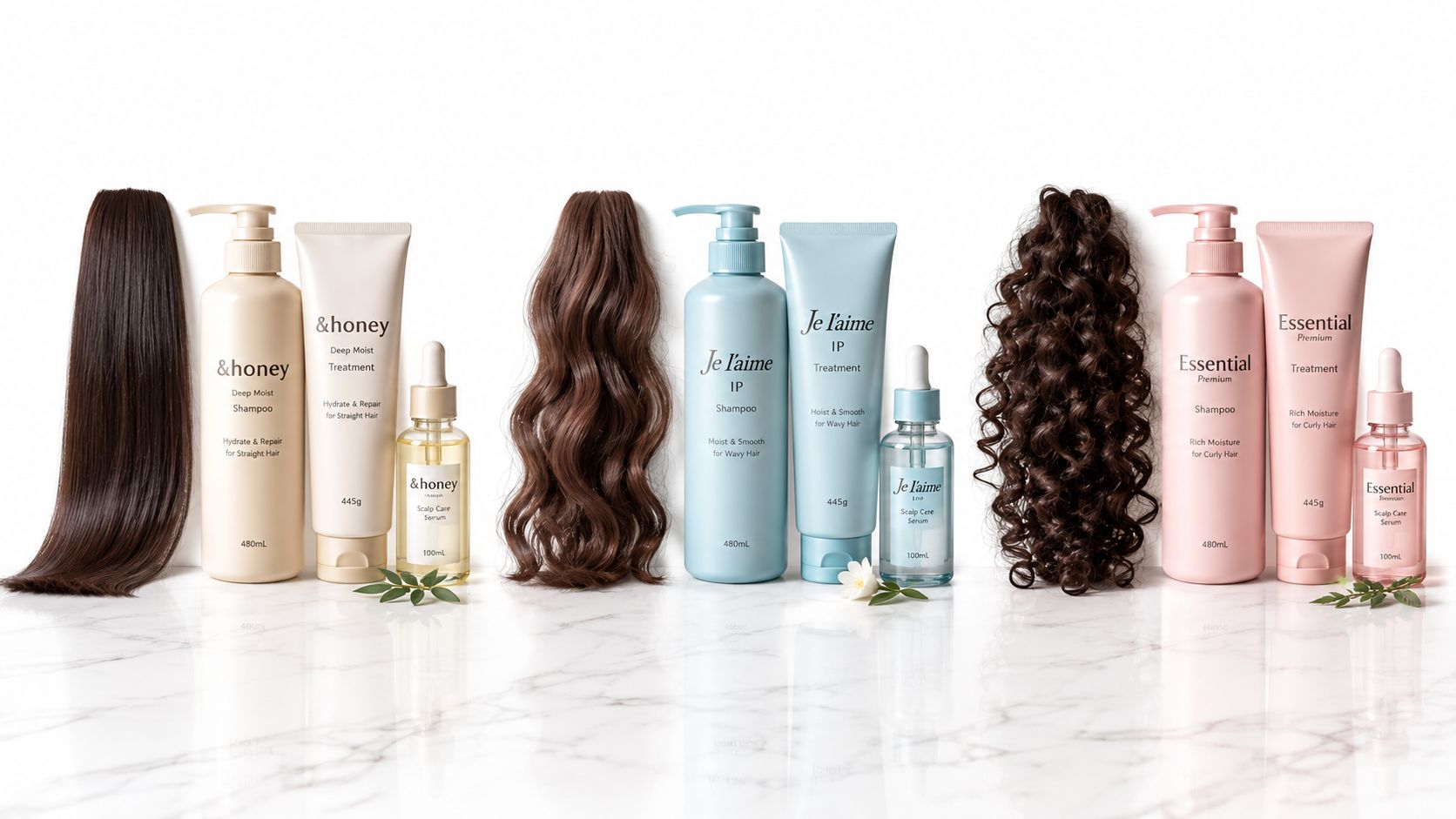
“Japanese haircare for women” is too broad to guide a good purchase. The recipient may have fine, oily hair, dry lengths, dense curls, a sensitive scalp, color-treated hair, or a combination of several needs. The safest starting point is to identify her routine rather than relying on her gender or a product's country of origin.
Japanese consumer research indicates that women are placing less emphasis on strong cleansing power than in 2021, suggesting greater interest in moisture preservation and avoiding over-cleansing. Market reporting also identifies scalp health, hair thinning, and age-related concerns as increasingly important in Japan's aging population. These observations support a more careful approach to gifting, particularly when the recipient's current products are unknown.
Compare the likely matches
| Recipient's situation | More suitable direction | What to watch |
|---|---|---|
| Dry, bleached, colored, or heat-styled hair | Hydrating shampoo with a richer conditioner or treatment | Avoid assuming that a heavy oil will suit fine lengths |
| Oily scalp with drier ends | Gentle cleanser with lightweight conditioning on the lengths | Keep rich products away from the scalp unless the label directs otherwise |
| Coarse or frizz-prone texture | Smoothing conditioner, mask, serum, or oil | Humidity can make finish and weight especially important |
| Fine hair | Lightweight conditioner, milk, or serum | Rich masks and oils may leave the hair feeling weighed down |
| Mature recipient concerned with scalp comfort | Mild cleanser and scalp-focused care | Don't present cosmetic products as treatments for clinical hair loss |
The most important distinction is between scalp and lengths. A scalp-focused formula may not provide enough conditioning for dry ends, while a rich lengths treatment may feel unsuitable near an oily scalp. A set containing complementary formats can solve that mismatch more effectively than one heavily concentrated product.
Selection rule: If you don't know her texture, choose a smaller assortment or a balanced routine rather than a highly rich formula designed for one specific hair type.
Japanese products can work well for curly, coily, textured, color-treated, or hard-water hair, but “Japanese” isn't itself a hair-type recommendation. International shoppers should check whether the formula offers enough conditioning, whether it may weigh down fine hair, and whether the recipient already follows a protein-sensitive or color-safe routine.
For help comparing formats, explore this guide to Japanese hair conditioners. A video can also help shoppers understand how product textures and application methods differ:
Navigating Ingredients and Safety Claims
Ingredient names can make a gift feel more complicated than it needs to be. Start by separating cosmetic conditioning claims from medical claims. A hair oil may improve the feel, shine, or manageability of the lengths, but it shouldn't be described as treating clinically significant shedding, scalp disease, or hair loss.
Traditional ingredients can provide cultural context without being automatically suitable for every recipient. Camellia, or tsubaki, oil has been used for hair since the Edo period and is rich in oleic acid, a fatty acid resembling the lipid profile of natural skin sebum. That helps explain why tsubaki products are often positioned for dry, frizzy, or coarse hair. Fermented rice-water products are another recognizable category. Fermentation produces inositol, which a commercial haircare source reports can reduce hair-surface friction by up to 25%. That figure applies to the cited product research, not universally to every rice-water formula, so it should be treated cautiously. The background is outlined in this guide to Japanese haircare ingredients.
Use this label checklist
- Fragrance: Strong fragrance may be unsuitable for someone who prefers unscented products or has fragrance sensitivities.
- Botanicals and essential oils: “Natural” doesn't mean irritation-free. Plant-derived ingredients can still cause sensitivity.
- Cleansing agents: Check whether the recipient avoids sulfates or prefers a milder cleansing feel.
- Silicones and oils: These may improve slip and smoothness, but the recipient's existing routine and texture matter.
- Proteins: Protein-rich formulas may not suit every hair routine, especially when the recipient already knows that protein makes her hair feel stiff.
- Color-treated hair: Look for clear suitability information rather than assuming every gentle-feeling product is color-safe.
- Scalp or lengths: Confirm where the product is intended to be used. A treatment for the lengths isn't automatically a scalp product.
- Label clarity: For international gifting, check the current packaging, ingredient list, directions, and any translated information available from the seller.
A mildly acidic formulation can be a more broadly defensible choice when the recipient's scalp condition is unknown, because dermatology literature identifies pH above approximately 5.5 as potentially irritating to the scalp. That doesn't replace individual advice or patch testing, especially for someone with a known sensitivity.
For heat-styled hair, this Japanese heat-protection hair products guide can help you think about styling habits as well as wash-day care. Persistent shedding, pain, scaling, or scalp irritation deserves professional advice rather than a cosmetic gift.
Creating the Complete Japanese Gift Experience
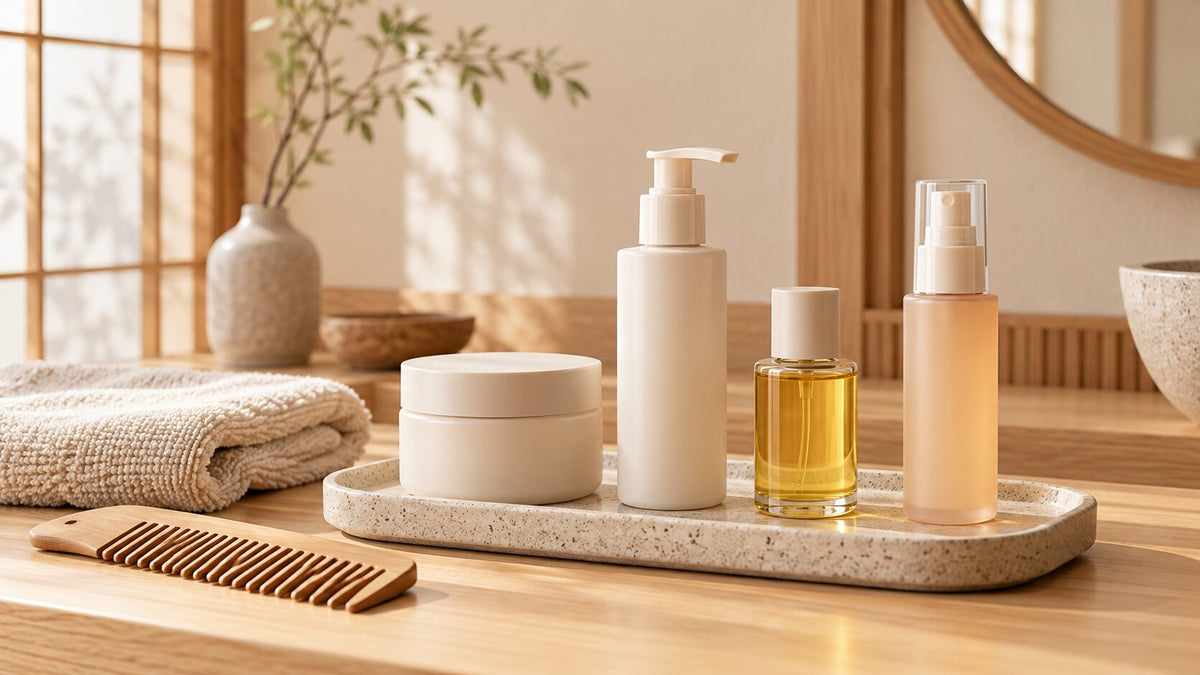
A haircare gift can become more memorable when it introduces a small, coherent experience rather than presenting unrelated items. Start with the recipient's routine, then add one complementary element that reflects Japanese daily life.
For example, a recipient with dry, frizz-prone hair might receive a cleanser, rinse-out treatment, and finishing oil. A Japanese snack selection could sit alongside it, creating a contrast between the tactile ritual of washing and the pleasure of discovering unfamiliar flavors. The haircare serves a repeated everyday purpose, while the snacks make the opening moment social and immediate.
Build around a simple theme
- A self-care evening: Pair a coordinated haircare routine with a lifestyle item that supports a calm at-home ritual.
- A welcome-home present: Use a practical haircare set alongside Japanese snacks chosen for sharing.
- A thank-you gift: Select a polished, easy-to-understand routine and explain how the products work together.
- A seasonal package: Combine haircare with items that reflect the season without implying that every Japanese gifting custom must be reproduced abroad.
The experience should remain usable. Don't add snacks without checking the current packaging and ingredient label, and don't describe food as suitable for a particular diet unless the product information confirms it. Likewise, never assume that a gift box, message card, wrapping, comb, or accessory is included unless the relevant listing shows it.
A short handwritten note can explain the sequence: cleanse, condition, detangle gently, then apply a small amount of leave-in product if appropriate. That context helps the recipient understand why the set contains several items and turns the products into a routine rather than a collection.
The result is a gift that expresses Japanese hospitality through variety and care. It gives the recipient something useful, something enjoyable, and a small story to discover at her own pace.
Curated Selections from Gift Me Japan
Choosing Japanese haircare gifts for women becomes easier when you begin with the routine rather than the label. Look for a cleanser and conditioner combination, add a treatment or finishing product when the hair's needs justify it, and match the texture and fragrance to the recipient's preferences. If those preferences are uncertain, a balanced or smaller assortment is usually more considerate than a highly specialized formula.
Gift Me Japan presents curated Japanese gift sets alongside beauty, skincare, lifestyle products, and Japanese snacks sourced directly from Japan. That range makes it possible to choose a focused haircare present or create a broader assortment that combines traditional Japanese elements with contemporary products.
The occasion can guide the tone. A coordinated haircare routine can suit a birthday, thank-you, graduation, promotion, seasonal gift, or welcome-home gesture. A tsubaki-inspired treatment may appeal to someone interested in Japanese beauty traditions, while a lightweight serum or practical conditioner may better suit a recipient who values uncomplicated daily care.
For additional selection ideas, read Gift Me Japan's guide to the best Japanese haircare products. Check the current product page for exact contents, variants, packaging, availability, and directions before ordering, since these details can change.
The strongest gift is the one that respects the recipient's actual routine. Choose for her hair and scalp needs, pair products that perform different steps, and add cultural or sensory touches only when they make the present more personal.
Gift Me Japan offers carefully curated Japanese gift sets, beauty and lifestyle products, and Japanese snacks sourced directly from Japan. Explore Gift Me Japan to find a coordinated haircare gift or a broader Japanese assortment that suits her routine, interests, and occasion.

Share:
Japanese Products for Glossy Hair: A Practical Gift Guide