

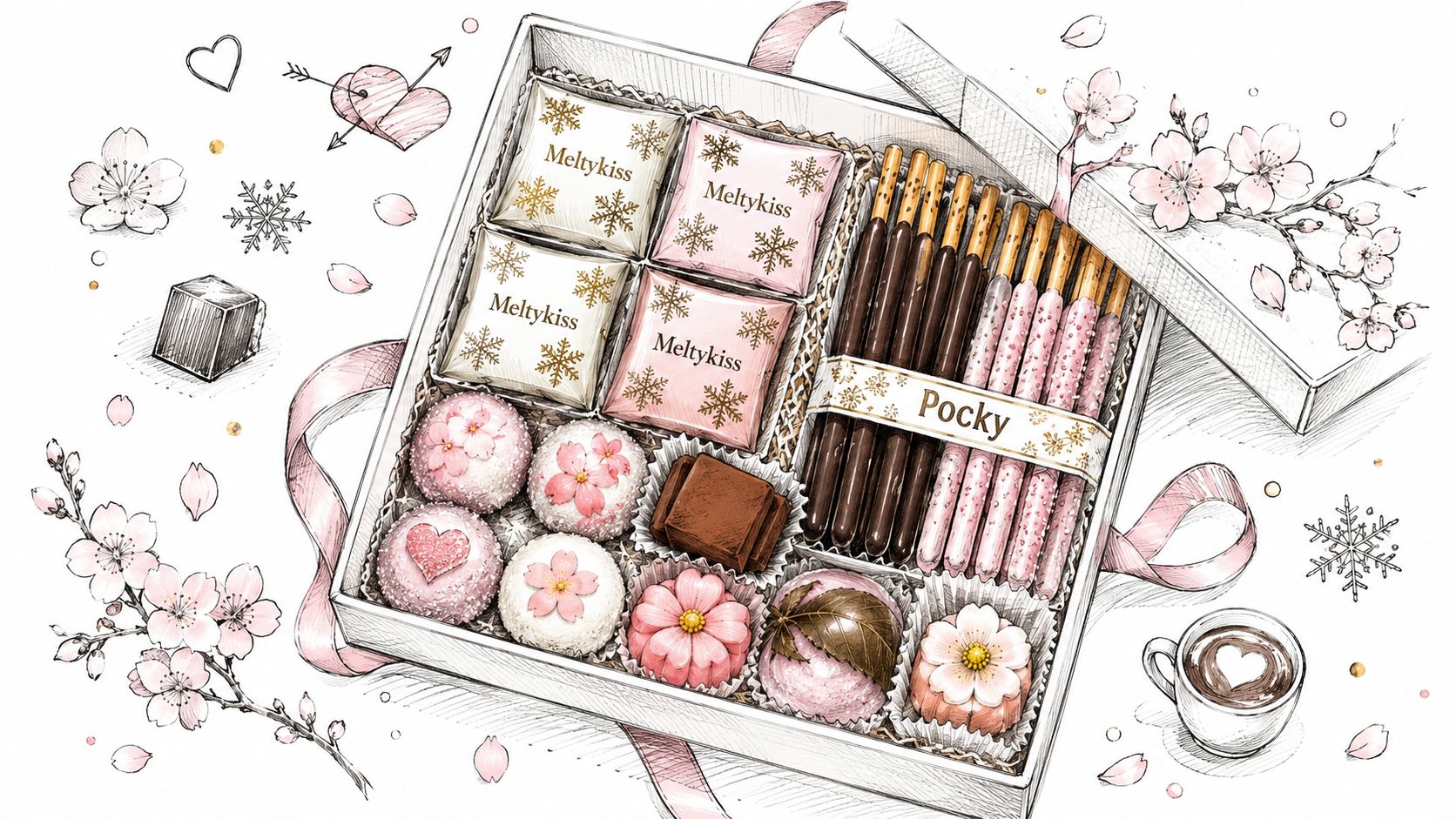
Japan's chocolate market reached JPY 710.5 billion in retail sales and produced 210,736 tonnes in 2025, so Japanese candy chocolate sits inside a category that's both culturally visible and commercially huge. That scale matters because chocolate in Japan isn't a side shelf novelty, it's part of a mature confectionery market where gifting, seasonality, and product design all shape what people buy.
You're probably here because you want a Japanese chocolate gift that feels thoughtful, not random. Maybe you're packing a care box for someone abroad, maybe you're choosing something for Valentine's season, or maybe you've opened a shop display full of elegant wrappers and aren't sure what matters beyond the cute packaging.
Welcome to the World of Japanese Candy Chocolate
Step into a Japanese confectionery shop, and the display already feels like a gift table. Boxes sit in neat rows, wrappers look chosen for a specific mood, and even a simple chocolate bar can seem tied to a season, a greeting, or a small act of courtesy. That careful presentation is a big part of why Japanese candy chocolate feels distinct from an ordinary supermarket sweet.
The category is broad enough to cover everyday treats and constant experimentation. As noted earlier, the market is large and commercially mature, with familiar sweeter styles still holding a strong place in buyer preferences. That helps explain why boxed Japanese chocolate often puts as much weight on presentation, softness, and giftability as it does on bold bitterness or niche craft cues.
A shop experience built around gifting
Walk through a Japanese sweets aisle and the packaging does part of the social work for you. A small box can signal celebration, apology, seasonal attention, or simple courtesy, which matters if you are choosing something for someone who expects the gift to feel considered. The same product can feel like a casual snack in one setting and a polished present in another.
Practical rule: choose Japanese candy chocolate by occasion first, flavor second. In Japan, the wrapper, season, and presentation often say as much as the taste.
That is why this category makes more sense if you stop treating it as “just chocolate.” It works more like a gift language with edible parts. Once you see that, the differences between traditional sweets, modern chocolate, and mixed snack boxes start to make sense.
Wagashi and Yougashi
Japanese sweets usually fall into two broad families, and the split helps you avoid mismatched gifts. Wagashi is the traditional side, while yougashi covers the modern, Western-influenced side. If you've ever wondered why one box feels tea-room formal and another feels like a trendy snack drop, that's usually the difference at work.
Traditional sweets and modern sweets
Wagashi often relies on rice flour, red bean paste, and seasonal fruit. It tends to be delicate, restrained, and closely tied to tea culture, so it's the kind of sweet you'd give when you want the recipient to slow down and pay attention. Yougashi is looser and more global in its references, and that's where most Japanese chocolate lives. It includes familiar bakery items and candy formats that feel more accessible to first-time buyers.
The visual language is different too. Wagashi packaging usually feels calm and nature-aware, while yougashi can be bold, graphic, and character-driven. That matters for gifting because the box itself sets expectations before anyone opens it. A tea lover and a chocolate lover may both appreciate Japanese sweets, but they'll often want very different cues from the package.
For shoppers trying to cover both styles in one purchase, a mixed assortment can help. Essential Japanese Snacks 13 Items (8 Snacks + 5 Coffee/Tea) is a good example of how a curated set can combine traditional crackers, modern treats, and coffee or tea in a single giftable format. That kind of bundle works because it doesn't force every recipient into the same flavor profile.
Why the distinction matters
The key mistake is assuming all Japanese sweets belong to one aesthetic. They don't. Wagashi is about season, symbolism, and ceremony. Yougashi is where chocolate's contemporary side shows up, especially in snacks designed for everyday buying or export-friendly gifting.
If you keep that split in mind, you'll make cleaner choices. Give wagashi when the moment calls for quiet formality. Choose yougashi when you want broader appeal, easier sharing, or a gift that feels modern without losing its Japanese identity.
What Makes Japanese Chocolate Different
A box of Japanese chocolate can look ordinary at first glance, then surprise you at the first bite. The difference often starts before flavor does, because formulation matters as much as flavor. Standards are tighter than many first-time buyers expect, and those rules shape texture, melt behavior, and shelf stability. That is why some Japanese chocolates feel silkier than the packaging suggests.
Composition rules shape the bite
Japanese guidance sets clear thresholds for what counts as chocolate. Standard chocolate must contain at least 35% total cocoa solids, including at least 18% cocoa butter. Milk chocolate must contain at least 21% total cocoa solids, at least 18% cocoa butter, and at least 14% total milk solids. Chocolate kiji is capped at 3% moisture, and processed chocolate products at 15%. SOCI's summary of Japanese chocolate composition guidance explains why moisture control and cocoa butter balance shape texture, melt, and storage stability.
For shoppers, those rules show up in the mouthfeel. More cocoa butter usually gives a smoother melt. Tight moisture control usually lowers the risk of texture problems in storage. A chocolate labeled as premium or “nama” style often depends on that formula discipline more than on a high cacao number.
Practical rule: if a chocolate is meant to feel soft or melt quickly, assume it needs careful temperature control in transit.
Market preference favors familiar styles
As established above, milk and white chocolate held 71.92% of the market. That tells a simple story about buyer preference. Japanese candy chocolate is built around familiar textures and sweeter profiles, not only around dark, high-cacao tasting bars. The category also reflects a gift culture, where the box needs to feel approachable before it is opened.
That helps explain why chocolate in Japan often sits closer to everyday gifting than to specialty tasting. A smoother bite, a gentle sweetness, and a polished package can matter as much as intensity. For someone buying abroad, that means the best choice is often the one that feels reassuring rather than challenging.
Japanese chocolate also shows how health-forward reformulation can shape a product without stripping away its appeal. Some makers respond to consumer expectations by adjusting sweetness, milk content, or moisture balance, while keeping the texture careful and the presentation refined. The result is a category that can feel lighter in style without losing its gift-ready polish.
If you are choosing a box for someone outside Japan, that distinction matters. A chocolate that looks modest on the shelf may be the one that best reflects Japanese confectionery priorities, careful composition, clear texture, and a format that works well as a present.
Seasonal Releases and the Gift-Giving Calendar
Japanese chocolate gifting makes a lot more sense once you stop reading it like a normal candy calendar. The social rules around Valentine's Day and White Day turn chocolate into a timed gesture, not just a treat. That's why a box can feel emotionally specific even before anyone tastes it.

Valentine's and White Day work as a pair
In Japan, Valentine's Day traditionally puts women in the role of gift giver, and the gifts are often split between giri-choco, the polite chocolate given to coworkers and acquaintances, and honmei-choco, the more personal version for romantic partners. A month later, White Day flips the gesture back. That pattern changes how chocolate is bought, wrapped, and remembered, because the box isn't just food, it's part of a social exchange.
The seasonal rhythm matters even outside romance. Many Japanese confectionery launches cluster around these moments because buyers expect novelty, limited editions, and themed packaging. If you're sending gifts internationally, that seasonality helps you choose better. A Valentine box feels culturally legible in February. A White Day return gift feels intentional in March.
You can also see how these rituals show up in related culture writing, including this Japanese moon-bunny story, where seasonal symbolism shapes how people think about gifting and celebration.
Summer changes the buying logic
Chocolate in Japan doesn't behave like a year-round climate-proof snack. A 2024 confectionery wholesaler analysis flags summer demand decline as a real challenge, and trade commentary around the wider category points toward cooler, more temperature-tolerant formats in hot weather. That doesn't mean people stop wanting sweets. It means the form changes when heat becomes part of the shopping decision. Yamaseiya's confectionery category analysis makes the seasonal problem easy to understand.
For international gift buyers, that's the most useful rule. If the weather is warm, prioritize sturdier formats and assume soft chocolates need more careful shipping. The best seasonal gift isn't the fanciest one, it's the one that arrives intact and still feels timed to the occasion.
The Health-Forward Shift in Japanese Confectionery
Japanese candy chocolate is no longer only about indulgence. A noticeable part of the category is moving toward low-sugar, sugar-free, and functional formats, which changes how people shop for gifts. That shift matters if you're buying for an adult recipient who wants something polished but not overly sweet.
What buyers are looking for now
Recent trend coverage points to growing interest in xylitol-coated items, sugar-free options, and premium sweets that also highlight sustainability or local sourcing. The appeal isn't that chocolate has become “healthy” in a strict sense. The appeal is that it can now fit more situations, including office gifting, adult self-treats, and presents for people who watch sugar intake more closely. Accio's review of Japanese candy trends highlights this functional direction.
That makes the category feel more flexible than outsiders often expect. A box of Japanese chocolate can still be a comfort gift, but it can also look more considered when it's positioned for shared workplaces, family occasions, or people who prefer smaller portions and lighter sweetness. The big change is in use case, not just recipe.
Reformulation changes the gift message
When a chocolate line emphasizes lower sugar or functional ingredients, it sends a different signal from a novelty box loaded with flashy flavors. It says the giver paid attention to the recipient's habits, not just their taste for sweets. That's a meaningful shift for modern gifting, especially when the recipient isn't a child or isn't looking for a sugar bomb.
A thoughtful gift doesn't have to be the richest one on the shelf. It has to fit the person receiving it.
Japanese candy chocolate becomes more practical than playful. Reformulated sweets can feel adult, restrained, and still special. For international buyers, that makes the category easier to give across workplace, family, and corporate settings without guessing too hard about how much dessert the recipient wants.
Curating the Right Gift Set for Every Recipient
A Japanese chocolate gift works best when it feels chosen for a specific person. The right box takes taste, temperature, and the setting into account, so the recipient sees care in the selection rather than just a pile of sweets.
Match the set to the recipient
For someone who likes skincare, beauty, or self-care, a mixed gift that pairs snacks with tea or coffee often feels balanced and thoughtful. For someone who prefers savory flavors, chocolate fits more naturally as part of a broader snack selection that includes crackers or lighter bites. Corporate gifting usually benefits from variety, because a mixed box gives different people something they can enjoy without forcing the whole group into one flavor lane.
A curated snack set like Essential Japanese Snacks 13 Items (8 Snacks + 5 Coffee/Tea) combines several snack styles with coffee and tea in one box. It gives the gift a finished feel, which helps when you want a present that feels complete without building it piece by piece.
Gift Me Japan also organizes Japanese gift sets by recipient and occasion, which helps when you want a ready-made format instead of assembling one from scratch. That is useful for international buyers who want authentic Japanese items without comparing a dozen separate shops.
Check storage before you check style
Storage is where many good gifts go wrong. Meiji's Chocolate Kouka specifies storage at 28°C or lower, while Meltykiss requires 23°C or lower, and that difference tells you these products do not travel the same way. The softer product is more sensitive to heat, while the firmer one is easier to treat like standard confectionery. Meiji's product page makes that distinction easy to see.

The simplest rule is practical. If your recipient lives in a warm place or you are shipping across a hot route, choose firmer products, limit handling, and use packaging that can survive transit. If the goal is a delicate melt-in-the-mouth experience, build in better temperature control and faster delivery.
How to Choose and Ship Japanese Candy Chocolate
Start with the person, not the product. Decide whether the recipient likes traditional or modern sweets, sweeter or more restrained flavors, and indulgent or health-conscious gifts. Once you've answered that, the rest of the choice gets easier.
Use three checks before you buy
First, look at the season. Valentine's Day, White Day, and summer all change what feels appropriate. Second, check the product's storage needs. A soft chocolate designed to melt quickly is a different shipping decision from a firmer bar or a snack-style assortment. Third, think about presentation, because Japanese gift culture puts real weight on how the box opens and how the set feels in hand.
You can also use this guide to Japanese snack boxes if you're deciding between a single chocolate gift and a broader snack assortment. That kind of comparison helps when you want the present to feel complete, but you're not sure how chocolate-heavy it should be.
A simple decision framework
- Choose for the occasion: A seasonal box feels natural for Valentine's or White Day, while a mixed snack set works better for neutral gifting.
- Choose for the climate: Softer chocolates need more careful shipping than sturdier bars or crackers.
- Choose for the recipient: Health-conscious adults may appreciate lower-sugar or more functional options, while others want a richer sweet experience.
- Choose for the unboxing: The box should look like a gift before it's opened, not just a snack shipment.
When you treat Japanese candy chocolate as both food and etiquette, you avoid the usual gifting mistakes. The result feels more intentional, and it's much more likely to arrive in a form the recipient can enjoy immediately.
If you want a ready-made way to send Japanese candy chocolate abroad, Gift Me Japan curates Japanese gift sets, snack boxes, and recipient-specific assortments sourced from Japan. Visit Gift Me Japan to browse gift-ready options that make seasonal, health-conscious, and climate-aware chocolate gifting easier.
Share:
Japanese Sour Candy: Beyond the Challenge
How to Build a Thoughtful Snacks Care Package