

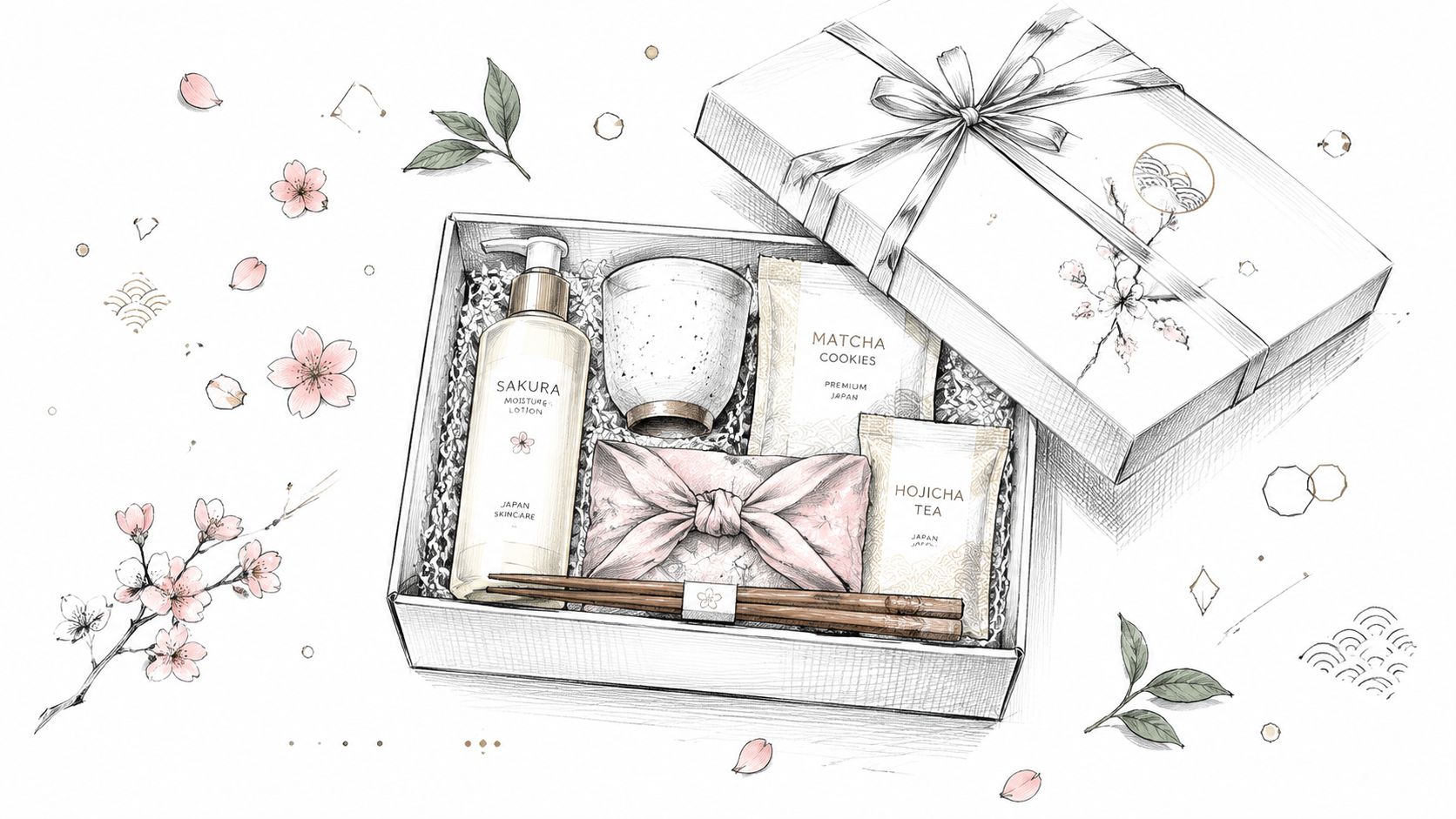
You're trying to send something that feels distinctly Japanese, but you don't want to spend half a day decoding product pages, second-guessing presentation, or wondering whether the gift will survive the trip overseas. That's exactly where a Japanese gift set earns its keep. It gives you a finished answer instead of a scavenger hunt, which matters when you're buying from abroad and still want the gift to feel thoughtful, specific, and culturally on point.
Why Japanese Gift Sets Solve the Gifting Dilemma
A good gift fails for one of two reasons. It's either too generic, or it asks the buyer to do too much work. A Japanese gift set solves both problems because it packages the selection, the balance, and the presentation into one decision.
Why curated sets work better than single items
If you're shopping internationally, you usually don't know the recipient's exact preferences well enough to build a box from scratch with confidence. You may like the idea of tea, skincare, or snacks, but you still have to match flavors, textures, and practical use. Curated sets remove that friction.
That's why sets feel smarter than random add-ons. A snack assortment looks deliberate because it creates variety without forcing the buyer to compare ten separate listings. A skincare set looks thoughtful because the pieces are meant to function together, not fight each other. A tableware bundle feels complete because the pieces are chosen as a group rather than as leftovers from different styles.
Practical rule: if the gift needs explanation before it feels useful, the set is probably too complicated.
Gift sets also reduce the risk of buying something culturally off-target. Japanese gifting places a lot of weight on presentation and usefulness, so a mismatched bundle can feel sloppy even when the individual items are good. A curated set lowers that risk because someone has already done the curation work for you.
For shoppers who want a ready-made example of that logic, Essential Japanese Snacks 13 Items (8 Snacks + 5 Coffee/Tea) is built as a single gifting unit rather than a loose collection. It pairs snacks with coffee and tea, then adds finishing details so the gift feels complete instead of improvised.
The primary advantage is simple. A curated set lets you send a coherent experience, not just objects in a box.
The Cultural Roots of Japanese Gifting Traditions
Japanese gifting is not a trend added onto commerce, it is part of the cultural structure. Gift exchange is documented in Japan as far back as the Heian period (794–1185), when elites used gifts to build political alliances, and it expanded during the Edo period (1603–1868) as merchants and commoners adopted more formal gifting customs. That long history matters because it explains why gift sets today still emphasize order, thoughtfulness, and presentation over novelty.
Seasonal giving still drives modern expectations
Two periods matter more than almost anything else, chūgen and oseibo. Industry reporting says those two seasons account for 60% of annual profits for most department stores in Japan, which shows how seasonal gifting is built into the retail calendar. Gifting in Japan is not a side habit, it is a major commercial pattern with rules people already understand.
The spending norm is just as important. Japanese gift purchases often sit in a modest, familiar range, which is one reason ready-made sets work so well. Buyers do not need to improvise. They can choose, send, and trust the format.
The market itself is large enough to support that structure. Japan's retail gift-and-present market is forecast at around 11 trillion yen in 2024, up from less than 10 trillion yen in 2015 (Statista). That is not a niche category. It is a mature market with enough scale to sustain clear gifting norms and product formats.
The tradition also shapes what people send. The summer-gift practice of chūgen began as part of Obon, a festival honoring ancestors, and later became a form of customer appreciation. A modern survey found that 77.6% of respondents send chūgen to relatives, while only 18.3% send them to work superiors. In the same survey, 68.1% chose packaged food, 36.1% condiment and ingredient sets, and 27.6% fresh food. That pattern makes curated food-heavy sets feel authentic, not arbitrary.
For the clearest example of how symbolism still shapes Japanese gifting, see the moon and bunny story. It shows how Japanese occasions often carry layered meaning instead of simple decoration.
The takeaway is direct. Japanese gift sets work because they fit a culture that already values seasonal reciprocity, practical usefulness, and polished presentation.
Main Categories of Japanese Gift Sets
A Japanese gift set works best when you match it to a clear use case. Start with what the recipient does, then choose from three practical lanes, skincare and beauty, snacks and tea, or lifestyle and tableware. Each one serves a different kind of gift, and mixing them without a reason usually weakens the result.
Side by side comparison
| Category | Typical Contents | Ideal Recipients | Best Occasions |
|---|---|---|---|
| Skincare and beauty | Cleansers, lotions, creams, masks, self-care items | Beauty fans, sensitive-skin shoppers, people who enjoy routines | Birthdays, thank-yous, self-care gifts |
| Snacks and tea | Crackers, sweets, coffee, tea, regional treats | Food lovers, office teams, families, hosts | Holidays, office sharing, casual appreciation |
| Lifestyle and tableware | Chopsticks, cups, bowls, trays, small kitchen pieces | Home cooks, design-minded recipients, collectors | Housewarmings, anniversaries, client gifts |
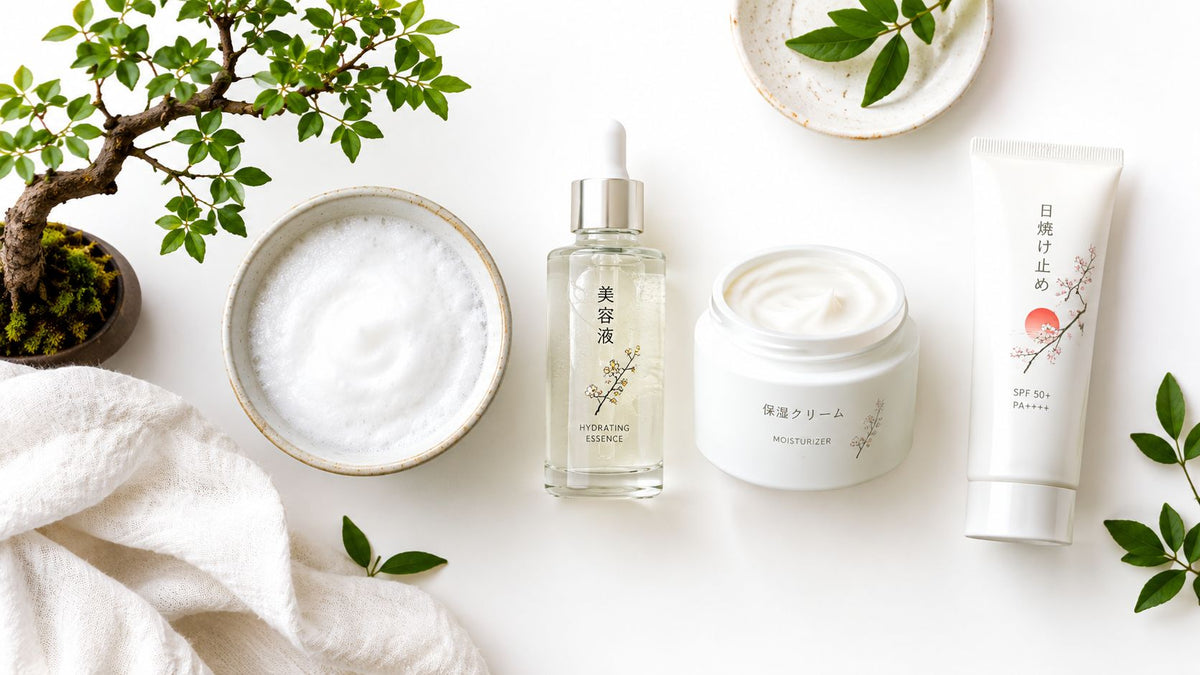
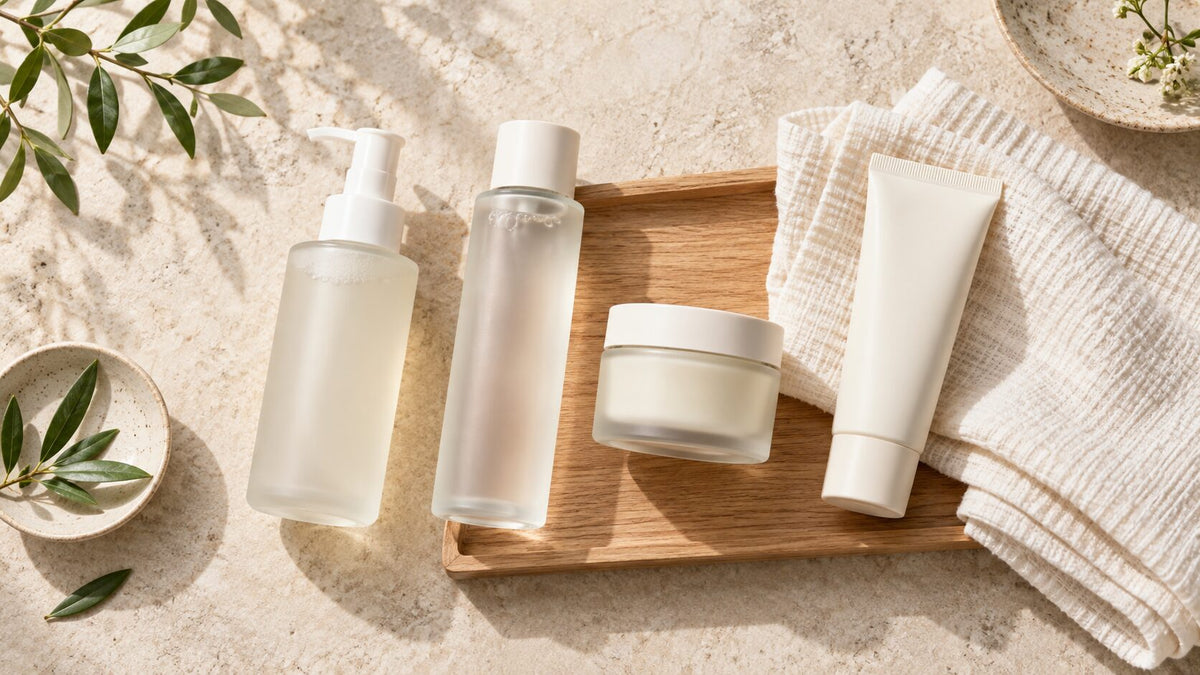
Skincare and beauty sets make sense for recipients who already use routine-based products. They are a strong fit if the person likes Japanese formulations, gentle packaging, or a tidy daily ritual. If you want a closer look at how to choose within that category, the Japanese skincare gifts beginner guide gives a practical starting point.
Snack and tea sets are the safest choice for international gifting because they are easy to share and easy to explain. They work well in offices, family settings, and situations where the recipient does not want another permanent object. That makes them a solid answer for hosts, colleagues, and teams, especially when shipping needs to stay simple.
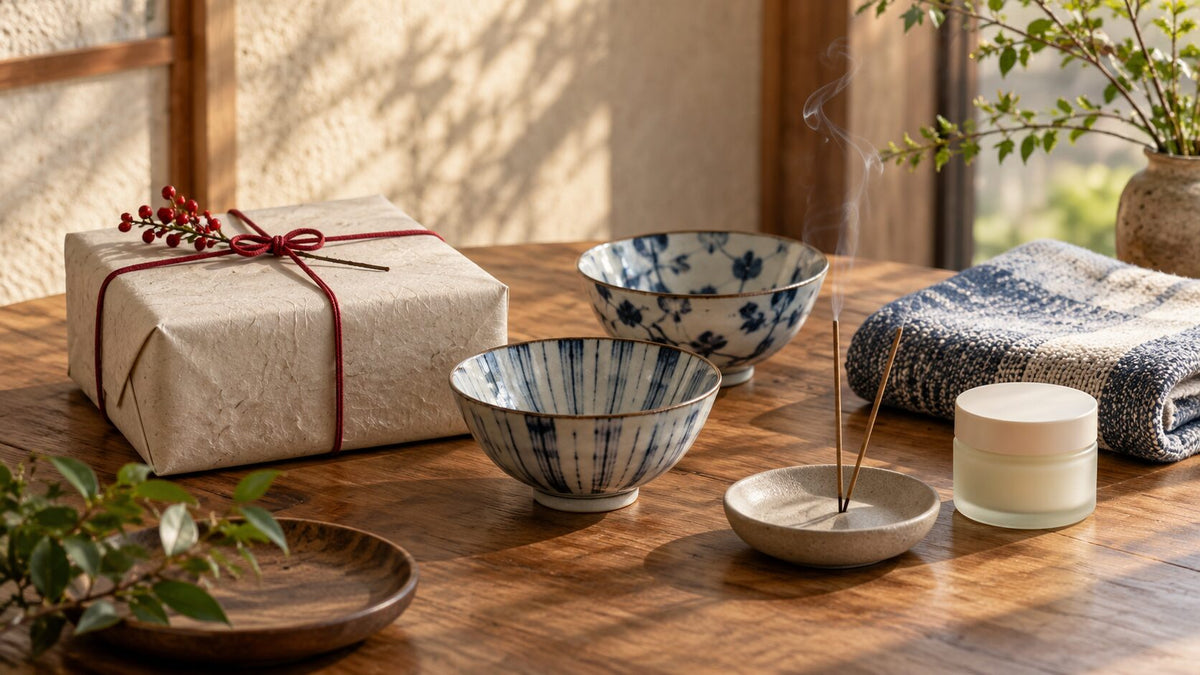
Lifestyle and tableware sets fit gifts that should stay in the home and get used over time. Choose them for people who care about their home setup, kitchen rituals, or the look of the objects they keep around. These sets land better when the recipient values form as much as function.
Use-case rule: pick the set that fits how the person lives, not how you wish to categorize them.
For group gifting, snack sets usually win because they are easy to divide. For one person who likes routines, skincare is the safer choice. For a gift that should remain visible in the home, tableware is the better bet.
A few concrete examples make the decision easier. A remote worker who snacks at their desk should get a shareable food set. A client who appreciates design should get tableware. Someone recovering from a busy season should get skincare or self-care items. That approach avoids the stale “for her” and “for him” trap and gives you a cleaner match between product and person.
How to Choose the Right Set for Your Recipient
Start with the recipient's real habits. Not their demographic, not your assumption, their habits. That's the only reliable way to choose a Japanese gift set that gets used instead of stored away.
Ask four questions before you buy
- Will the recipient use it alone or with others? A solo user can enjoy skincare, tea, or a small ritual object. A shared setting calls for snacks or consumables.
- How much space do they have? Small apartments and busy desks don't reward bulky gifts. In those cases, consumable sets beat decorative ones.
- Do they have sensitivities or restrictions? Skincare should fit the skin type you know about. Food gifts should stay away from ingredients you can't confidently support.
- Is this for daily use or a moment of delight? Daily-use gifts should be practical. Occasion gifts can lean a little more decorative.
Gender-based shopping breaks down here. A person isn't automatically a skincare buyer because they're female, or a grooming buyer because they're male. Use-case thinking is sharper. It also matches what people need, which is why consumable and shareable gifts remain so effective in Japanese gifting culture.
For office sharing, don't overcomplicate it. Choose a snack box or tea collection that can be opened quickly and divided easily. For a remote-work thank-you, choose something compact and low-maintenance, since the recipient probably doesn't want more clutter on a home desk. For a client gift, prioritize presentation and neutrality. You want polished, useful, and easy to accept without awkwardness.
Direct advice: if you don't know the person well, avoid any set that depends on a very specific taste profile.
Self-care gifts need a different filter. If the recipient likes skincare routines, a customizable set is stronger than a random bundle because it gives them a sense of fit. A ready-made skincare gift box can also solve the common problem of sending something that looks luxurious but doesn't suit the skin.
If you're buying for someone with limited storage, smaller consumable sets are the least risky. If you're buying for a homebody or collector, a tableware set can feel more satisfying because it stays in use. The point is to choose the set that fits the person's daily environment, not just the occasion.
A little discipline here saves a lot of regret later. The right recipient match makes the gift look intentional even before it's opened.
Navigating International Shipping and Presentation Standards
A Japanese gift set can look perfect in the catalog and still fail the moment it enters international shipping. Overseas buyers need to judge contents, packing, and delivery together, because a gift that arrives crushed or poorly presented stops feeling like a gift at all.

Presentation has to survive the journey
Japanese gifting culture treats wrapping and presentation as part of the product, not a final extra. Overseas buyers should check whether the seller packs the set so it still looks deliberate when it arrives, because a careless unboxing undercuts the whole experience.
Shipping terms deserve the same attention. Gift buyers need clear tracking, a delivery window that makes sense, and a final price that does not change at checkout. Gift Me Japan publishes flat international shipping options, with stated rates of US$15 / €10, which helps overseas buyers plan without guessing at the shipping total.
Snack sets need a stricter filter than decorative items. Food is more sensitive to transit time, handling, and freshness, so choose a box that is already assembled for international delivery instead of trying to recreate one yourself from mixed sellers. See our guide on Japanese snack boxes for more on what works for cross-border delivery.
Customs creates another layer of risk. Food, liquids, and cosmetics can draw more attention than paper goods or textiles, so check the destination country's rules before you order. If the gift has a hard deadline, leave room for inspection or delay instead of assuming the package will move on schedule.
The safest approach is straightforward. Buy from a seller that shows tracking, states shipping terms clearly, and packs the set as a gift from the start. If the store also keeps support, order status, and policy information in one place, that usually means it is built for cross-border gifting rather than casual domestic orders.
Best practice: if a seller cannot explain how the gift will arrive, do not treat the listing as gift-ready.
Shipping is part of presentation. A gift that arrives intact and polished feels Japanese in the way international buyers expect.
Why Curated Sets Outperform DIY Assemblies
DIY gift boxes sound personal until you price in the time, uncertainty, and packing mistakes. Buying individual products can work if you already know the recipient well and you have reliable local access. For international shoppers, it usually turns into a frustrating project with too many decisions and too many chances to get one thing wrong.
What specialists handle for you
A specialized curator handles sourcing, pairing, and packing as one workflow. That matters because Japanese gifting is sensitive to cohesion. The products need to make sense together, the box needs to look complete, and the combination needs to feel intentional. If you build the set yourself, you're also becoming the curator, and most shoppers don't want that job.
A curated store also lowers the risk of mismatched presentation. If you grab five interesting items from different places, the result can look busy rather than thoughtful. Professionally assembled sets solve that by controlling the theme and the visual balance. You don't have to guess whether a snack box should also include tea or whether a skincare set needs one more piece to feel finished.
This is also where authenticity matters. If the products are sourced directly from Japan, the gift carries a clearer origin story and a more consistent style. That's not a marketing flourish, it's the difference between a gift that feels like a Japanese set and one that merely uses Japanese-shaped packaging.
I'd rather send one cohesive set than five individually chosen pieces that don't speak to each other. That's especially true when you're buying for a client, a team, or someone you haven't met in person. In those cases, consistency beats improvisation every time.
Gift Me Japan fits that model by organizing curated sets around skincare, snacks, and lifestyle goods, with direct-from-Japan sourcing and cross-border shipping support. Use it if you want a pre-assembled gift rather than a self-built bundle. If you want more control, you can still shop elsewhere, but you'll be doing the curation work yourself.
Bottom line: curated sets save you from paying in time, guesswork, and awkward presentation.
DIY can look cheaper on paper. In practice, it often costs more in effort and delivers less confidence.
Your Action Plan for Confident Japanese Gifting
Choose the recipient first, not the product category. Then decide whether the gift should be used alone, shared, or displayed. That one move filters out most bad choices before you even open a product page.
Next, match the set to the use case. Snacks and tea work well for groups and office settings. Skincare fits self-care and personal routines. Tableware works when the gift should linger in the home and feel a little more lasting.
Then check the logistics before you click buy. Confirm shipping visibility, packaging standards, and whether the gift is likely to arrive intact and gift-ready. If the seller can't explain that clearly, keep looking.
Finally, keep the cultural test simple. Does the gift feel thoughtful, practical, and presentation-aware? If yes, you're close. If not, you're probably still assembling around your own preferences instead of the recipient's reality.
Buy the set that solves a real gifting problem. That's how you send something Japanese, appropriate, and useful without overcomplicating the process.
If you want curated Japanese gift sets that are organized for gifting rather than improvised from random pieces, visit Gift Me Japan. It offers ready-to-give assortments across snacks, skincare, and lifestyle goods, with shipping and checkout built for international shoppers. If you're buying for a birthday, a client, or a thoughtful thank-you, start there and choose the set that fits the recipient's actual use case.
Share:
Moon Bunny Story and Japanese Gift Culture Explained
Japanese Sour Candy: Beyond the Challenge