

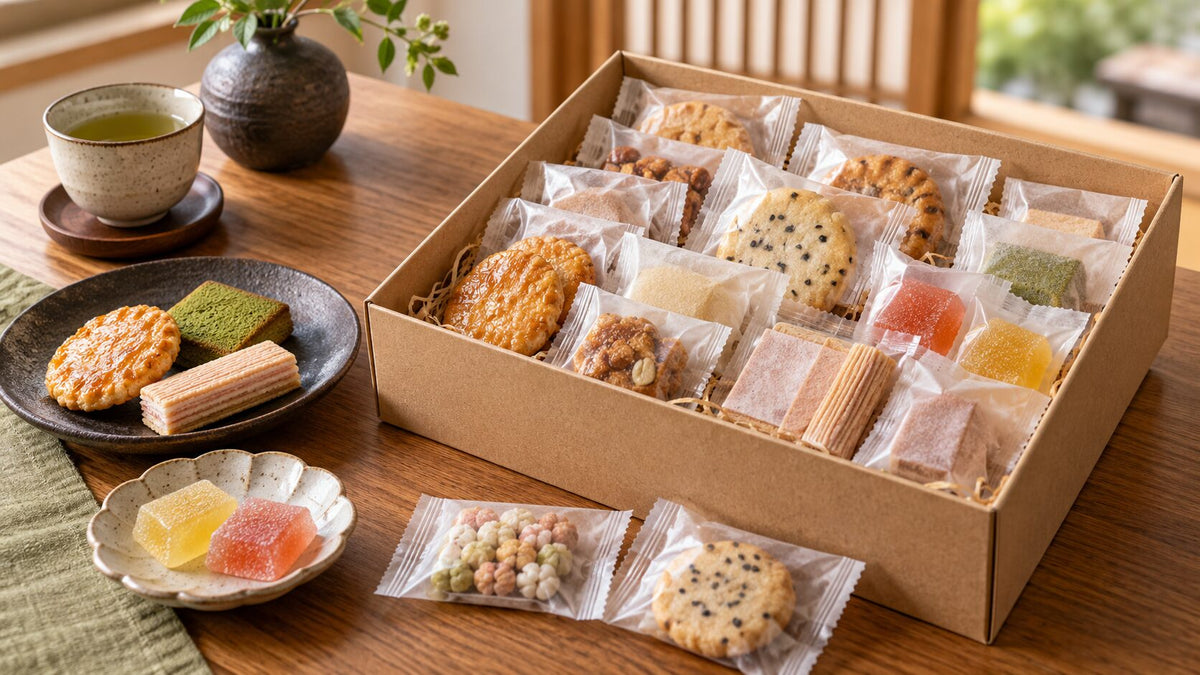
Individually wrapped Japanese snacks are especially useful when a gift will be shared. Each person can take one piece, unopened portions stay protected, and the original assortment can be enjoyed over several days instead of all at once.
The wrapping alone does not make a snack gift thoughtful, though. A good assortment still needs clear labels, varied flavors, suitable dates, and contents that match the recipient. Use individual packaging as a practical feature—not as a substitute for checking what is inside.
What “Individually Wrapped” Actually Means
An individually wrapped snack has its own sealed inner wrapper. That is different from a large bag containing loose pieces or several serving-size bags grouped in one multipack.
Separate wrapping can help with portioning, handling, and freshness after the outer box is opened. It is particularly convenient for rice crackers, biscuits, jellies, and small confections that may be shared at an office, gathering, or host family’s home.
Keep the outer package: Small inner wrappers do not always carry the complete ingredient, allergen, storage, or date information. Make sure recipients can refer to the original box or bag.
When Individual Wrapping Is Useful
- Office or team gifts: People can take a sealed portion without handling the remaining snacks.
- Family gatherings: Several people can sample different items at their own pace.
- Travel and care packages: Unopened portions remain separate if the gift is enjoyed over time.
- Host gifts: The recipient can serve a few pieces and save the rest.
For a gift intended for one person to eat at home, a resealable pack may be equally practical and may use less packaging. Choose the format for the way the snack will be eaten.
What to Put in a Shared Assortment
Variety matters more than the number of packets. A compact box can feel generous when each item adds a different flavor or texture.
Savory snacks
Senbei, arare, and okaki provide crisp texture and are easy to share when separately sealed. Look for a small range of seasonings rather than several near-identical crackers. Soy sauce, seaweed, sesame, salt, and mild spice can create useful contrast.
If the recipient is unfamiliar with Japanese snacks, begin with approachable flavors before adding stronger seafood, wasabi, or fermented notes. Our guide to traditional Japanese rice crackers explains the main styles in more detail.
Sweet snacks
Baked biscuits, wafers, fruit jellies, chocolate-coated treats, and mochi-style confections can balance the savory side. Choose different textures—a crisp wafer, a soft sweet, and a fruit-based item create more interest than three similar cookies.
Product-specific storage still matters. Chocolate may not travel well in hot weather, while some soft sweets have shorter best-before periods than shelf-stable crackers.
How to Choose a Good Box
| Check | What to look for |
|---|---|
| Wrapping | Each piece is sealed, not simply loose inside an outer bag. |
| Variety | Distinct sweet, savory, crisp, and soft options rather than repeated flavors. |
| Quantity | Enough portions for the intended group without relying on a misleading packet count. |
| Dates | Enough remaining shelf life for shipping, gifting, and gradual eating. |
| Storage | Instructions that suit the route, season, and recipient’s home. |
| Labels | Ingredient and allergen information remains available with the assortment. |
For one recipient, six to ten distinct pieces can be more satisfying than a large box of duplicates. For an office or family, prioritize clear labeling and enough portions for the group.
Allergens and Dietary Needs
Check every product in a mixed assortment. Common ingredients may include wheat, soy, milk, egg, peanuts, tree nuts, sesame, seafood, gelatin, and buckwheat. A sealed packet is not automatically allergen-safe, and appearance cannot confirm whether a snack is vegan, vegetarian, halal, kosher, or gluten-free.
Read the complete current label, including advisory statements and any shared-facility information. If someone has a serious allergy and the necessary details are unavailable, choose a different gift.
Do not separate snacks from the outer package unless the relevant product information will remain accessible. If you make an English contents card, treat it as a helpful guide and keep the original label with the gift.
The Packaging Trade-Off
Individual wrapping can reduce handling and help unopened portions retain their intended texture. It also creates more packaging than a single resealable bag.
The practical question is whether the extra wrapping serves a real purpose. It often does for a shared office gift, a mixed household, or a package that will be opened gradually. For one person likely to finish a pack promptly, a simpler format may make more sense.
Do not assume a paper outer box makes every inner wrapper recyclable. Materials and local collection rules vary, so avoid broad sustainability claims unless the packaging provides specific information.
International Shipping and Storage
Keep every snack in its original sealed packaging. Protect crisp items from crushing and humidity, and consider seasonal temperatures before including chocolate or other heat-sensitive sweets.
Food import rules vary by destination. Before ordering, review Gift Me Japan’s current shipping policy and the destination country’s official import guidance. Allow extra time around holidays and check delivery estimates at checkout rather than assuming a fixed arrival date.
A Simple Formula for a Shareable Gift
Start with two savory rice snacks, add two sweets with contrasting textures, then include one regional or seasonal item if its ingredients and storage needs are clear. Keep the original labels together and add a short note explaining the selection.
For broader selection advice, see Best Japanese Snacks to Give as Gifts and our guide to building a balanced sweet and savory snack box.
The best individually wrapped Japanese snack gift is not the one with the most packets. It is the one that is easy to share, clearly labeled, appropriate for the recipient, and practical to store and ship.
Share:
Sweet and Savory Japanese Snack Box: A Practical Guide
Japanese Food Gifts for Foodies: How to Choose Well