

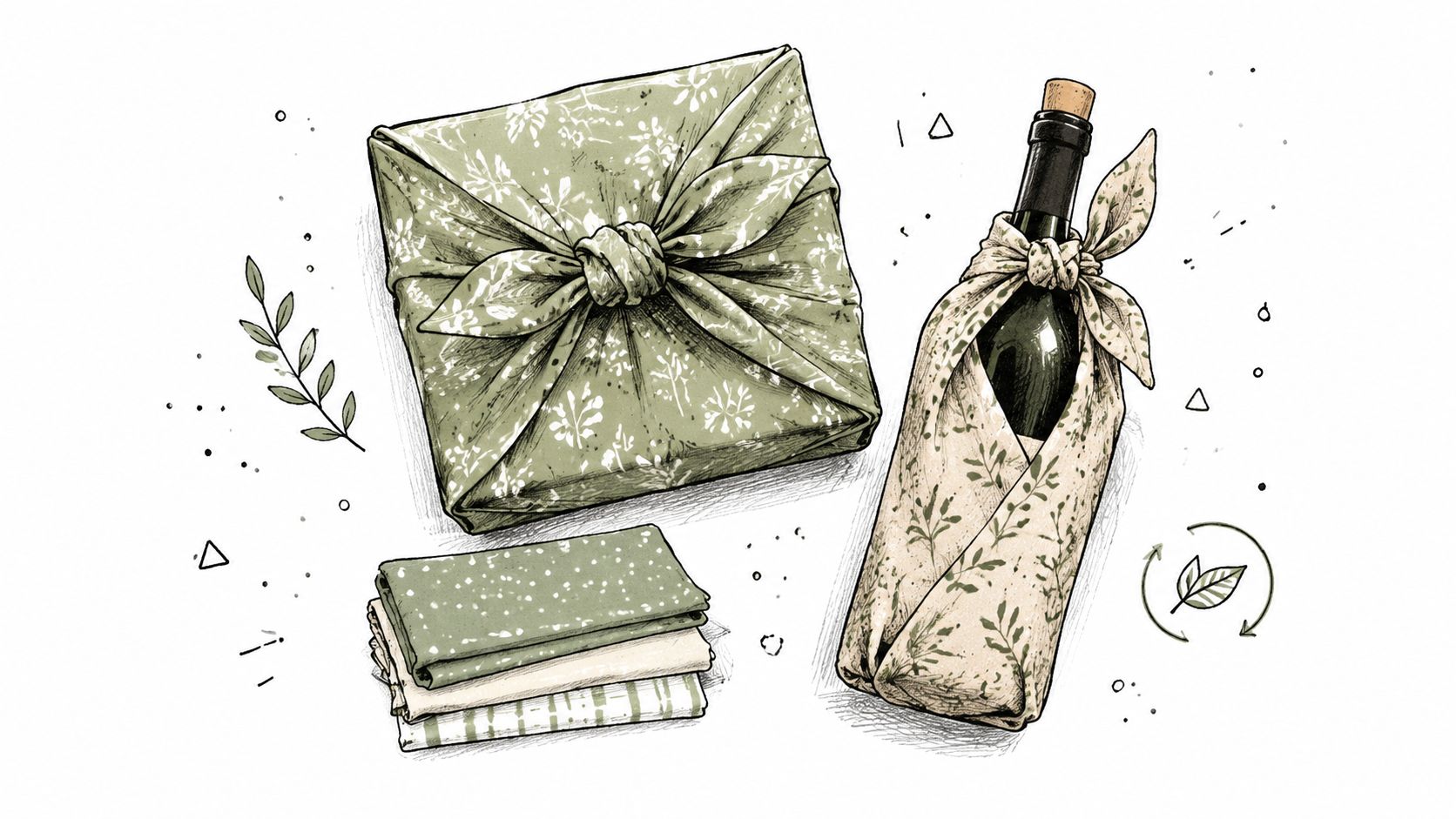
You're standing at the table with a gift that still looks unfinished, a roll of torn paper, and tape stuck to your fingers. A cloth square solves that mess fast, and furoshiki wrapping paper turns the wrapping itself into part of the gift instead of a disposable shell. Used well, it replaces paper, ribbon, and tape with a single reusable wrap that looks intentional, travels well, and can be tied again next week.
Why Furoshiki Belongs in Your Gift Wrap Toolkit
The appeal is practical before it's poetic. A square cloth can wrap a box, hold a bottle, or sling an awkward bundle without the brittle tears that make paper feel fussy. Once you learn the folds, you're not hunting for extra tape or trying to patch a ripped corner at the last minute.
What makes it easier than paper
Paper asks you to cover an object and then hope the seams behave. Furoshiki lets the fabric do the work, because the cloth can bend around edges and gather where a paper sheet would split. That makes it especially useful for gifts that aren't perfectly flat, or for moments when you want the outside of the present to look deliberate rather than rushed.
Practical rule: if the object's shape feels awkward in paper, cloth usually gives you more margin for error.
You'll also get a useful cultural thread, a reliable way to wrap boxes and bottles, and a clear-eyed view of the eco claims by the time you finish. For a simple example of how Japanese gifts are often presented as complete sets, see the moon bunny story, which shows how packaging and meaning can work together.
The Cultural Roots of Furoshiki
A furoshiki cloth carries a long practical history. Its documented roots reach back to Japan's Nara period (710–794 CE), when the cloth was called tsutsumi and used to protect valuable temple objects, a use that still matches the material's strengths today (Wikipedia on Furoshiki). By the Edo period (1603–1867), it had moved into everyday life, especially in bathhouses and for carrying goods, which shows how a working cloth can shift from sacred storage to ordinary transport.
Why the practice faded, then returned
The decline came later, after the Second World War, when handbags and disposable shopping bags became common and many households stopped using cloth wraps. That change explains why furoshiki often feels rediscovered rather than invented. People did not suddenly decide cloth wrapping was clever. They returned to a method that had already solved a real problem for centuries.
The modern comeback is tied to sustainability concerns, but the older value remains easy to see. Cloth folds, travels, and gets reused well. It also gives a gift a finished look without leaving a pile of packaging behind.
For a related example of how Japanese presentation often carries meaning as well as function, the moon bunny story shows how wrapping and symbolism can work together.
The Box Wrap Method Step by Step
A rectangular gift gives you the clearest test of furoshiki technique. The edges show whether the cloth is centered, the folds line up, and the knot sits where it should. A tidy result comes from matching the cloth to the box shape first, then tightening the wrap with control rather than force.
Start with the right placement
Set the box at the center of the cloth so the opposite corners can meet over the top. Bring the two nearest corners up first, because that creates the clean line that keeps the package looking orderly. Then wrap the remaining two corners around the sides and tie them on top with a square knot or double knot.
The cloth should have enough reach to cross the box comfortably, with a diagonal about three times the gift length. If the cloth is too small, the corners will not cover cleanly, and the knot loses strength because the folds cannot meet at the center. At that point, the wrap starts to look decorative instead of secure.
A good way to check fit is to pause before tying. If the fabric still has slack at the corners, you can correct the placement. If the cloth is already straining across the box, the tension will fight the shape of the gift instead of supporting it.
What a secure knot feels like
A secure knot holds because the fabric lies flat under tension, not because you pulled as hard as possible. If you tighten too early, the corners twist and the package bulges. If you leave it loose, the wrap shifts the moment someone picks it up.

The motion should feel more like smoothing bedsheets than yanking on rope. Press out the slack, keep the folds aligned, and tighten only after the cloth sits evenly across the box. That approach gives you a cleaner top surface and a knot that stays put without crushing the shape underneath.
For a visual demonstration of the fold order, the YouTube tutorial shows the same box layout in motion. The clip is useful because you can see where the cloth settles before the final knot, which is the part beginners usually rush.
The box method rewards calm hands, not speed, and it is worth learning before you move on to anything taller or more irregular.
Wrapping Bottles, Bundles, and Awkward Shapes
Bottle wrapping is where cloth starts to feel smarter than paper. A wine bottle has a narrow neck, a heavy base, and a shape that paper tends to fight. Furoshiki can grip that geometry, but only if you anchor the folds before you twist anything.
A single bottle needs a neck anchor
Lay the cloth flat, set the bottle at the center, then fold one end over the neck and the opposite end over the body. Twist the remaining tails, hold the twist in place, stand the bottle upright, and then finish the knot so the bundle bears weight instead of sliding off (Global Kitchen Japan guide).
That neck anchor is the point most beginners miss. If the first folds aren't secured before the twist, the wrap loosens the moment you lift the bottle. Once the bottle is upright, the cloth settles into its load-bearing position and the knot does the rest.
For paired bottles, symmetry matters even more. The cloth needs extra spacing so the bottles don't lean into each other and tip during transport. A matching fold on both sides keeps the bundle balanced, which is why this method works better than a casual tie around the middles.
Bundles and irregular shapes
For stackable snacks, books, or odd gifts, think of the cloth as a sling rather than a cover. Find the narrowest stable point first, then bring the corners up so the fabric supports the object instead of chasing its outline. That's where cloth outperforms paper most clearly, because it can grip a shape that would force paper to crease, tear, or open.
If you're looking for a ready-made boxed assortment that fits this method well, a curated care package like the snacks set shows why geometry matters. A firm box wants a different tie than a tall bottle, and the wrap should match that shape rather than fight it.
Choosing the Right Cloth Size for Each Gift
A furoshiki wrap works best when the cloth fits the object instead of fighting it. If the square is too small, the corners will not meet with enough overlap, and the knot has to do too much work. If it is too large, the bundle can look loose and feel harder to control. Size planning comes first because shape and tension depend on it.
Quick reference for common gifts
| Gift Type | Recommended Cloth Size | Best Method |
|---|---|---|
| Mug | Small square cloth with enough room to cross over the handle | Sling-style bundle wrap |
| Paperback book | Medium square cloth | Simple box wrap |
| Standard box | Cloth diagonal about three times the gift length | Box wrap with square knot |
| Wine bottle | Tall square cloth with extra length above the neck | Single-bottle wrap |
| Paired bottles | Larger square cloth with extra spacing between bottles | Mirrored bottle wrap |
| Small bundle | Medium to large cloth, depending on bulk | Sling wrap or box-adjacent fold |
The table gives a practical starting point, but the test is whether the fabric can travel over the object, meet at the corners, and still leave enough material for a clean tie. A mug needs room for the handle. A bottle needs height above the neck. A box needs diagonal coverage so the corners can fold in without straining the fabric.
A cloth that is too small changes the whole job. It exposes corners, weakens the knot, and makes a reusable wrap feel like a frustrating craft exercise. A cloth sized to the item behaves differently. It settles into place and starts to look like part of the present rather than a cover added at the last minute.
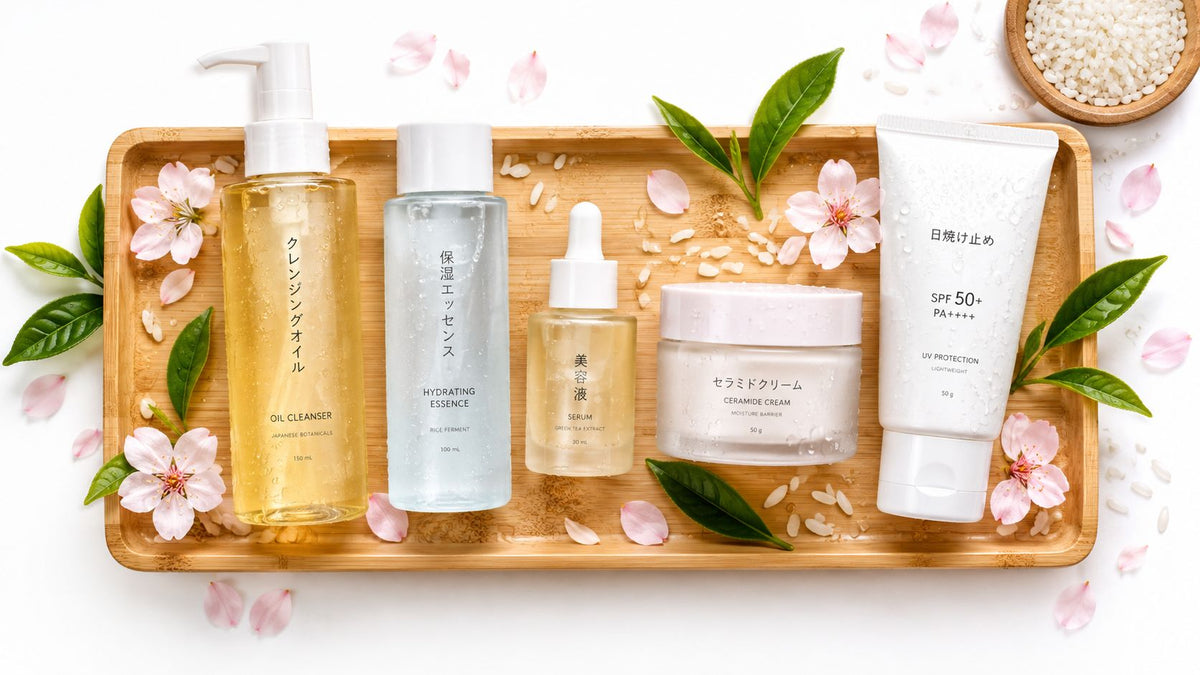
Boxed gifts are the easiest place to see this. An item like the Essential Japanese Skincare Gift Set (Cleanser, Lotion & Cream) is packed individually and placed in a premium traditional style gift box, so it lines up neatly with the box method instead of asking for a more complicated shape match. For shoppers, that means less guesswork and a cleaner result.
Is Furoshiki Actually Better for the Planet
The eco story is strongest when it's tied to reuse, not wishful thinking. One widely cited comparison says using a furoshiki instead of a 10-gram polyethylene plastic bag is said to prevent 61 grams of carbon dioxide from being emitted (Web Japan). That number makes sense in the context of a reusable wrap, but it doesn't turn every cloth into an instant climate win.
The conditions that decide the result
The cloth has to be used again and again, not just once or twice. It also needs to be durable enough to survive that reuse, and a material like cotton or linen makes more sense than something flimsy that won't last. Washing matters too, because a wrap that needs harsh laundering or constant replacement weakens the sustainability claim.
A cheap cloth that sits in a drawer after two uses doesn't deliver the same benefit. It still reduces single-use waste at the gifting moment, which is real, but the lifecycle picture gets weaker if the item isn't part of a repeat habit. That's the distinction the marketing usually skips.
Simple standard: if you wouldn't expect the cloth to get many reuses, don't call it a sustainability solution.
The strongest case for furoshiki is modest and practical. It avoids a single disposable bag or sheet of paper, it can be used repeatedly, and it turns packaging into something the recipient might keep. That's a real improvement, just not a magical one.
Wrapping Your Next Gift With Furoshiki
Start with the shape, not the pattern. Pick a cloth that fits the object, anchor any narrow point before you tighten, and finish with a knot instead of tape. Then reuse the cloth enough times that the eco case holds up.
A short checklist to keep nearby
- Match the geometry: boxes want a square wrap, bottles want neck control, and irregular gifts need a sling-like hold.
- Check the slack: tighten only after the fabric lies flat, so the knot stays stable and the package doesn't bulge.
- Choose the right gift type: boxed Japanese assortments are especially easy to wrap, including ready-to-give sets from Gift Me Japan's Japanese gift set collection.
- Reuse the cloth: the sustainability argument gets stronger each time the wrap comes back out of the drawer.
The tradition has always been about usefulness first. The same cloth that once protected temple objects in Japan now works on birthday gifts, care packages, and bottles at the dinner table. That continuity is part of the appeal, because it makes the wrap feel earned rather than decorative for its own sake.
You don't need perfect technique to begin. You need a square of cloth, a gift worth wrapping carefully, and one calm attempt at the first knot.
If you want ready-to-wrap Japanese gifts that pair naturally with cloth wrapping, browse Gift Me Japan for curated snack, skincare, and lifestyle sets sourced directly from Japan. Their boxed assortments make it easy to practice furoshiki with shapes that hold neatly and present well.
Share:
Corporate Gift Ideas Christmas: 5 Standout Picks
5 Perfect Japanese Gift Ideas for 2026