

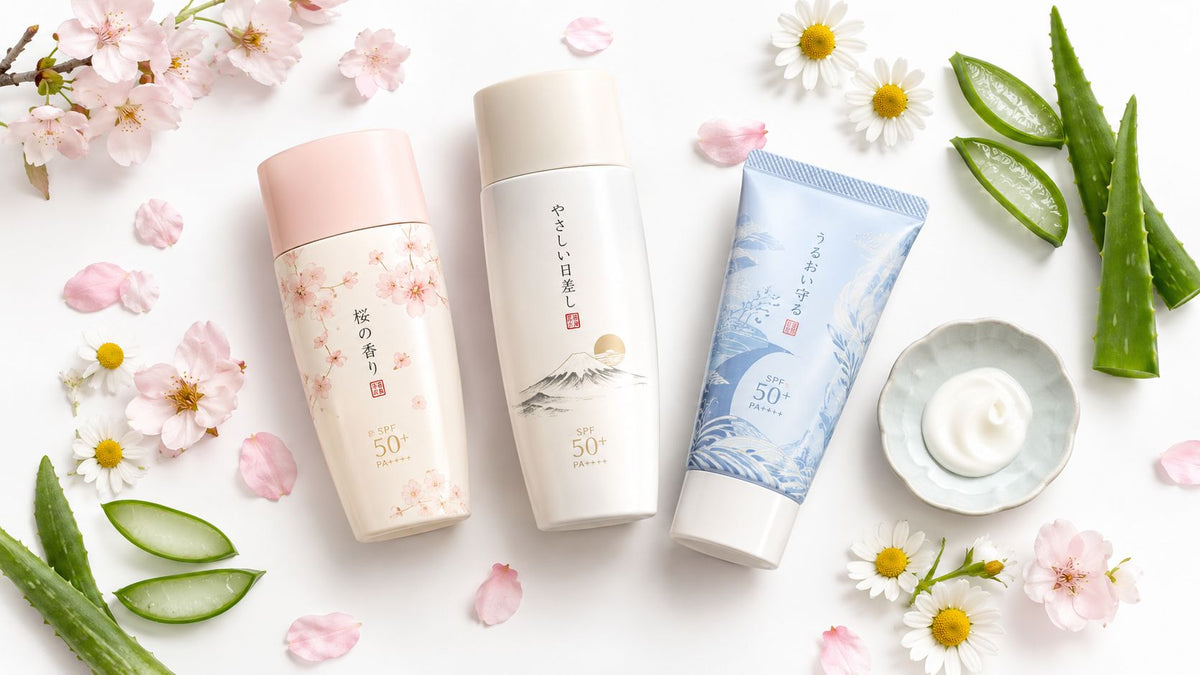
Japanese sunscreens use both SPF and the distinctive PA system, which reaches PA++++, the highest UVA rating. That combination gives shoppers separate information about UVB and UVA protection, while Japan's regulatory framework adds another layer of oversight for high-protection products.
But does a “sensitive skin” label tell you enough to choose safely, or are you still missing the details that matter most, such as fragrance, alcohol, filter type, UVA strength, and everyday wearability? For international shoppers choosing a thoughtful beauty gift, understanding those details makes Japanese sunscreen easier to select with confidence.
Why Japanese Formulas Are Different
Japanese sunscreen has earned attention not because the formulas feel light, but because the country uses a distinctive labeling and regulatory framework. Products are commonly identified with both SPF, which measures UVB protection, and PA, which measures UVA protection. That gives shoppers more information than an SPF number alone.
In Japan, sunscreens with SPF 30 or higher, or products carrying a PA++++ rating, are classified as quasi-drugs rather than ordinary cosmetics. They require pre-market approval from Japan's Ministry of Health, Labour and Welfare, as described in Japan's sunscreen market analysis. This status doesn't mean every formula suits every person, and it doesn't remove the need to inspect the ingredient list. It does, however, create a regulatory distinction that helps explain why high-protection Japanese products are often viewed as dependable daily formulas.
Oversight is useful, but it isn't a sensitivity guarantee
A high rating or quasi-drug classification doesn't prove that a sunscreen will be comfortable for your skin. Irritation can still depend on fragrance, alcohol, preservatives, UV filters, botanical extracts, and the condition of your skin barrier. Someone with easily stinging skin may tolerate a modern chemical formula well, while another person may prefer a mineral formula with fewer potential triggers.
That's why the word “mild” should be treated as a starting point, not a final decision. Look for concrete information such as fragrance-free, alcohol-free, or non-chemical, and consider whether the formula matches the recipient's known preferences. Japanese market guidance commonly highlights these features for shoppers seeking lower-irritation options, especially when the product is intended for reactive or easily uncomfortable skin.
Japan's sun-care category also has meaningful market scale. One industry estimate values Japan's sun-care products market at USD 827.97 million in 2024, while another estimates the broader sunscreen market at about USD 2.1 billion in 2023. Mineral formulas represent roughly 20% to 30% of face-sunscreen sales, according to the same market reporting, showing that mineral protection is a substantial niche rather than a fringe preference. Details are available in this Japanese sun-care market overview.
Practical rule: Treat Japanese regulatory status as helpful context, then choose according to the recipient's triggers, tolerance, and daily routine.
For readers exploring Japanese beauty as a gift, Gift Me Japan's guide to Japanese skincare products offers broader context on the category. A sunscreen gift becomes more thoughtful when the selection reflects how the recipient uses skincare, not only how impressive the label looks.
Understanding SPF and PA Ratings
The easiest way to read a Japanese sunscreen is to separate the two ratings. SPF refers mainly to UVB, the type of ultraviolet radiation strongly associated with sunburn. PA refers to UVA, which penetrates further and contributes significantly to photoaging and uneven pigmentation.
A bottle marked SPF 50+ PA++++ is communicating two separate strengths. SPF 50 blocks approximately 98% of UVB rays, while SPF 30 blocks about 97%, according to the Japanese sun-care market reference cited above. The difference is relatively small in percentage terms, so SPF should not be treated as a reason to apply less product or stay outside longer.
How to read the PA scale
Japan's PA system uses four levels:
| Label | What it communicates |
|---|---|
| PA+ | Some UVA protection |
| PA++ | Moderate UVA protection |
| PA+++ | Strong UVA protection |
| PA++++ | The highest level on the Japanese scale |
The scale is based on Persistent Pigment Darkening, or PPD, testing. It is commonly mapped as PA+ for PPD 2–4, PA++ for PPD 4–8, PA+++ for PPD 8–16, and PA++++ for PPD 16 or higher, as explained in this guide to Japanese sunscreen labels.
For ordinary commuting, errands, and time near windows, a broad-spectrum product with a strong PA rating can be a sensible daily choice. For long outdoor exposure, high UV conditions, or concerns about pigmentation, many shoppers prefer the added reassurance of PA++++, provided the formula also feels comfortable enough to apply generously and reapply.
Avoid choosing by SPF alone
A high SPF number doesn't automatically tell you how strong the UVA protection is. Two products can carry similar SPF claims while offering different UVA coverage, so read both parts of the label. Japanese labeling makes this comparison visible, which is particularly useful for sensitive-skin shoppers who want strong protection without automatically moving to a heavy-feeling formula.
The Japanese SPF 50 sunscreen guide can help readers become familiar with high-protection formats. Still, the label is only one part of the decision. Texture, filter type, fragrance, alcohol, and the expected exposure all matter.
A sunscreen is easier to use correctly when its protection is clear and its finish doesn't make you want to skip the next application.
Chemical Versus Mineral Filters
For sensitive skin, the filter system often deserves more attention than the brand name. Mineral filters, particularly zinc oxide and titanium dioxide, sit on the skin's surface and block ultraviolet radiation through reflection and scattering. Chemical filters absorb UV radiation and convert it into a small amount of heat that is released from the skin.
Mineral formulas are commonly preferred by people whose skin is prone to stinging or discomfort, including those managing rosacea-prone, eczema-prone, or post-procedure sensitivity. That preference is based on the way inorganic filters work and their generally lower likelihood of causing immediate stinging for some users. It isn't a guarantee, because any ingredient can cause an individual reaction.
Choosing between the two
| If the priority is... | Consider looking for... | Trade-off to check |
|---|---|---|
| Minimising potential stinging | Mineral filters such as zinc oxide or titanium dioxide | Possible whitening or a less fluid finish |
| A barely noticeable texture | A modern chemical or hybrid formula | Alcohol, fragrance, and individual filter tolerance |
| A simple sensitivity-focused choice | Fragrance-free and alcohol-free labeling | Fewer available textures or finishes |
| Strong UVA coverage with a light feel | A formula with a high PA rating and modern filters | The ingredient list may be more complex |
Japanese markets have access to modern filter families such as Uvinul A Plus and Tinosorb-family filters, which are valued for UVA coverage and photostability. Strong UVA performance can be combined with a lighter texture, but shoppers with reactive skin shouldn't assume that every modern-filter formula is gentle. Recent independent coverage notes that many products marketed for sensitive skin still contain alcohol, fragrance, or multiple modern filters, while only some are explicitly fragrance-free, alcohol-free, or mineral-only. This independent review of Japanese sensitive-skin sunscreens discusses that distinction.
For a clearly mineral option, Kose Sekkisei Clear Wellness Skincare UV Mild Milk SPF 50+ PA++++ 50ml is described as a non-chemical sunscreen using zinc oxide and titanium dioxide. The catalog also identifies Kogen Getto Leaf and Peony Flower extracts, tocopherol, a hypoallergenic formula, and SPF 50+ PA++++ protection. Those details make it a relevant option for someone specifically seeking a mineral, high-PA format, but patch testing remains sensible.
Research on photoprotection in Asian populations also stresses the importance of broad-spectrum UVA and visible-light protection, while noting that some chemical filters can be allergenic for children and people with sensitive skin. It also indicates that UV-absorber-free products account for under 10% of surveyed Japanese sunscreen offerings, so mineral formulas may be less common and may involve texture or whitening compromises. The photoprotection review provides useful background for weighing gentleness against wearability.
How to Patch Test Safely
Even a formula designed for sensitive skin can feel uncomfortable on one person and work well for another. Patch testing gives you a controlled way to introduce a new sunscreen before applying it across the face, neck, or areas already prone to irritation.
Use a small amount on the inner forearm, where the skin is easy to observe. Leave the area undisturbed and monitor it for 24–48 hours, following the practical approach recommended in this Japanese sunscreen guide from a pharmacist.
A careful introduction process
- Read the label first. Check for fragrance, alcohol, mineral filters, and any ingredients the recipient already knows they don't tolerate. If the label is unfamiliar, use the product information from a reputable retailer rather than guessing from the product name.
- Apply a small patch. Use enough to cover a modest area of the inner forearm, but don't spread it across a large section of skin. Keep the test separate from other new products so you can identify which formula caused a response if discomfort develops.
- Observe more than redness. Persistent itching, burning, swelling, unusual warmth, or small bumps can all be reasons to stop. A brief sensation during application may not tell the whole story, so give the area time and avoid rubbing it.
- Introduce it gradually. If the patch remains comfortable, try the sunscreen on a limited facial area before using it as your full morning sunscreen. Avoid testing a new sunscreen immediately before a long outdoor day.
Safer gifting habit: If you don't know the recipient's triggers, give clear ingredient information and encourage them to patch test rather than presenting the product as universally suitable.
The patch test doesn't prove that a formula will work during heat, perspiration, or repeated application. It reduces the uncertainty around an initial use. If someone has a history of significant reactions or is under clinical care for a skin condition, they may want professional advice before trying unfamiliar skincare.
Sensitive skin also benefits from a simple routine during testing. The beginner's Japanese skincare routine can help new users avoid introducing several unfamiliar products at once.
Building a Gentle Skincare Routine
A sunscreen can be well chosen and still feel irritating if it sits on top of a complicated morning routine. A calmer approach starts with a gentle cleanser, continues with a familiar moisturiser if needed, and finishes with sunscreen as the final skincare layer before makeup.
Consider a recipient who enjoys Japanese beauty but reacts when several products are layered together. Their morning routine might include a mild cleanse, a fragrance-free moisturiser, a short pause for the layers to settle, and then a sunscreen selected for its filter type and finish. The fewer unfamiliar variables introduced at once, the easier it is to understand what the skin accepts.
Keep the layers compatible
Choose fragrance-free and alcohol-free products underneath when those are known priorities. A rich cream beneath a fluid sunscreen may create pilling, while too many watery layers can make application uneven. The practical test is simple: apply the routine as it will be worn, then check whether the sunscreen spreads smoothly without rolling or collecting around the nose and hairline.
Reapplication matters as much as the first application, especially during outdoor exposure. A comfortable formula is more likely to fit naturally into a day that includes commuting, walking, sightseeing, or sitting near bright windows. Makeup wearers may prefer a finish that doesn't disturb foundation, but they should still focus first on even application and adequate coverage.
Match the gift to the routine
A sunscreen alone suits someone who already has a stable skincare routine and wants a targeted addition. A broader skincare gift may suit a beginner who needs a simple sequence, provided the product contents and sensitivities are known. Gift shoppers can explore ideas in the Japanese skincare gifts collection, then narrow the choice by recipient, occasion, and tolerance rather than by appearance alone.
For a birthday, thank-you gift, or care package, include a short note explaining why the product was chosen, such as its high PA rating or mineral filter approach. Don't promise that it will suit the recipient's skin, and don't assume that a gift set includes wrapping, a message card, or accessories unless the listing confirms it.
A thoughtful presentation respects both sides of skincare gifting. The recipient receives something useful and recognisably Japanese, while still having the information needed to decide whether and how to introduce it.
Curated Gift Sets for Skincare Lovers
International shoppers often face two problems at once: finding authentic Japanese products and deciding whether separate items belong together. A curated set can simplify the search by grouping products around a routine, while a single sunscreen can keep the gift focused for someone who already knows what they need.
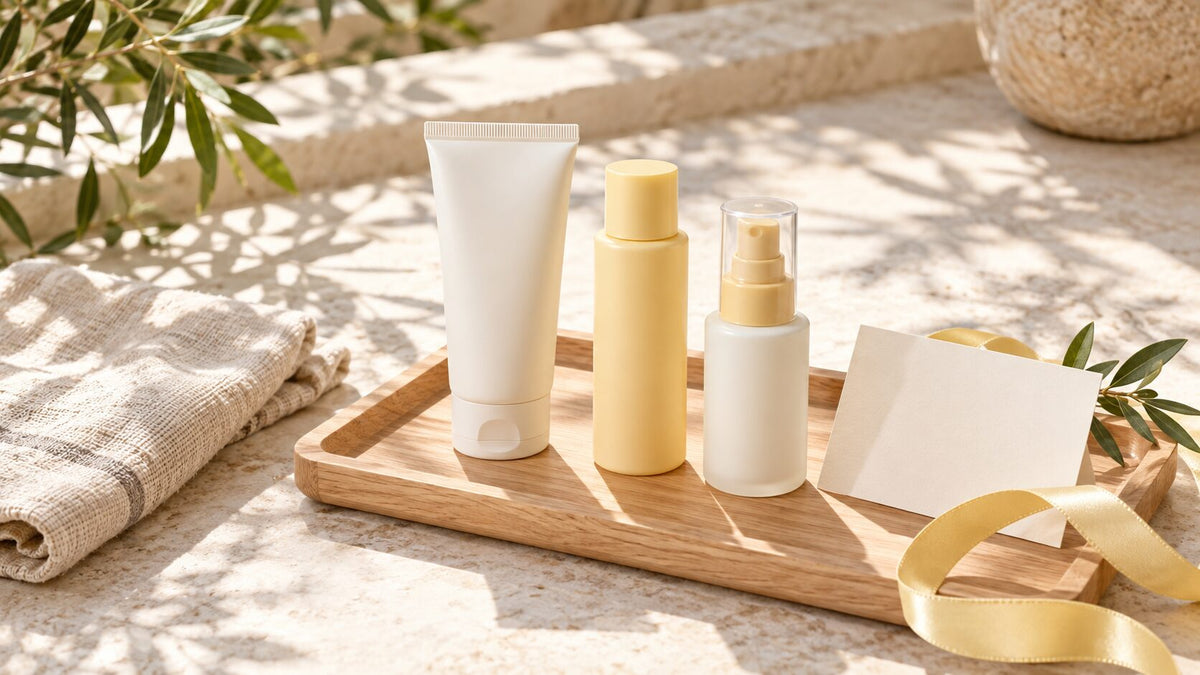
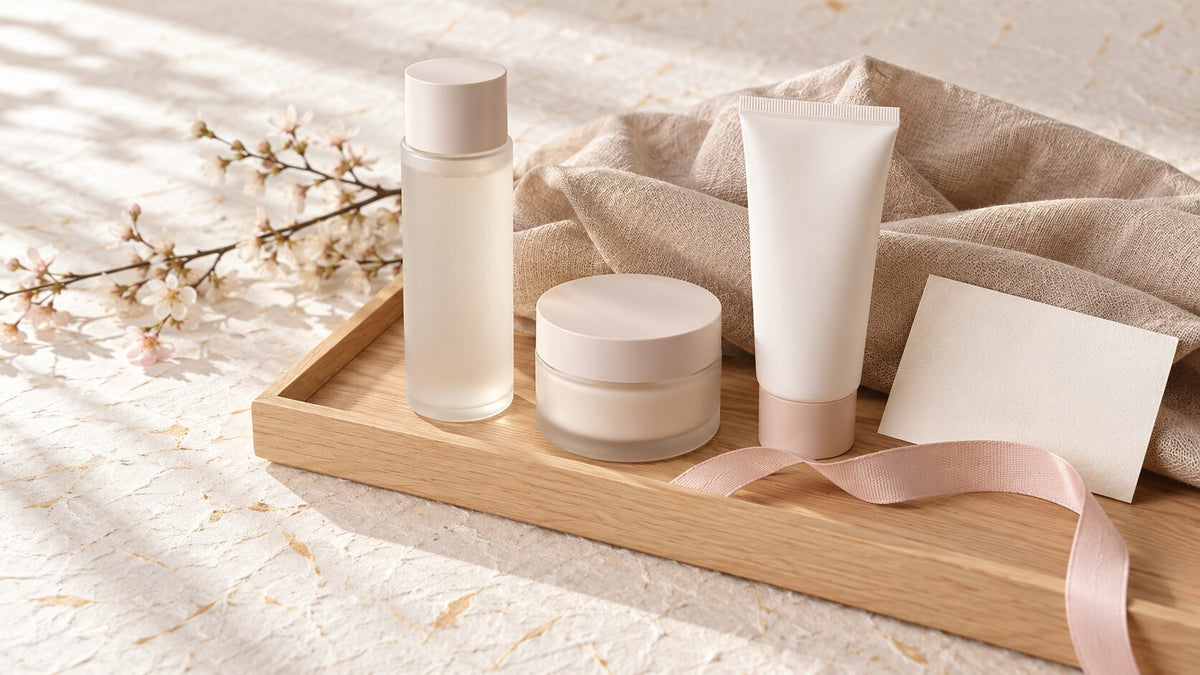
The Essential Japanese Skincare Custom Gift Set is presented around a cleanser, lotion, and cream. That combination can suit a skincare beginner, a beauty enthusiast building a simple routine, or someone celebrating a birthday, housewarming, graduation, or personal milestone. It works as a sequence because cleansing prepares the skin, lotion adds a light skincare step, and cream provides a moisturising finish. The set isn't a sunscreen substitute, so a recipient seeking daily UV protection may need to choose sunscreen separately.
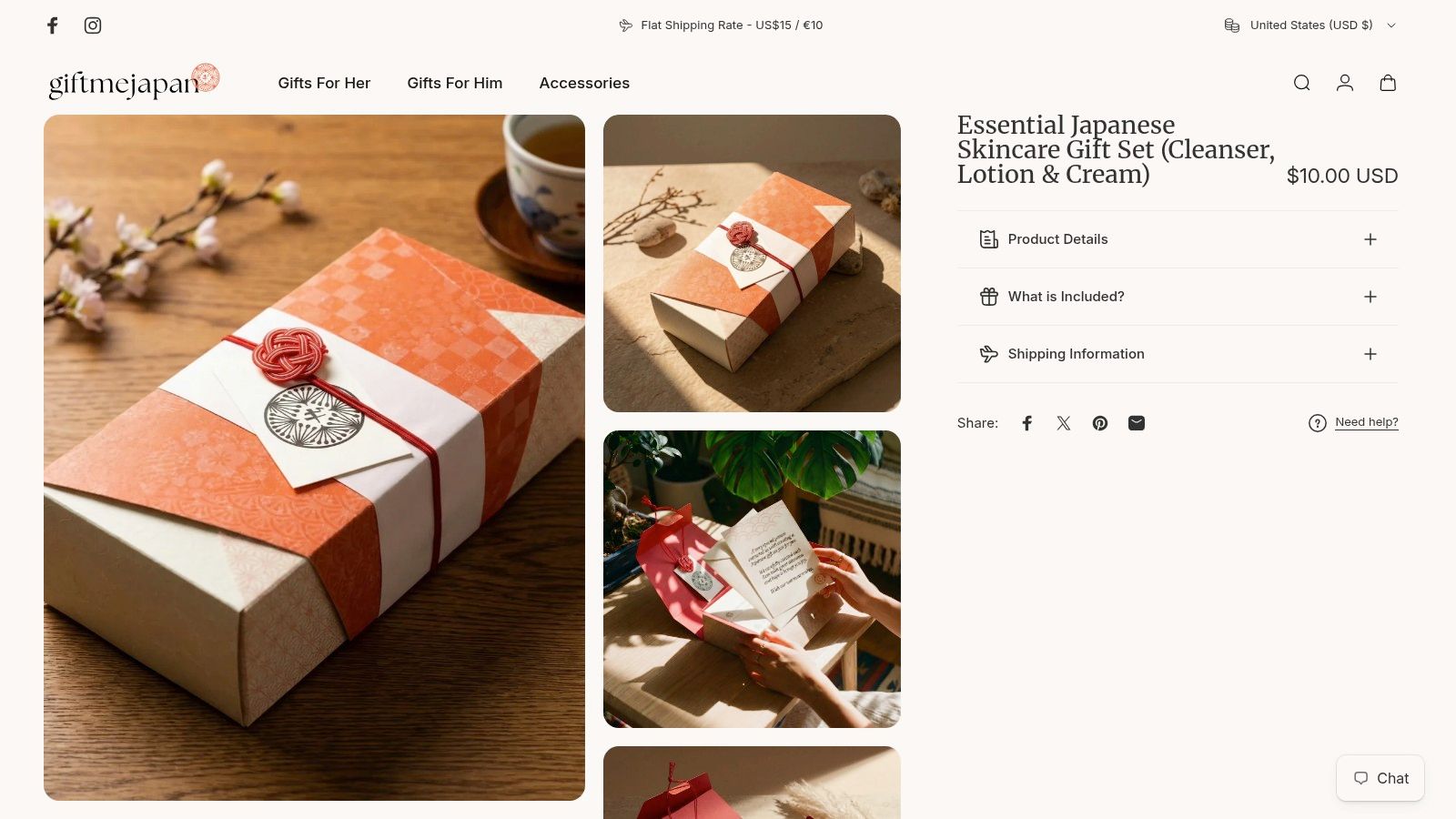
Before selecting a skincare gift, check whether the recipient prefers fragrance-free products, mineral filters, lighter textures, or a more moisturising finish. If you don't know their sensitivities, a curated set with clearly listed contents can be paired with a note encouraging patch testing, rather than being described as suitable for every skin type.
Gift Me Japan presents curated Japanese gift sets and products sourced directly from Japan, bringing together beauty, skincare, lifestyle items, and Japanese snacks for international shoppers. Its Japanese gift set guide can help you think through the recipient and occasion before choosing a complete set or an individual beauty item.
For shoppers who want to understand the gifting experience and presentation, this video offers additional context:
The main decision is straightforward. Choose the PA rating for the UVA needs, check the SPF for UVB protection, inspect sensitivity-related ingredients, and match the texture to the recipient's routine. Japanese sunscreen for sensitive skin can make a practical and meaningful beauty gift when the selection is based on real preferences rather than a broad “mild” label.
Gift Me Japan offers curated Japanese gift sets and individual products that bring together skincare, beauty, lifestyle goods, and snacks sourced directly from Japan. Explore Gift Me Japan to find a thoughtful Japanese skincare gift that matches your recipient's routine, interests, and occasion.
Share:
Best Japanese Sunscreen SPF 50: A Gifting Guide