

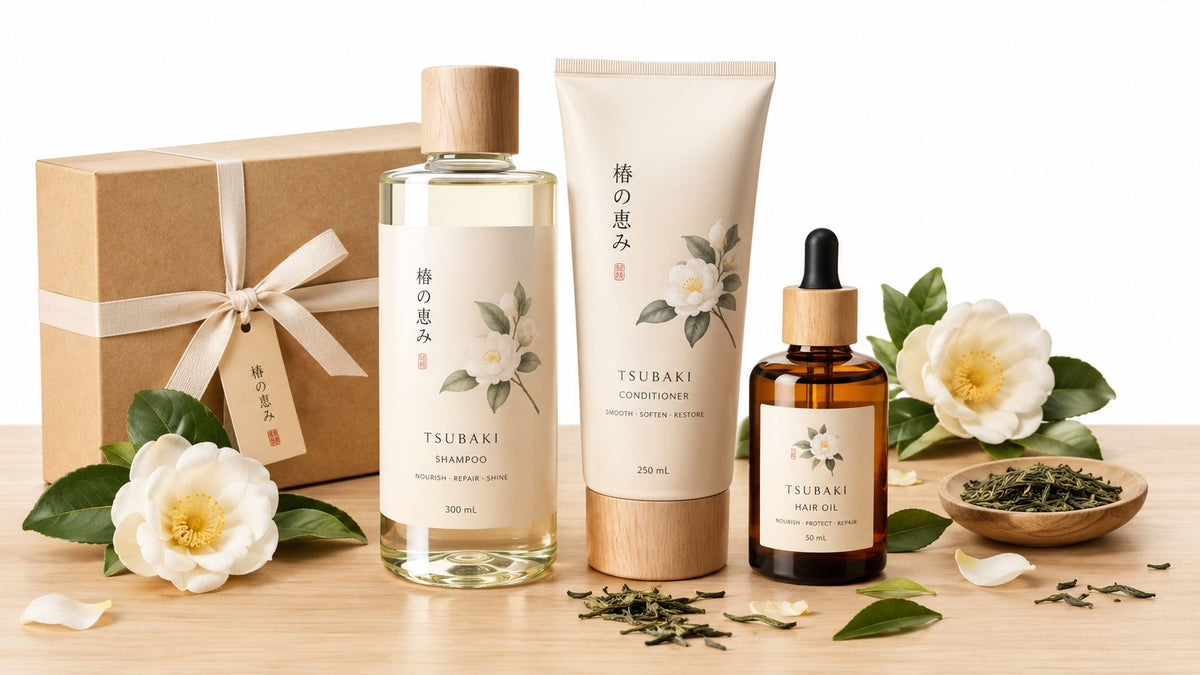
You want to send a Japanese beauty gift that feels thoughtful, useful, and genuinely authentic. But a quick search can leave you facing unfamiliar product names, translated labels, different haircare routines, and strong claims that are difficult to evaluate from another country.
The best Japanese haircare products aren't necessarily the most popular or beautifully packaged. The better choice depends on the recipient's scalp, hair texture, styling habits, sensitivities, and preferences. Once you understand how shampoo cleanses, how conditioner reduces friction, and how labeling helps you check a formula, choosing a meaningful gift becomes much easier.
Introduction to Thoughtful Japanese Haircare Gifting
A recipient with bleached hair may appreciate a very different gift from someone with an oily scalp. A frequent traveler might prefer a compact, coordinated routine, while someone with fragrance sensitivity may need a carefully checked formula. These differences matter more than whether a product is marketed toward women or men.
Japanese haircare is appealing for gifting because it brings together daily practicality, refined presentation, and specialized product categories. Shampoos, conditioners, masks, scalp products, oils, and styling items can each serve a distinct role. That variety lets you build a gift around a real routine rather than sending a decorative item that may sit unused.
The phrase “best Japanese haircare products” should therefore be treated as a selection question, not a ranking. The right product is the one that matches the recipient's concern without making promises that a cosmetic formula can't support.
A useful gifting rule: choose for the recipient's routine first, then consider scent, packaging, and the story behind the product.
Authenticity also deserves attention. International shoppers may need to compare Japanese ingredient labels, translated descriptions, usage directions, and product claims before purchasing. A product sourced from Japan can be a meaningful gift, but its suitability still depends on the individual recipient.
This guide focuses on the practical decisions behind Japanese haircare gifting. You'll learn how to assess cleansing systems, understand conditioning ingredients, match products with hair concerns, check safety information, and evaluate whether a set contains complementary items.
Why Japanese Haircare Stands Out Globally
Japanese haircare has relevance beyond its domestic market. A 2021 to 2026 industry outlook estimated Japan's haircare market at approximately US$1.25 billion by 2026, while reporting average annual demand growth of 2.6% since 1993 and supply growth of 14.6% over the same period. The same Japanese haircare market outlook placed Japan sixth globally for demand and eleventh for supply in 2021.
Those figures describe both sides of the category. Japan has substantial domestic interest in haircare, but it also has established manufacturing and supply capabilities. That makes Japanese shampoo, conditioner, treatment, scalp-care, and hair-color products relevant to international shoppers looking for gifts with a clear country-of-origin story.
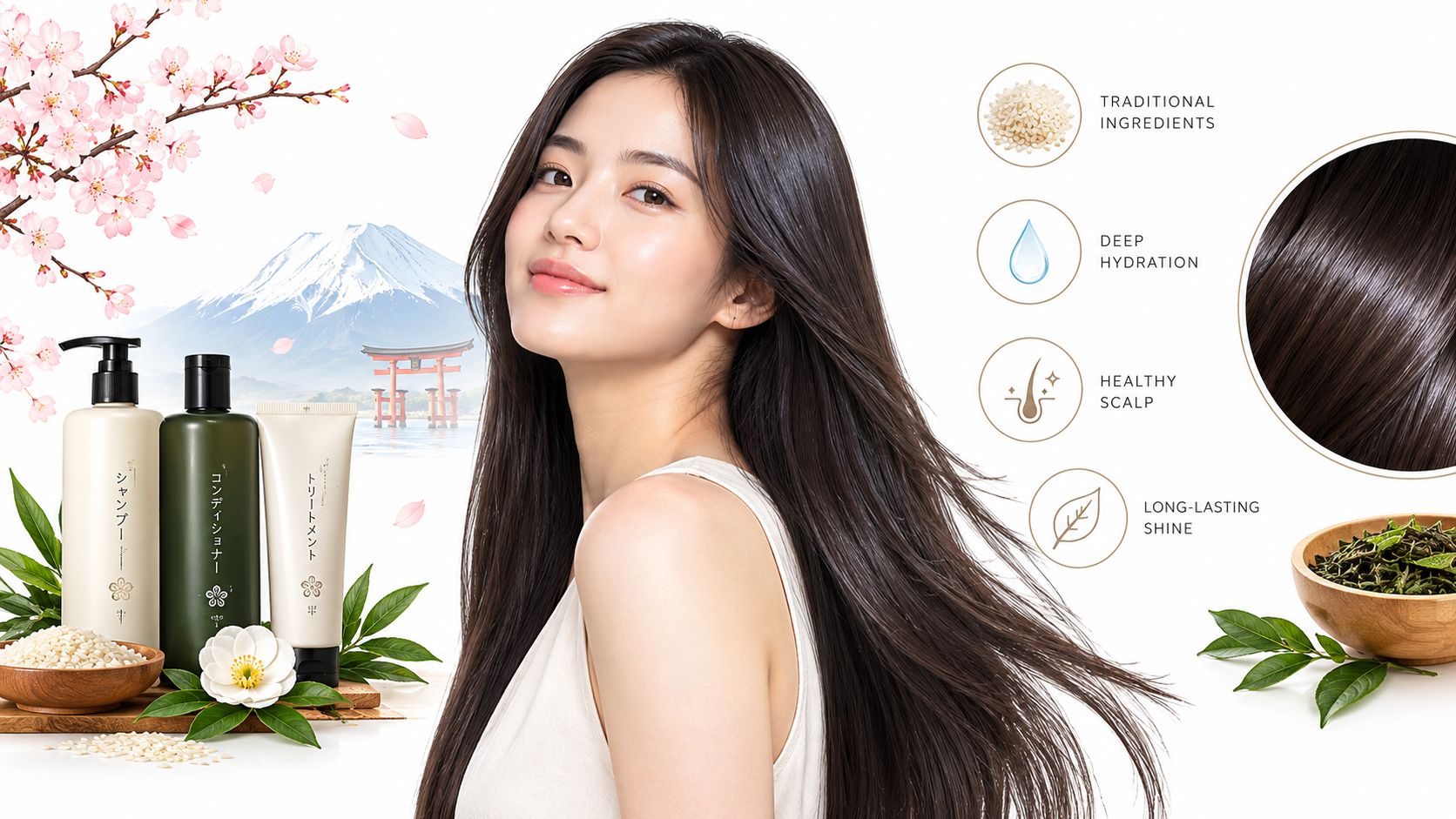
Export strength and product specialization
International trade adds context. Japanese haircare imports were projected to rise from US$530.6 million in 2021 to US$575.3 million in 2026, while exports were forecast to increase from US$543.9 million to US$671.1 million in the same outlook. These projections suggest a category with international movement rather than a purely local niche.
The wider J-Beauty economy has also expanded. One market summary citing Japan's Ministry of Economy, Trade and Industry reported that Japanese cosmetics exports reached ¥646.6 billion in 2023, compared with ¥285.1 billion in 2018, and identified haircare as the second-largest revenue pillar within J-Beauty. The J-Beauty market summary associates this strength with areas such as damage repair and scalp care.
For a gift buyer, the practical conclusion is simple. Look beyond attractive packaging and select products with a defined use case, transparent sourcing, and a formula that suits the recipient. Japanese haircare's global reputation provides useful context, but it doesn't remove the need for individual compatibility.
Readers exploring other Japanese beauty categories can also compare this approach with the guide to the best Japanese skincare products, where matching the product to the recipient remains just as important.
Understanding Key Ingredients and Formulation Philosophy
A shampoo's country of origin tells you less about its daily suitability than its surfactant system. Surfactants lift oil, residue, and environmental buildup from the scalp and hair, but stronger anionic systems can also remove surface lipids and affect keratin when washing and mechanical scrubbing are repeated.
That doesn't make every anionic surfactant unsuitable. It means you should consider the complete formula, how often the recipient washes, and where the shampoo is applied.
Start with the cleansing system
For dry, colored, or chemically treated hair, a daily-use shampoo may be more comfortable when it combines milder amphoteric or nonionic co-surfactants with conditioning polymers rather than relying only on aggressive cleansing. The outer hair surface can become more negatively charged as protective material is removed, which increases friction between fibers and encourages tangling and frizz. This technical review of shampoo and hair-fiber damage explains why the washing process matters as much as the label claim.
Apply shampoo mainly to the scalp and let the lather move through the lengths during rinsing. Someone with an oily scalp may prefer stronger cleansing periodically, but conditioning the lengths helps limit the cumulative effects of lipid and protein loss.
“Sulfate-free” alone doesn't prove that a formula is gentler or more effective. Total surfactant concentration, pH, contact time, and vigorous rubbing all influence the experience.
Understand what conditioner can and can't do
The most useful performance question for a conditioner or treatment mask is often wet-combing friction, especially when hair has been bleached or exposed to heat. Chemical damage creates irregular, more polar areas on the cuticle. Cationic surfactants and polymers can attach to those negatively charged regions and create a lubricating layer.
That layer can make detangling easier and improve softness, but it doesn't rebuild the internal keratin structure. Research using molecular simulation and atomic-force microscopy found that cationic treatment can bring friction on bleached hair closer to virgin-hair levels, while commercial conditioner adsorption produced comparable friction reduction. The research on conditioning damaged hair supports a careful interpretation of “repair” claims.
For a recipient with long, colored, textured, or fragile hair, a rinse-out conditioner after shampoo is usually a more useful gift choice than a second cleansing product. Concentrate it from the mid-lengths to the ends, where friction and cuticle damage are often most noticeable. A richer mask may suit hair affected by bleaching or frequent heat styling.
You can find more practical background in this guide to Japanese hair conditioners.
How to Choose Products by Hair Type and Concern
The recipient's scalp and hair length may need different solutions. Shampoo works mainly at the scalp, while conditioner, masks, oils, and leave-in treatments are generally selected for the lengths and ends. Treating them as one problem leads to mismatched gifts.
| Recipient concern | More suitable product direction | Selection caution |
|---|---|---|
| Oily scalp or buildup | A cleanser designed to remove sebum and residue | Avoid scrubbing the lengths aggressively |
| Dry or frizzy hair | Mild cleansing paired with conditioning support | A strong cleanser alone may leave the lengths uncomfortable |
| Sensitive scalp | Low-irritation, lightly scented, or unscented options | Check the full ingredient list and patch test |
| Color-treated hair | Gentle cleansing and friction-reducing conditioner | Don't assume “color care” guarantees color retention |
| Bleached or heat-damaged hair | Conditioner, mask, or leave-in product for manageability | “Repair” usually refers to surface effects, not regeneration |
| Thinning concerns | Scalp-focused grooming with modest cosmetic claims | A cosmetic shampoo doesn't treat hereditary hair loss |
Match the scalp first
An oily scalp may benefit from a cleanser that handles sebum and buildup, while dry or sensitive skin may call for less aggressive washing. A shampoo can improve the feeling of cleanliness without treating a scalp disease, and a scalp product shouldn't automatically be presented as a solution for follicle-level thinning.
Market commentary points to stronger interest in scalp health, hair aging, thinning, damage prevention, mild formulations, amino-acid cleansers, and probiotic-inspired ingredients. The important distinction is that ingredient positioning isn't proof of superior efficacy. “Natural,” “fermented,” and “amino-acid” descriptions still need to be considered alongside the full formula and the recipient's history.
Treat the lengths separately
Bleached, porous, or heat-styled lengths usually benefit more from reduced friction than from repeated deep cleansing. A conditioner or mask can support smoother combing and a softer feel, while an oil or serum can be reserved for the ends when the recipient wants a polished finish.
For a recipient whose preferences you know well, a coordinated cleanser and conditioner is often more useful than several products that duplicate the same step. If you're choosing for someone whose routine is unfamiliar, a lightly scented or fragrance-conscious set may be less risky than a highly perfumed assortment.
Haircare gifts can also sit naturally within broader grooming collections. For ideas that avoid rigid gender assumptions, explore Japanese grooming gift sets for men and focus on the recipient's routine, travel habits, and preferred level of maintenance.
Safety, Regulations, and Authenticity Checks
A Japanese product can comply with its home-market rules and still be unsuitable for a particular recipient. Allergies and irritation are individual responses, so international shoppers should treat labeling as a starting point for informed selection, not as a universal guarantee of safety.
Japanese cosmetic labels generally list ingredient names in Japanese and in descending order by quantity. Required packaging information includes the product name, responsible marketing holder, batch or lot number, net content, and relevant precautions. These details give gift buyers a way to compare the actual product rather than relying only on translated front-label language. The European-Japan Centre guide to Japanese cosmetics explains these labeling expectations.
Read claims with care
Japanese cosmetics are limited to 56 designated efficacy expressions, while stronger treatment-oriented claims may require a quasi-drug route or additional approval. Ordinary cosmetics may be described as cleansing, conditioning, smoothing, or improving manageability, but those descriptions shouldn't be expanded into promises of hair regrowth, disease treatment, or permanent repair.
A quasi-drug is a distinct regulatory category with approved active ingredients and permitted claims. Translated marketing can make a cosmetic description sound more medical than the original wording, so check the product category and avoid gifting a cosmetic as though it were professional treatment.
Check formula and exposure
Japanese standards control the substances used in cosmetic formulations. The Ministry of Health, Labour and Welfare states that cosmetic ingredients and impurities must not create an infection risk or otherwise make use hazardous. It also specifies that preservatives and UV absorbers must come from the relevant listed substances, and sets a glycerin specification of less than 0.1 grams of diethylene glycol per 100 grams. These details appear in the MHLW cosmetic standards.
Hair dyes, lotions, and shampoos have been identified among common causes of allergic contact dermatitis in a Japanese cosmetics study. A review also reported cysteamine hydrochloride allergy in 13.5% of tested patients, including occupationally and non-occupationally exposed people, as described in this Japanese cosmetics safety study.
Patch testing is sensible for unfamiliar products, particularly dyes, leave-on treatments, and formulas with fragrance. Ask the recipient about known sensitivities when possible, and encourage them to check the current packaging before use. For broader guidance on verifying origin and presentation, see how to find authentic Japanese gifts online.
Curated Gift Sets for Every Recipient
A useful haircare set should combine different functions rather than repeat one step. A cleanser removes sebum, styling residue, and environmental buildup. A rinse-out conditioner or mask follows cleansing to improve softness and manageability, while a leave-in oil or serum can be used on the lengths and ends for a smoother finish.
This structure gives the recipient a complete routine without requiring the gift buyer to select unrelated items. It also makes the set easier to evaluate because each product has a clear role.
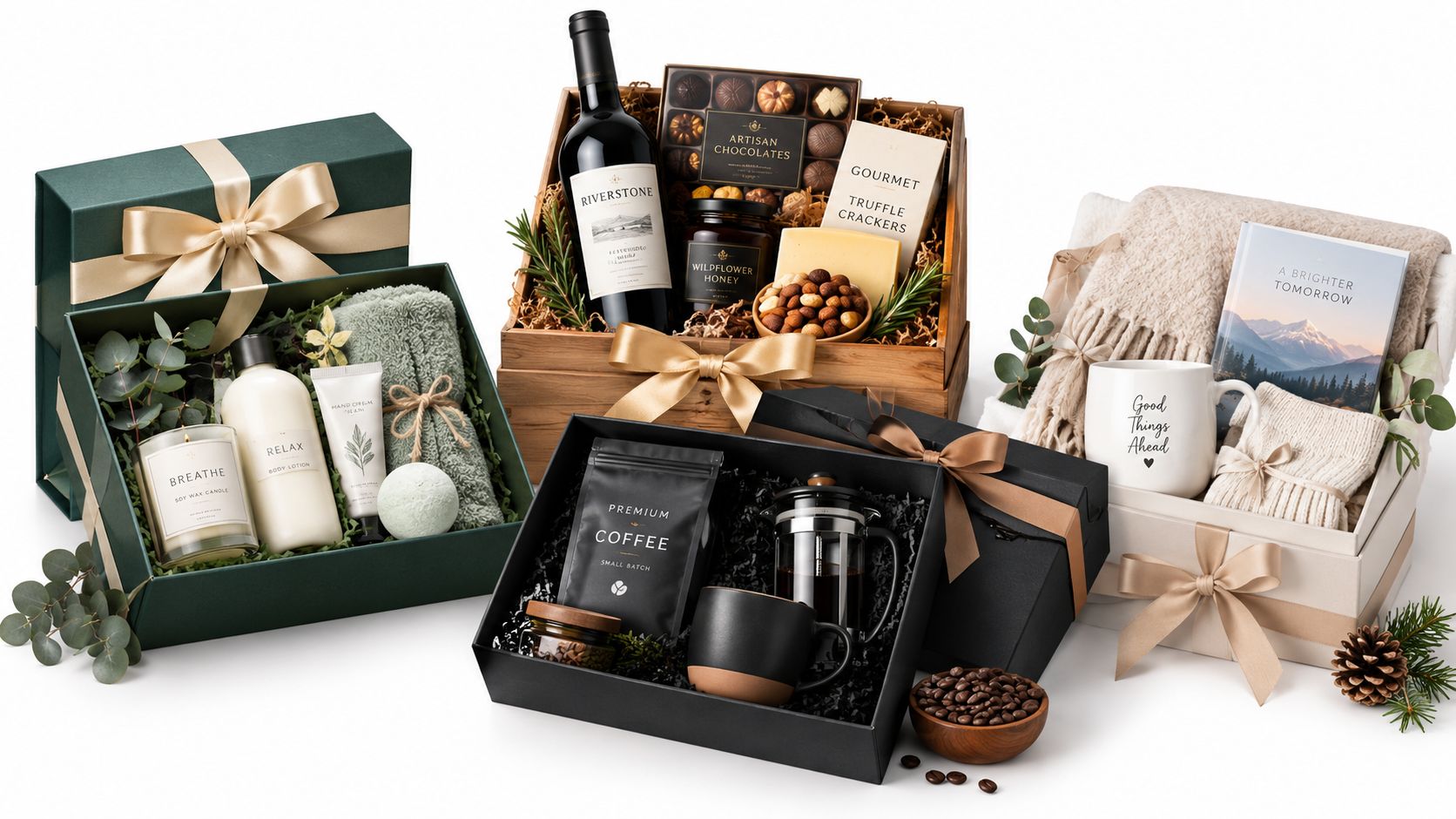
Build around the recipient
A coordinated assortment can suit several occasions and interests:
- For a frequent traveler: Choose a compact combination with complementary steps, after confirming the exact sizes and contents shown on the product page.
- For a Japanese beauty enthusiast: Look for a set with a distinctive scent or a clearly explained traditional ingredient story, provided the recipient enjoys fragranced products.
- For someone with dry or damaged hair: Favor a cleanser plus conditioner or treatment rather than multiple shampoos.
- For fragrance sensitivity: Check whether the formula is unscented or lightly scented, and don't assume either option without verified product information.
- For birthdays, thank-you gifts, holiday exchanges, or corporate gifting: A ready-made assortment can simplify selection while still feeling considered.
The recipient's preferences matter more than gender. Someone may want a simple daily routine, a richer treatment ritual, or a portable option for travel. Packaging, gift wrapping, message cards, and accessories should never be assumed unless the listing explicitly shows or states that they are included.
Verify every component
Japanese cosmetic packaging identifies ingredients, net content, the responsible seller, and precautions, which helps you check whether a set really contains a shampoo, conditioner, mask, oil, or leave-in treatment. The Japanese gift set guidance supports comparing each item's function before purchase.
For a broader assortment of coordinated Japanese presents, browse Japanese gift set ideas. Confirm the current variant, quantities, sizes, and packaging at the time of ordering, since those details can change.
Conclusion and Final Gifting Tips
Choosing the best Japanese haircare products for a gift doesn't require memorizing every brand or ingredient. Start with the recipient's scalp condition, then consider the needs of the lengths and ends. A mild cleanser, a friction-reducing conditioner, or a targeted treatment can be more thoughtful than a prestigious product that doesn't fit the recipient's routine.
Before ordering, check the complete ingredient list, usage directions, product category, scent profile, and exact set contents. For sensitive recipients, patch testing and a conversation about known allergies are more valuable than relying on broad claims such as “natural” or “repairing.”
A good set should feel coherent. Shampoo should have a cleansing role, conditioner or mask should support manageability, and an oil or serum should be reserved for the finish when appropriate. That small amount of functional planning turns a Japanese beauty item into a personal gift that the recipient can understand and use.
If you know very little about the recipient's hair, choose a modest routine with clearly described cosmetic benefits rather than making a treatment promise. If you know their habits well, you can select a more specific assortment for travel, damage care, scalp comfort, or a relaxing self-care ritual.
Gift Me Japan offers carefully curated Japanese gift sets that bring together beauty, skincare, lifestyle products, and Japanese snacks sourced directly from Japan. Explore Gift Me Japan to find a thoughtfully selected set that matches your recipient's routine, interests, and occasion.

Share:
Japanese Beauty Gift Set Ideas for Every Recipient