

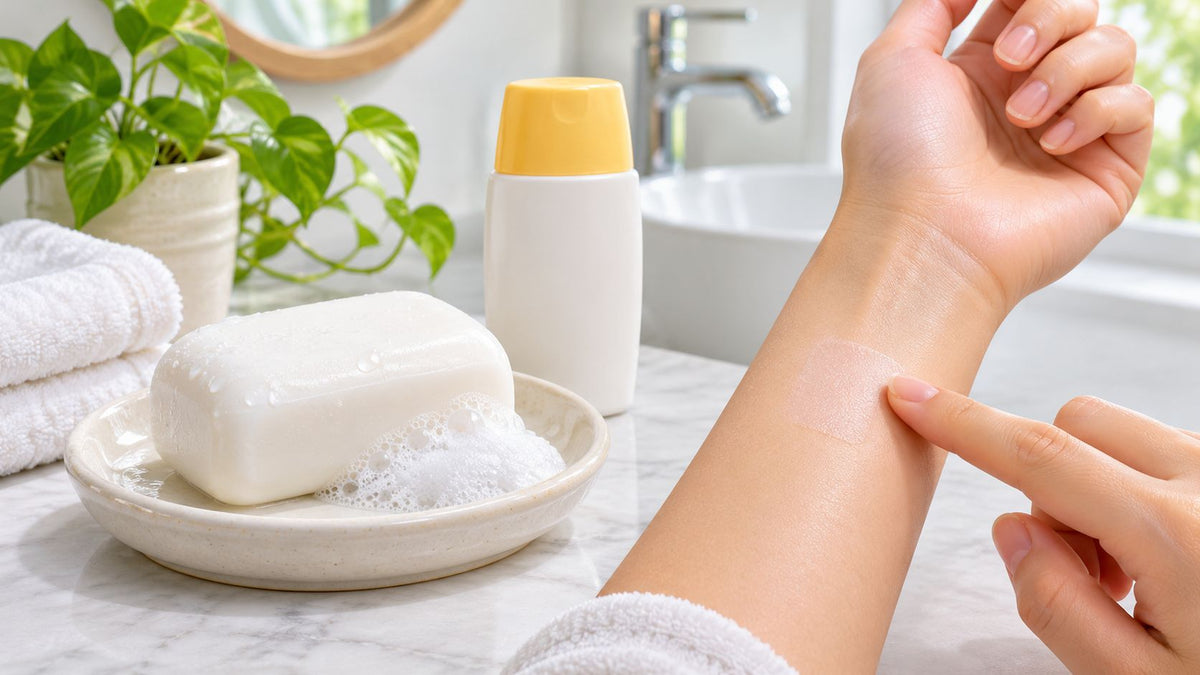
For a product that gets rinsed off in under a minute, white kojic acid soap attracts a surprising amount of confident instruction. The most repeated tip is to lather it up, leave the foam sitting on a dark patch for five or ten minutes, and let the kojic acid "get to work." That advice is backwards, and it's the fastest route to irritated skin and a patch that ends up looking darker than before.
A bar cleanser isn't a serum with a shorter name. Judging one comes down to contact time, disclosed concentration and what the label says, and none of those are settled by the word white on the front of the box.
The word describes a goal rather than an outcome. What you're buying is a rinse-off cleanser that may contain an ingredient aimed at the pigment pathway, and the honest question is whether it stays on your skin long enough to matter.
What White Kojic Acid Soap Is and Where Its Ingredient Comes From
White kojic acid soap is a rinse-off bar cleanser that lists kojic acid among its ingredients, usually sold with the suggestion that it helps even out the look of skin tone. Everything past that definition is formulation, and formulation is where most marketing claims stop being useful.
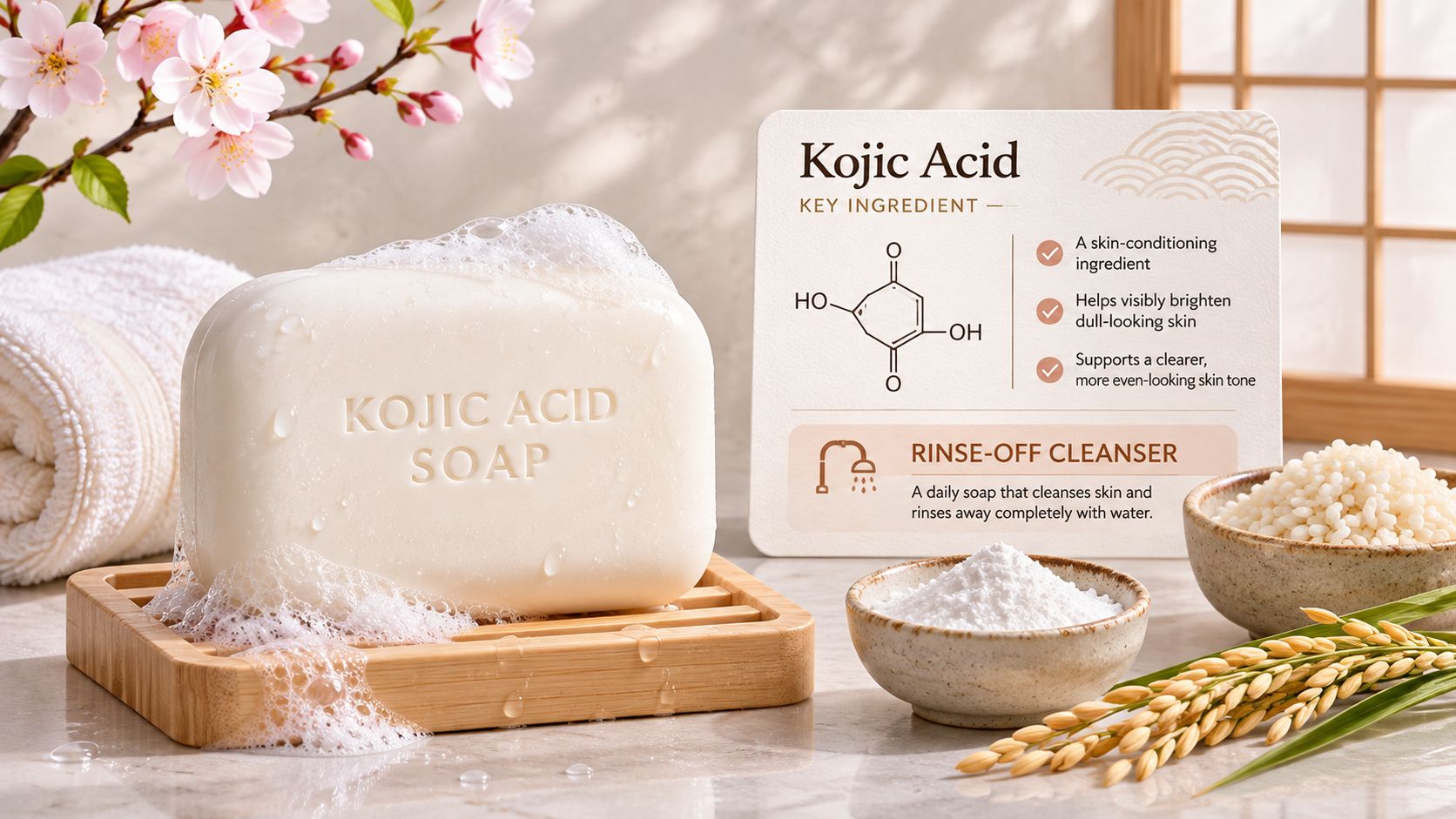
Kojic acid has a documented industrial history in Japan, where it was commercially used as a food additive before it became established in cosmetic skin-lightening products, as the European safety review of kojic acid sets out. European reviewers describe it as a substance used commercially in Japan for many years, and they assess it as slightly photoirritative but not photosensitising. The route from food production into skincare ran through chemistry rather than marketing: the compound inhibits oxidase enzymes involved in melanin formation, the pigment behind much of the visible colour in skin and a good share of what reads as hyperpigmentation.
Think of melanin production as a line of stations. Kojic acid slows one station, so less new pigment comes off the end of the line. It doesn't reach back and erase pigment already sitting in the skin. That distinction matters most for a bar, because the bar is gone before the slowdown gets much time to happen.
Regulators assess leave-on creams and face or hand products far more often than they assess soap, which is why a bar can't be treated as equivalent to a tested leave-on formulation. Without a full ingredient declaration or laboratory testing, its total concentration may not be publicly verifiable at all.
Three things you can check on any package:
- Kojic acid named in the ingredient list, not only in the product name on the front.
- A claim limited to brightening or evening tone, rather than permanent whitening.
- A stated concentration, or at minimum a market whose rules the product was made for.
If you're assembling a routine around Japanese products, this guide to Japanese skincare products worth building a routine around shows where a brightening cleanser fits alongside sunscreen and moisturiser.
How Kojic Acid Works, Realistic Results and Common Myths
A shopper buys a bar for a dark patch on the cheek, lathers it before bed, leaves the foam for five minutes because a video said to, and expects the patch gone in two weeks. By day fourteen the patch is still there and the surrounding skin is pink. Nothing has failed except the expectation, which came from leave-on creams and was carried across to a soap without anyone checking whether that was reasonable.
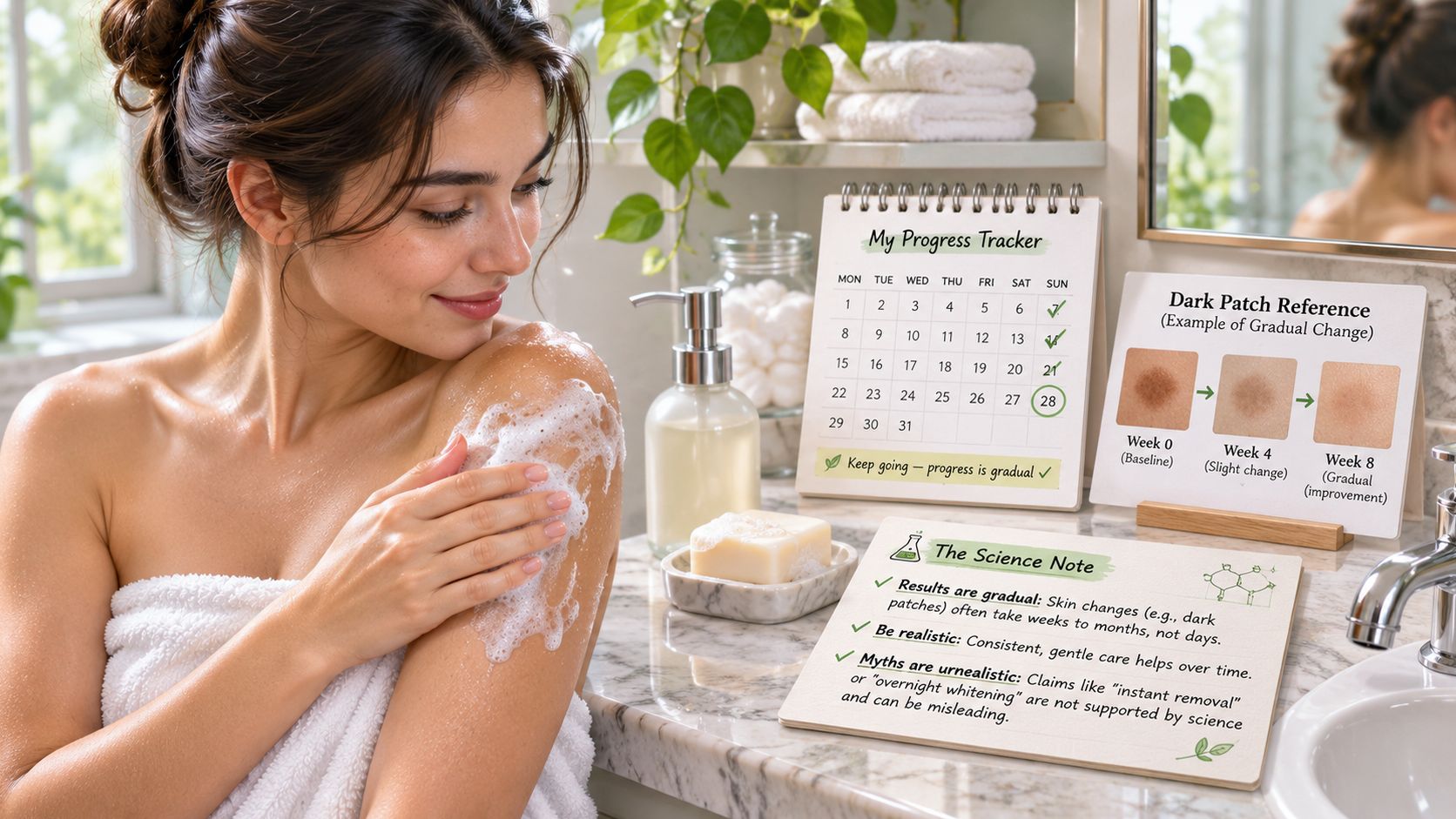
Kojic acid is a tyrosinase-inhibiting skin-brightening agent, which is a technical way of saying it suppresses a key copper-dependent enzyme required for melanin synthesis. The practical effect is reduced formation of new pigment. Existing discoloration clears on the skin's own schedule, and no amount of lather changes that schedule.
What the Clinical Numbers Show
The evidence base is real, and it's narrower than product pages imply.
| Reference | Concentration | Duration | Reported finding |
|---|---|---|---|
| Kojic acid clinical trial | 1% | Not specified in the cited report | Benefit reported for melasma, post-inflammatory hyperpigmentation, age spots and freckles |
| Kojic acid compared with hydroquinone | 0.75% kojic acid vs 4% hydroquinone | 12 weeks | Hydroquinone gave a faster and generally stronger response |
| Rinse-off white kojic acid soap | Rarely disclosed on the pack | Brief contact, rinsed away | Gradual tone-evening; cream-level results shouldn't be expected |
Clinical evidence supports efficacy in hyperpigmentation conditions including melasma, age spots, freckles and post-inflammatory hyperpigmentation, and a 1% kojic acid formulation demonstrated benefit in a clinical trial, as the published review of kojic acid efficacy reports. The same review notes that 4% hydroquinone produced a faster and generally stronger response than 0.75% kojic acid over 12 weeks. Read that comparison carefully: it set a prescription-strength bleaching agent against a low-strength kojic acid preparation, and both stayed on the skin.
For a rinse-off bar, contact time is substantially shorter than with a leave-on cream, so the achievable target is gradual tone-evening rather than cream-level performance. Allure's reporting on how kojic acid behaves in skincare makes the same point from the other direction: the ingredient may need meaningful skin contact and penetration to work, and wash-off bars vary widely in concentration and effectiveness.
A cleanser is one step in a sequence, and a beginner's Japanese skincare routine shows where it belongs before you start layering actives.
Four Myths That Cost People Results
- Longer contact means better results. Ten minutes of foam doesn't push more kojic acid into the skin. It raises the odds of irritation, and irritated skin can produce more post-inflammatory pigment than it started with.
- White means a permanent change of colour. No cleanser rewrites your baseline skin tone. The achievable goal is less excess pigment and a more even look over months.
- Japanese origin guarantees safety. Origin tells you where a product was made. It says nothing about the concentration, the other ingredients, or which market's rules the bar meets.
- One ingredient handles every kind of pigmentation. A post-acne mark, a melasma patch, friction darkening and sun damage don't share a trigger or a response. A cleanser can't fix a cause it never touches.
Track progress with one photo of one target area, taken in the same light every three or four weeks. Compare across months, not days.
Judge a bar over a quarter, not a fortnight. Pigment clears on its own schedule, and a cleanser supports that process rather than forcing it.
Daily broad-spectrum sunscreen stays in the routine regardless, because ultraviolet exposure keeps stimulating melanin production and kojic-acid-treated skin may be more prone to irritation and sunburn. The video below walks through how the steps fit together.
Kojic Acid Limits and Status Across Markets
A percentage limit is meaningful only for the product types and markets it covers. The rules below show why a rinse-off bar's label matters as much as the word “white.”
| Market | Kojic acid reference | Status or history | What it means for a bar of soap |
|---|---|---|---|
| European Union | Up to 1% in face and hand products | A 2024 restriction followed a Scientific Committee on Consumer Safety review; potential risks were identified above 1% | Bar concentration may not be publicly verifiable; check the label |
| Japan | Approved in 1988 for quasi-drug products | Suppliers were asked to delay products in March 2003; kojic acid was accepted as safe after re-evaluation in November 2005 | Quasi-drug status applies to specific products, not every cosmetic |
| United States | No kojic acid concentration limit; lightening claims can be treated as drug claims | The Cosmetic Ingredient Review flags the drug-claim question | Treat claims to lighten skin with caution |
| United States, mercury | Mercury is banned in skin-lightening products | Mercury-containing skin-bleaching preparations have questionable effectiveness and recognised hazards | Any mercury in the ingredients is a reason not to buy |
The European Union provides a clear current benchmark. A restriction adopted in 2024, following a review by the Scientific Committee on Consumer Safety, allows kojic acid as a cosmetic skin-lightening agent at concentrations up to 1% in face and hand products. It also identifies potential health risks above that level, according to the EU regulation restricting kojic acid.
The Commission's safety summary notes concern about possible endocrine-disrupting properties. It also warns that a weakened skin barrier, such as after a peeling treatment, may increase absorption through the skin. An earlier assessment considered a lower combined-use example, but the 2022 opinion and 2024 regulation set the current 1% benchmark for specified cosmetic use.
Japan's regulatory history follows a different path. The Ministry of Health, Labour and Welfare approved kojic acid in 1988, after which companies developed proprietary quasi-drug products containing it, according to a review of kojic acid's Japanese regulatory history. In March 2003, the ministry asked suppliers to delay manufacturing or importing kojic acid products over concerns about possible carcinogenic effects. A re-evaluation in November 2005 accepted kojic acid as safe for cosmetic use, and it continued in Japanese skin-lightening quasi-drugs.
A quasi-drug is a Japanese category between general cosmetics and medicines. It covers products with defined purposes, so this status applies to specific approved products rather than serving as a general safety guarantee.
A 1% benchmark describes a permitted concentration for specified products. It does not reveal what the bar contains, or how much kojic acid reaches the skin during a brief wash.
For a rinse-off bar, the practical question is whether the label discloses a concentration and identifies the intended market. A tested leave-on kojic acid cream provides a more direct comparison: its stated concentration and longer contact with skin make the exposure easier to assess than a bar whose concentration is unknown.
Checking Labels, Batch Codes and Claims Before You Buy
A white kojic acid soap is a rinse-off product: contact is brief, the dose may be undisclosed, and leave-on kojic acid creams keep the active on skin for longer. Judge the bar by disclosed concentration, readable ingredients and traceability; the word white is only a label claim.
Run this check on any bar, in a shop or on a product page, before it goes near your face or into a gift box.
- Read the full ingredient list and find kojic acid by name. A product that never names the compound in its ingredients may not contain a meaningful amount of it.
- Look for a concentration. If no percentage appears on the pack or the listing, treat the concentration as unverified rather than assuming it matches the studied 1%.
- Identify the manufacturer or distributor, and a contact that works. A brand name alone doesn't tell you who is accountable if something goes wrong.
- Keep the batch or lot code. Japanese cosmetics often use a production or batch code instead of printing an expiry date, so photograph the code before the packaging goes out and quote it if you need to ask the maker about that exact production run.
- Check the labelling against the market you're buying in. Products are manufactured for the Japanese market and sold in accordance with applicable Japanese standards, and formulations, permitted ingredients, usage instructions and labelling requirements may differ between Japan and your country.
- Test the wording against what a cleanser can do. Language about evening tone is plausible for a wash-off product. Language about whole-body whitening or permanent change isn't.
- Rule out mercury and undisclosed bleaching agents. Mercury is banned in skin-lightening products, and mercury-containing skin-bleaching preparations have questionable effectiveness and recognised hazards.
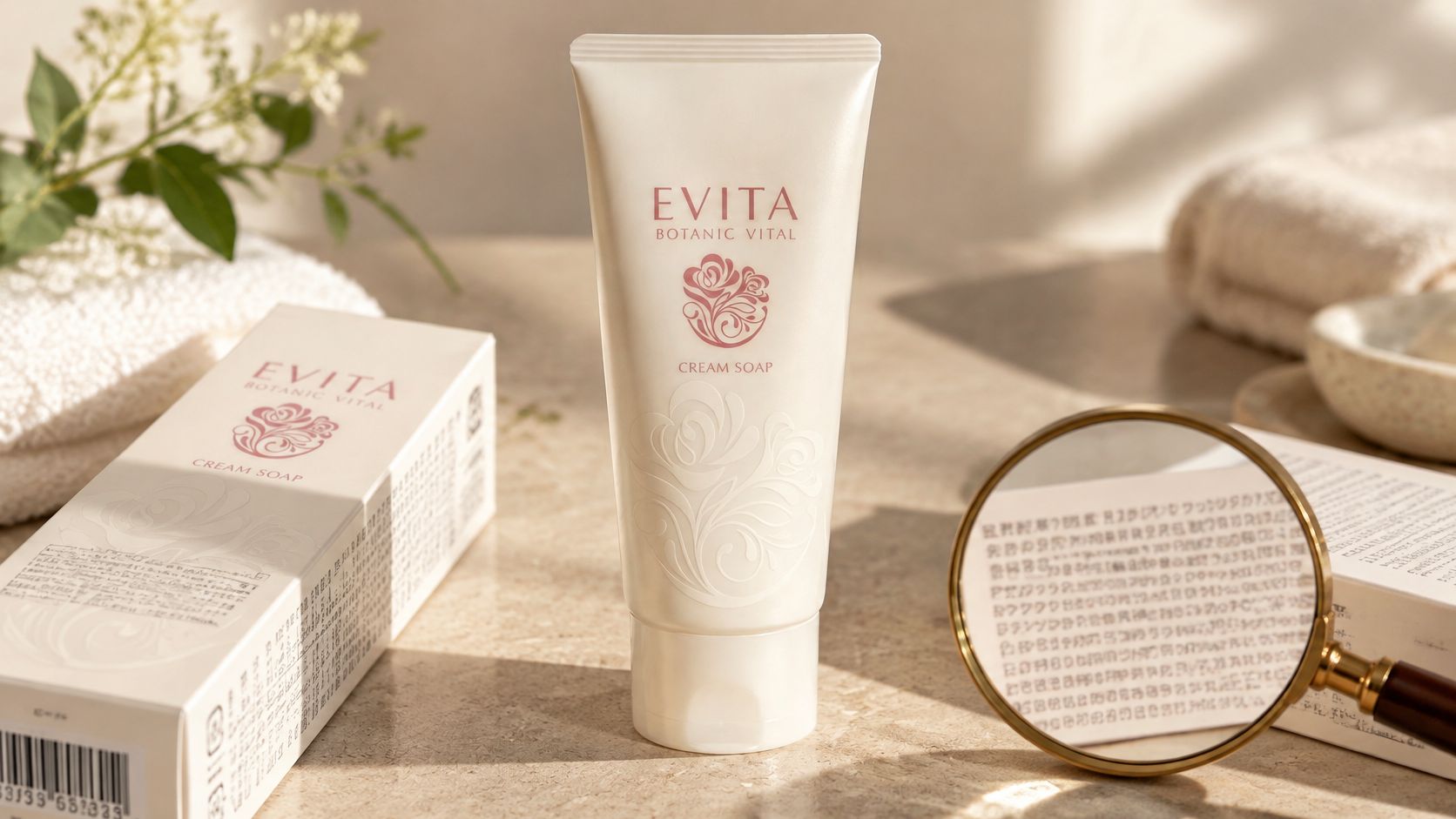
A well-documented listing makes all seven steps quick. Kanebo Evita Botanic Vital Cream Soap 130g is the kind of specific product page to prefer over a vague marketplace listing: the name and 130g size are clear, so the remaining checks are the ingredient list, the accountable company and the code on the box.
If any item cannot be checked, treat the product as unverified and keep it off your face and off sensitive skin. Sunscreen decides whether any tone improvement survives daily ultraviolet exposure, and this guide to choosing a Japanese sunscreen you will wear every morning covers texture and finish.
How to Use a Kojic Acid Soap Safely
A short, ordered routine does more for results than a stronger bar. Each step below carries its reason.
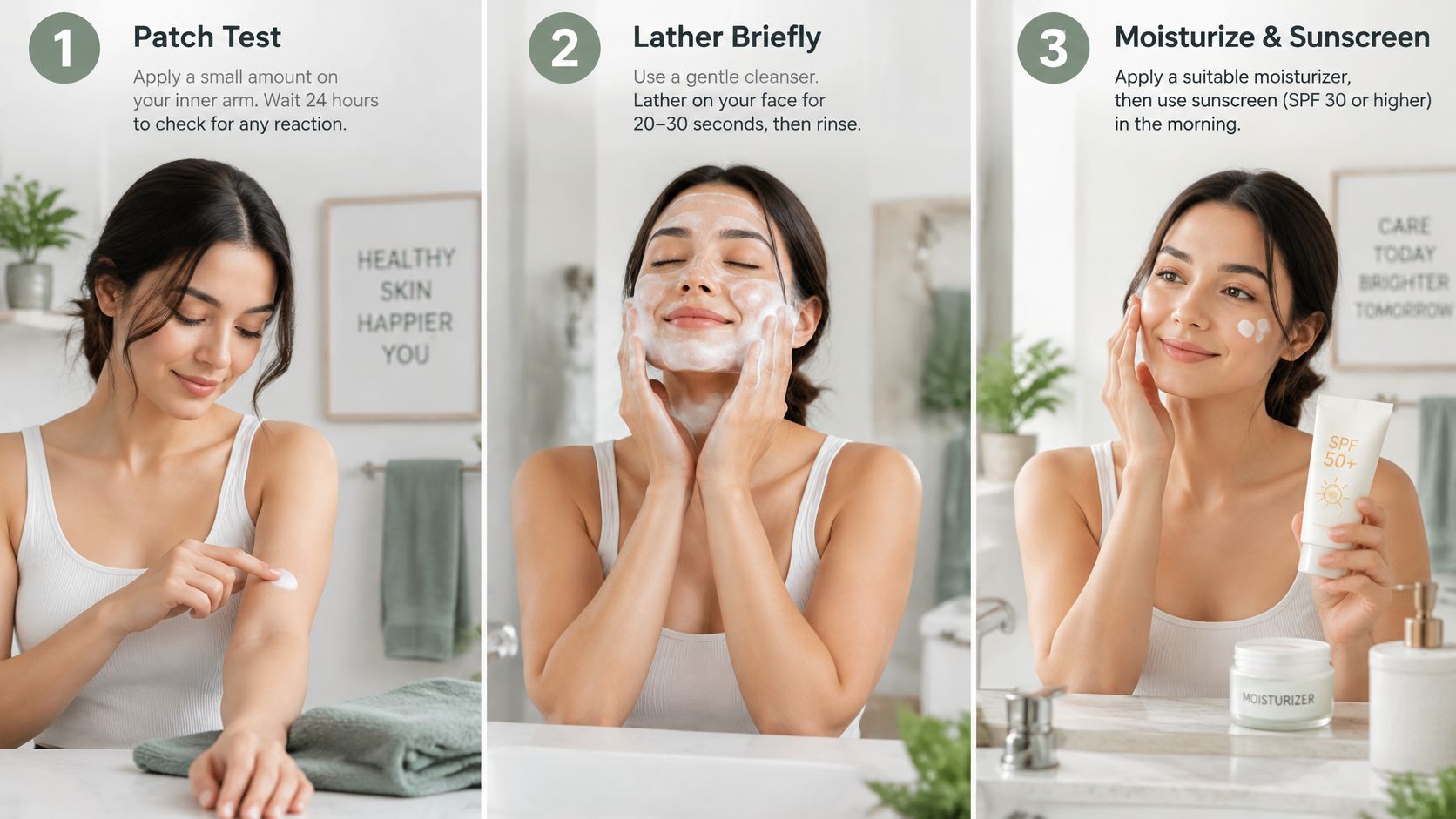
- Patch test first. Apply a small amount to the inner arm or behind the ear and wait 48 hours. A reaction there shows irritation before the bar touches your face.
- Start once a day. Give your skin a week to show how it responds before adding frequency.
- Build lather in your hands. Rubbing a bar over the skin with a cloth adds friction, and friction is its own source of irritation and pigmentation.
- Rinse fully instead of leaving the lather on longer. Prolonged contact doesn't reliably improve results and can increase irritation. The rinse is the point of the product.
- Pat dry, then moisturise if skin feels tight. A tight, squeaky finish signals a stripped barrier.
- Apply broad-spectrum sunscreen every morning. Kojic acid may increase sun sensitivity, and ultraviolet exposure keeps driving melanin production.
- Skip days when skin is peeling, freshly treated, sunburnt or already irritated. A weakened barrier can increase absorption, which is the concern regulators raised specifically for peeling products.
Contact time is the honest way to read this routine. A leave-on cream sits on skin for hours. A cleansing bar touches it for well under a minute before rinsing away, so judge a bar by its disclosed concentration and label, never by the word white on the box.
The evidence behind "used as intended" supports that distinction. The Scientific Committee on Consumer Safety concluded that kojic acid is safe as a skin-lightening agent in cosmetic products at concentrations up to 1%, including face-wash and cleansing products, when used as intended. The same assessment measured very slow penetration for a 1% leave-on formulation: after 24 hours, roughly 0.698% of the applied dose had crossed human skin, equivalent to 0.142 ± 0.265 micrograms per square centimetre, per the committee's opinion on kojic acid. Even a product that stays on the skin all day gets very little through, which sets a realistic ceiling on what a briefly rinsed bar can accomplish.
Stop using the bar if you get persistent burning, stinging, swelling, or dark patches that spread rather than fade. Anyone who is pregnant, breastfeeding, or treating a skin condition should check with a doctor before adding it to a routine.
If it burns, it isn't working harder. Stinging is a reason to stop.
If the bar is a gift, check the current ingredient list with the recipient's sensitivity in mind before ordering, and mention the patch test when you hand it over. This guide to Japanese sunscreen for sensitive skin pairs well with that advice.
Confirm the Label and Patch Test Before You Buy
A soap bar's name cannot tell you how much kojic acid it contains or how well it suits your skin. Use the earlier label checklist and patch test before making it part of your routine. A rinse-off bar has limited contact with skin, so its claims should stay modest.
Pigmentation that persists, spreads, or appears without an obvious cause deserves a clinician's opinion. A cleanser cannot address underlying causes such as melasma, inflammation, friction, or a medication effect.
For a gift, ask about the recipient's skin sensitivities before ordering. Gift Me Japan offers curated skincare selections, and its gift sets combine skincare, beauty, and lifestyle essentials sourced directly from Japan. If eye care is also part of their routine, this guide to Japanese eyelash serums may help you choose a related gift.
Choose a bar only when its label and the recipient's skin needs make it a sensible fit. For other gift ideas, browse Gift Me Japan and review the current product information before ordering.
Share:
Popular Japanese Candy: 8 Treats Worth Gifting in 2026
Collagen from Japan: Formats, Evidence and How to Choose