

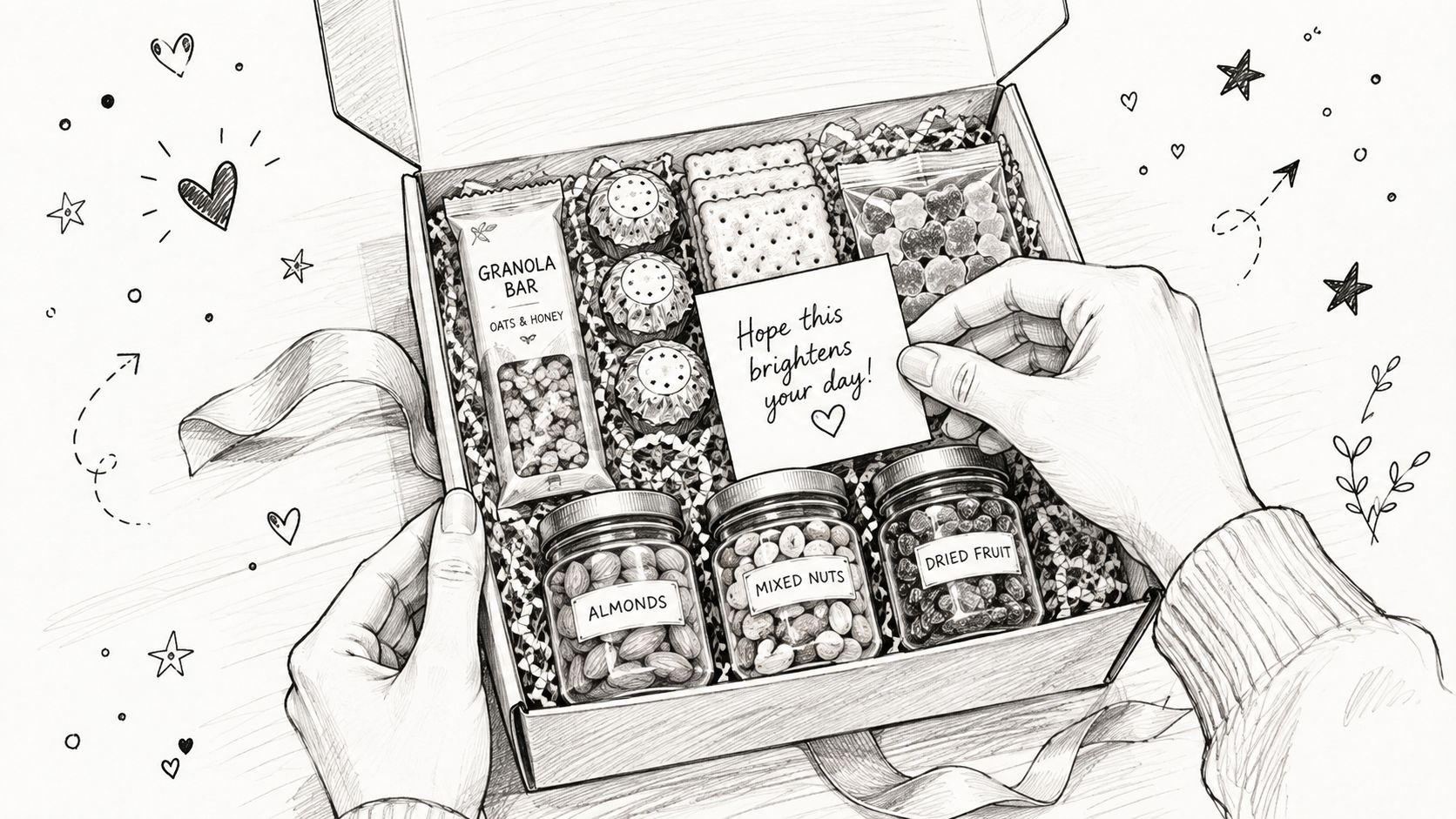
You're standing in the kitchen at midnight with a half-open cabinet, a roll of tape, and a small pile of snacks that seemed thoughtful in the store and random on the counter. That's usually the moment people realize a snacks care package isn't just “grab a few treats and put them in a box.” It's a small gift with a job to do, and if you pack it badly, the message gets lost.
A good snack box says, I know what you like, I thought about how this will travel, and I didn't make you do any work to enjoy it. That's the difference between a box that gets politely thanked and one that gets opened right away, photographed, and remembered. The trick is to treat it like gift engineering, not a last-minute grocery run.
What a Snacks Care Package Really Is
The first mistake people make is confusing a snacks care package with a random assortment of edible things. A better way to think about it is this, it's a small-format gift built around a person, a moment, and a unboxing experience. If you've ever mailed one to a college student, a long-distance friend, or a coworker having a rough week, you already know the goal isn't just feeding someone, it's making them feel seen.
The market context backs that up. Snacks sit inside a huge global category, with Grand View Research estimating the global snacks market at USD 719.18 billion in 2024 and projecting USD 922.08 billion by 2030 with a 4.3% CAGR from 2025 to 2030, which shows how mainstream snack buying already is in everyday life. USDA research also found that 95% of adults in the United States snack on any given day, 78% snack two or more times daily, and snacks contribute about 24% of daily energy intake among consumers, which is why a snack gift feels familiar instead of niche. That's useful for senders because it means you're not inventing a category, you're packaging a habit (Grand View Research snacks market).

Gift, not kit
A charity care kit solves a problem. A gift solves a feeling. That's the line I keep coming back to when I pack these boxes, because the moment you mix up those two purposes, the package gets awkward.
A snacks care package can still be practical, but it should feel chosen. That means a theme, a clear recipient, and a box that opens well, not just a pile of individual favorites. The best ones have a rhythm to them, first a visual hit, then a few reliable snacks, then one or two surprises that make the recipient say, “You really know me.”
The etiquette is simple. Don't make the recipient sort through clutter. Don't send a box that only makes sense to you. And don't confuse “more items” with “more thoughtful.”
Choosing the Theme and Recipient Profile
Start with four decisions before you buy anything. Who is this for, when do they need it, how long should it last, and what feeling should it leave behind. Those four answers keep the whole box from drifting into random territory.
If the recipient is a homesick college student, I'd lean into comfort, dorm-friendly snacks, and easy wins. If it's a remote coworker, I'd keep it clean, desk-friendly, and a little polished. If it's someone recovering from a hard week, I'd keep the box gentle and low-effort. If it's for a friend across the world, the package should feel like a cultural surprise, not a supermarket sampler.
Subtle intel helps a lot. Ask one or two questions that don't spoil the surprise, like what flavors they always reach for, whether they want sweet or salty, or whether there's anything they avoid. If someone says they “like trying new things,” that's not a vague answer, it's a signal to include one familiar anchor and one novelty item.
Build the theme before the shopping list
A theme acts like a spine. Without it, you overbuy, repeat textures, and end up with three similar chips and no emotional arc. With it, every item has a role.
That's also where dietary reality matters. If there are allergies, low appetite, or strict food rules, the theme has to work around them instead of pretending they don't exist. Mixed snack packs often fail broad compatibility checks, and a listing for a 40-snack variety pack explicitly noted nuts, dairy, and that it was not gluten-free, kosher, vegan, or sugar-free, which is exactly why you can't assume “variety” means “suitable for everyone” (Office Depot variety care package listing).
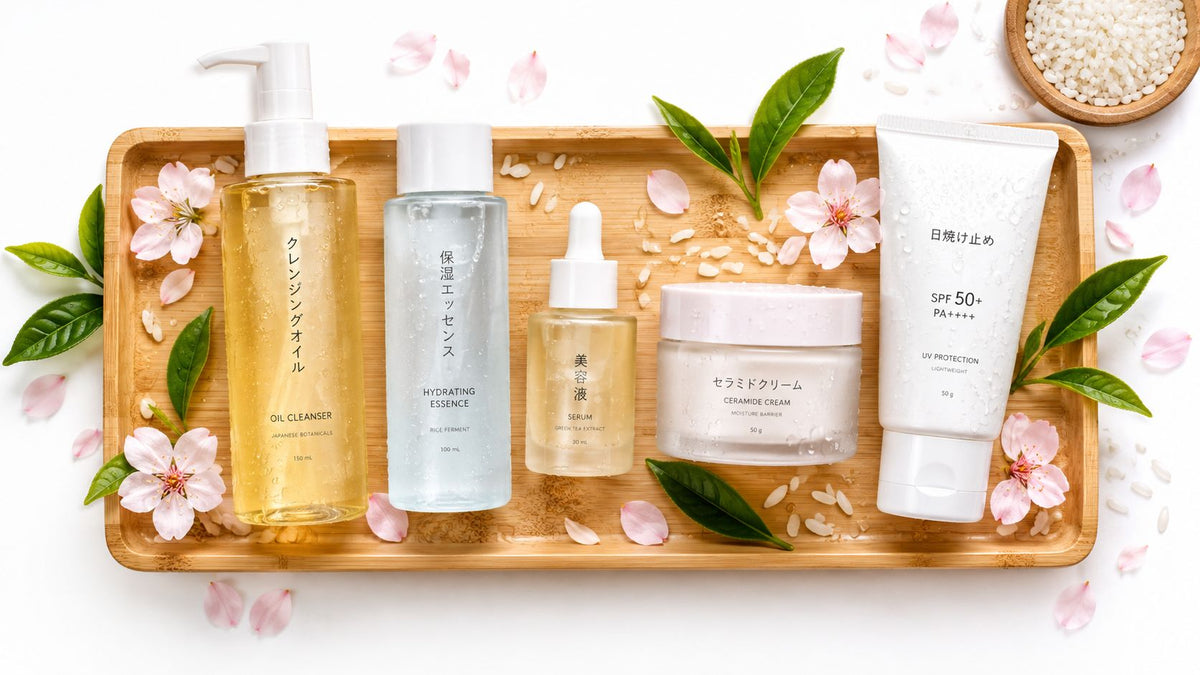
If you want a useful shorthand, think in themes like movie night, study fuel, comfort food, or Japanese snack discovery. For a gifting business or a curated option, a product like Biore Skincare Moisture Facial Cleanser 130g can also sit beside snack items in a broader care bundle because its creamy formula is positioned as a daily cleanser that leaves skin moist and comfortable, which fits the “thoughtful but practical” feel of a mixed gift.
For Japanese-themed gifting inspiration, this guide to a Japanese gift set is a useful reference point when you want the box to feel deliberate instead of generic.
Balancing Flavors, Textures, and Nutrition
A snack box falls apart fast when it is built around the sender's favorites instead of a real balance. I've opened boxes with six sweet items and no salty counterpoint, boxes that were all crunch and no pause, and boxes that looked generous but felt empty after two bites. Variety only works when each item has a job.
Use sweet, salty, savory, and functional as the core structure. Sweet items carry the treat value. Salty items keep the box from feeling one-note. Savory items make it feel substantial enough to count as a real care package. Functional items, such as easy-to-eat packaged snacks, cover travel, work, and low-energy days without asking the recipient to make a decision.
The packaging brief backs up that logic. Analysts in the InsightAce Analytic snack food packaging market brief found that larger package sizes increased overall snack intake by 11.9% versus control, while greater snack variety did not increase unhealthy intake and instead increased fruit and vegetable consumption. Packaging does more than hold food. It shapes how people eat.
Practical rule: Put one safe favorite, one texture change, one slightly adventurous item, and one easy backup snack in every box.
Use texture on purpose
Texture is what makes a snack box feel curated instead of random. A crispy rice cracker next to a chewy gummy creates contrast. A soft cookie beside a crunchy pretzel keeps the box moving. If everything is crunchy, the box gets loud. If everything is soft, it feels flat.
Keep the items commercially sealed and individually wrapped whenever possible. Public health and humanitarian guidance favors shelf-stable, easy-to-eat snacks, especially when the recipient's energy, schedule, or appetite is unpredictable (HPRC nutritious snacks for care packages). That is why compact items work so well. They survive a backpack, a desk drawer, or a bedside table without turning into a mess.
| Snack Roles in a Balanced Care Package | ||
|---|---|---|
| Category | Role in the Box | Example Item |
| Sweet | Adds a treat moment and makes the box feel like a gift | Chocolate-covered biscuits |
| Salty | Balances richer items and keeps the assortment from feeling sugary | Pretzels |
| Savory | Gives the package substance and keeps it from feeling candy-heavy | Rice crackers |
| Chewy | Slows the eating pace and adds contrast | Gummies |
| Crunchy | Creates immediate satisfaction and variety | Chips |
| Functional | Covers travel, desk use, or low-energy days | Trail mix or snack bars |
If you are building around Japanese snacks, use the same logic. Pair familiar items with one regional specialty, as explored in our guide to Japanese candy and chocolate. That single contrast makes the box feel deliberate instead of random.
Picking the Box and Packing for Safe Arrival
Packing is where taste meets physics. You can buy the right snacks and still ruin the box if the geometry is wrong. The easiest way to avoid that is to choose the container after you choose the count, not before.
A practical benchmark from retail listings is that assortments commonly range from 40 to 150 individually wrapped items, with published footprints around 13 x 11 x 3 inches for 20 to 50 snack formats, 16 x 12 x 6 inches for a 50-count package, and 17 x 13 x 7 inches for 120 to 150-count packs (Amazon snack variety pack listing). That tells you two things fast. First, density matters. Second, void fill and item placement matter just as much as the snacks themselves.

Pack by weight, not by instinct
Start with the heavy items on the bottom. Put brittle items, like chips or delicate cookies, away from the corners and away from anything dense. Then fill the dead space so the contents don't migrate during transit. Crinkle paper, tissue, or kraft fill all work if they stop movement without crushing the snacks.
Heavy items on the bottom, fragile items in the center, and no empty air pockets.
The common mistakes are easy to spot. Overfilling irregularly shaped snacks makes the lid bulge and raises crush risk. Underfilling lets the box slide internally, which is how broken chips and dented packages happen. If the box rattles when you shake it gently, it's not ready.
A corrugated mailer makes sense if you care about shipping protection first. A decorative gift box works when hand delivery or presentation matters more than rough transit. A reusable basket looks nice, but it's a poor choice if you need a box that closes cleanly and stacks well. I'd use baskets for local gifting only.
Shipping Without Stress
A beautiful box can still fail if it lands late, melted, or damaged. That's why shipping needs its own plan, not a hopeful shrug after packing. If the contents are sensitive, I ship earlier in the week and avoid last-minute drop-offs whenever possible.
If you mail often, flat-fee shipping simplifies budgeting, especially when you send multiple packages a year. Gift Me Japan says it offers flat international shipping rates of US$15 or €10, which is the kind of predictable structure that keeps a gifting habit from becoming a guessing game. For international orders, truthful customs declarations matter, and you should avoid anything that can be restricted in the destination country. Use the contents description accurately and keep the package simple when you want fewer surprises at the border.
A useful rule is to choose the shipping speed based on the snack type, not your optimism. Shelf-stable packaged snacks can handle normal transit. Anything weather-sensitive needs more caution. If you're sending a care package for a deadline, don't gamble on standard timing.

Keep the checklist short
Use this before you send anything:
- Theme confirmed: The box matches the occasion and the person.
- Dietary screen done: Allergens, restrictions, and dislikes are checked.
- Contents sealed: Everything is individually packaged and shelf-stable.
- Box fit tested: Nothing shifts, bulges, or crushes when closed.
- Shipping chosen: The delivery method matches the contents and timing.
- Contents declared truthfully: Especially for international shipping.
For people who want a ready-made route, a curated option helps. Gift Me Japan's snack box approach, including its broader Japanese snack box no subscription guidance, shows how a fixed assortment can reduce the hardest part of the process, which is deciding what belongs in the box.
Personalization Ideas That Make It Memorable
The cheapest upgrade in the whole package is the one that gets skipped, a note that sounds like you. I've seen a plain box become a keepsake because someone tucked in a short handwritten message and used one inside joke on the label. I've also seen expensive boxes feel flat because they never crossed the line from purchased to personal.
A clean example is a new job box with coffee snacks, a good-luck note, and a tiny tag that says “survive your inbox.” A breakup recovery box can stay gentle with comfort snacks, a low-pressure note, and no big performance. For exam week, keep the box simple, portable, and forgiving. For a new baby, send something that helps the parent, not just the occasion.
Small extras matter when they fit the person. A playlist QR code works for a music-loving friend. Chopsticks or a tea packet make sense in a Japanese-themed box. Mini skincare items can be a quiet, practical addition when the gift is meant to feel restorative rather than flashy.
Personalization should feel like attention, not decoration.
Presentation helps too. Tie the box with ribbon if you want it to feel celebratory. Use themed tissue if you want the unboxing to feel layered. Put the note on top so the recipient sees the emotional cue before they reach for the snacks.
Your Repeatable Packing Checklist and Final Thoughts
The box gets easier every time you do it if you use the same system. Start with the recipient profile. Lock the theme. Build a balanced assortment. Match the box to the count. Pack by weight. Check shipping. Add one personal detail. That's the whole method.
Use this as your repeatable checklist:
- Recipient profile
- Occasion and mood
- Flavor balance
- Texture balance
- Allergen check
- Box size and fill
- Shipping plan
- Personal note
The three mistakes I'd avoid every time are simple. Don't ignore allergies. Don't let shipping timing become an afterthought. Don't let theme drift turn a thoughtful gift into a random snack pile. A box can have great items and still miss the mark if those three things go wrong.
If you want a shortcut, a curated Japanese snack set takes the decision load off your plate while still giving the gift a clear identity. That's especially useful when you're short on time or you want the package to feel regionally specific without doing hours of research yourself.
If you want a thoughtfully curated route instead of building every box from scratch, Gift Me Japan puts together Japanese gift sets and snack assortments that already solve the theme, sourcing, and presentation problem. It's a practical place to start when you want your next snacks care package to feel intentional, polished, and easy to send.
Share:
Japanese Candy Chocolate: Flavors & Gift Guide 2026
5 Perfect Japanese Gifts for Her in 2026