

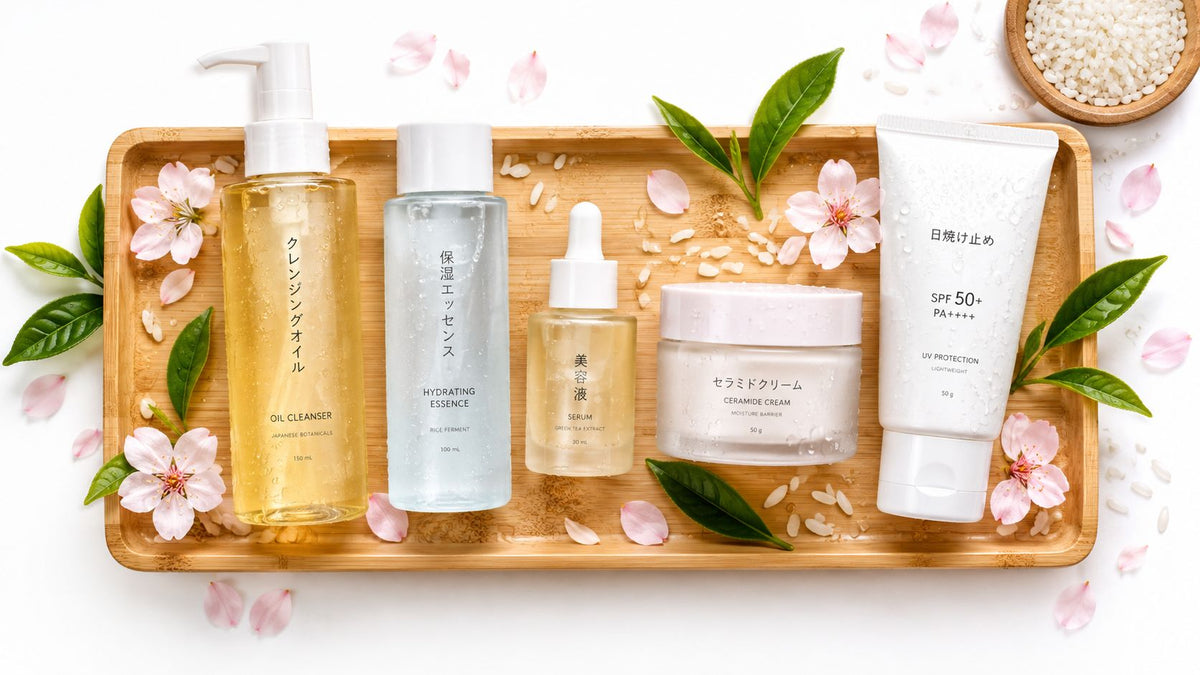
You're standing in a drugstore aisle, comparing a shelf of aggressive single-ingredient treatments with a smaller Japanese skincare section. One bottle promises instant resurfacing, another targets discoloration, and a third claims to solve dryness. The Japanese options look quieter, but that's often the point. You want a thoughtful gift, not a complicated routine that leaves the recipient guessing what to use first.
The best Japanese skincare products earn their place through a barrier-first approach: cleanse without stripping, add water, support moisture retention, address one clear concern, and protect skin from ultraviolet exposure. This guide focuses on that practical logic, so you can choose skincare for a friend, partner, colleague, or family member without relying on hype or a ten-step ritual.
Why Japanese Skincare Deserves a Second Look
Japanese skincare is built around consistent maintenance rather than dramatic correction. Many Western routines encourage shoppers to combine potent exfoliants, retinoids, acids, and targeted serums. Japanese formulas more often prioritize hydration, comfort, careful cleansing, and daily sun protection. That doesn't make them passive. It means the formula has to work repeatedly without making the rest of the routine harder to tolerate.
Japan's cosmetics industry also has substantial international reach. The Japan Cosmetic Industry Association reports that exports accelerated sharply in 2015, exceeded imports for the first time in 2016, and continued expanding across China, Hong Kong, Korea, and Singapore. Exports to China have represented over half of total cosmetics export value since 2020, according to the reported Japanese cosmetics trade overview. That export history helps explain why Japanese skincare has become recognizable well beyond Japan.
The difference is discipline
The most useful distinction isn't “gentle versus strong.” It's routine discipline versus active accumulation. A well-designed Japanese lotion, essence, cream, or sunscreen can deliver a comfortable daily step while reducing the temptation to keep adding products.
Japanese beauty also has a strong relationship with ritual and presentation. That matters when you're choosing a gift. A skincare set can feel meaningful when it combines a useful everyday routine with a visible connection to Japanese beauty culture, much like the broader principles of thoughtful Japanese gift giving.
Look for performance without drama
Japan's skincare market is large and mature, with independent estimates placing it between about USD 17.1 billion in 2021 and USD 19.57 billion in 2023. Another estimate places the market at USD 8.8 billion in 2026, with a projection of USD 11.29 billion by 2031, while a separate analysis estimates skincare represented roughly 45.6% of Japan's total cosmetics revenue in 2023. These figures vary by market definition and methodology, so use them as context rather than a precise market scorecard. The figures are summarized in independent Japanese skincare market reporting.
My advice is simple: don't choose the loudest product. Choose the formula that fits the recipient's skin, habits, and tolerance for routine complexity.
The Philosophy and Signature Ingredients Behind Japanese Skincare
Japanese formulation philosophy rests on three practical ideas: prevent unnecessary damage, build hydration in layers, and use familiar ingredients with careful processing. The result is often a formula that feels light but supports several parts of a routine at once.
Prevention before correction
A prevention-first routine doesn't ignore pigmentation, dryness, or visible lines. It addresses them through daily cleansing, hydration, barrier support, and ultraviolet protection before adding more intense treatments. That approach is especially useful for gifting because you can recommend a comfortable foundation without needing a detailed history of the recipient's previous active ingredients.
Ceramides and pseudo-ceramides are central to that foundation. In a four-week single-blind study of a pseudo-ceramide-containing spray, the treatment group showed improved stratum corneum water content, reduced transepidermal water loss, smaller corneocyte scaling, and an improved ceramide NP/NS profile. The control spray without pseudo-ceramide didn't show comparable barrier improvement, as reported in the PubMed study on pseudo-ceramide and skin barrier measures.
Hydration is more than one ingredient
Japanese skincare frequently combines humectants, emollients, and barrier-supporting lipids. Independent ingredient market research identifies ceramides, hyaluronic acid, and squalane as accounting for 15% to 18% of cosmeceutical ingredient value in Japan, which helps explain why these ingredients appear so often in skincare designed for dry or sensitive skin. See the Japan cosmeceutical ingredients market analysis.
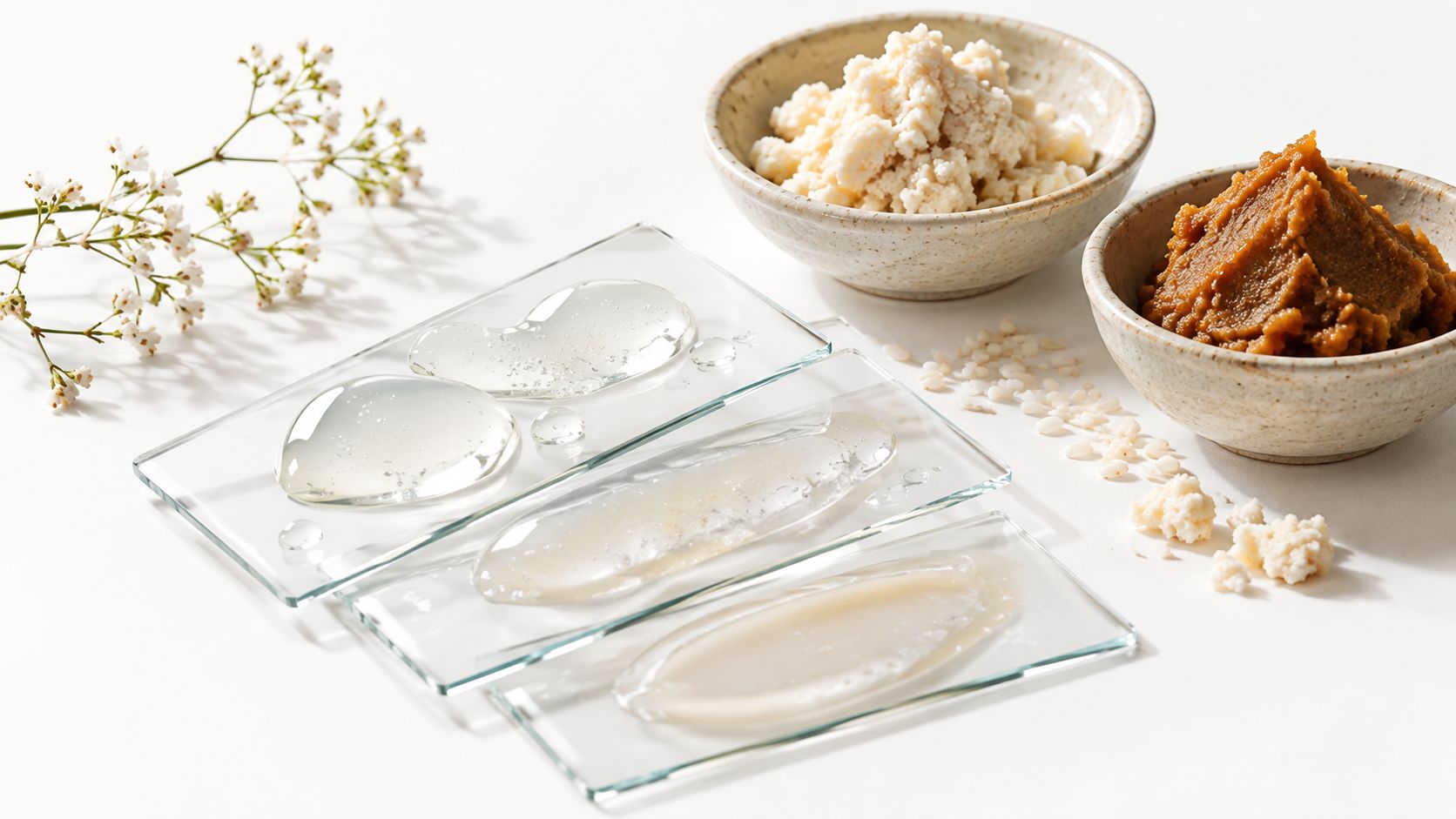
Fermented rice, sake lees, and koji extracts are also familiar features. A sake-based moisturizer listed with 41 ingredients combines Ceramide EOP, Ceramide NP, Ceramide AP, rice ferment filtrate, glycerin, squalane, cholesterol, and phytosphingosine. Another sake essence combines rice ferment lees, niacinamide, three ceramides, amino acids, vitamin C derivatives, arbutin, bakuchiol, and squalane. These examples show how a Japanese product may combine a cultural ingredient story with a broad supporting formula, rather than relying on one fashionable active.
Choose the formula, not the mythology
Fermentation can contribute to hydration, brightening, and the appearance of age-related skin changes, while hyaluronic acid, amino acids, collagen, and ceramides support moisturization. The Japanese skincare ingredient guide provides useful background on these categories. You'll find more practical formulation logic in this guide to a Japanese hair conditioner, where texture and daily usability matter just as much as the ingredient list.
Don't assume that a traditional ingredient automatically suits every skin type. Check the complete ingredient list, fragrance, texture, and intended use before choosing a gift.
The Core Product Categories Every Routine Relies On
A barrier-first routine works best when each category has a clear job. The mistake is buying several products that all provide the same watery hydration while leaving out sunscreen or a comfortable moisturizer.
Start with cleansing. An oil cleanser can dissolve sunscreen, makeup, and oil-soluble residue, while a gentle water-based cleanser removes what remains. Double cleansing makes the most sense when the recipient wears makeup or substantial sunscreen. It isn't mandatory for every person, especially if a single mild cleanser leaves skin comfortable and clean.
An essence or lotion usually sits after cleansing. Japanese “lotion” often means a watery hydrating step, not the thick cream many international shoppers associate with body lotion. Serums follow when the routine needs a specific focus, such as uneven tone or dehydration. Masks are optional intensifiers, not structural necessities.
Compare the roles before you buy
| Category | Primary function | Typical texture | Example products |
|---|---|---|---|
| Cleanser | Removes makeup, sunscreen, oil, and daily residue | Oil, milk, gel, or soft foam | Oil-based first cleanse or low-foam gentle cleanser |
| Essence or lotion | Adds lightweight hydration and prepares skin for later steps | Watery, fluid, or slightly viscous | Hydrating lotion or treatment essence |
| Serum | Targets one selected concern | Thin gel, liquid, or emulsion | Formula focused on brightening, hydration, or visible texture |
| Mask | Provides an occasional concentrated moisture step | Sheet, cream, gel, or wash-off paste | Hydrating or soothing mask |
| Sunscreen | Provides daily ultraviolet protection | Fluid, gel, milk, or cream | High-SPF formula with PA+++ or PA++++ |
The order matters because thin water-based textures generally precede thicker emulsions and creams. A serum does not become more effective merely because you apply more of it, and a mask cannot compensate for a routine that cleanses too harshly every evening.
Practical rule: If a gift set contains a cleanser, hydrating lotion, and cream, it already has the structure of a usable routine. Add a targeted product only when you understand the recipient's main concern.
For gifting, prioritize a coherent set over a pile of famous categories. A cleanser, hydrating step, and cream often make a more considerate present than several unrelated treatments.
Matching Japanese Skincare to Your Skin Type and Concerns
Skin type is a starting point, not a permanent identity. Climate, travel, seasonal dryness, stress, and product changes can shift how skin behaves, so choose a routine that can flex.
Use this decision table as a practical filter:
| Skin type or concern | Recommended texture | Key ingredients | Suggested product type |
|---|---|---|---|
| Oily or blemish-prone | Light gel, fluid lotion, gentle foam | Humectants and carefully selected exfoliating ingredients | Mild cleanser, lightweight lotion, targeted treatment |
| Dry or dehydrated | Slightly viscous lotion, emulsion, cream | Hyaluronic acid, ceramides, glycerin, squalane | Hydrating essence and barrier-supporting cream |
| Combination | Fluid layers with cream only where needed | Humectants and balanced emollients | Light lotion, targeted serum, selective moisturizer |
| Sensitive | Low-fragrance, simple, comfortable textures | Ceramides, pseudo-ceramides, glycerin | Gentle cleanser, hydrating spray or lotion, cream |
| Uneven tone | Lightweight serum or essence | Vitamin C derivatives, niacinamide, arbutin, or tranexamic acid where tolerated | One brightening serum, plus sunscreen |
| Mature-looking skin | Emulsion or cream with a comfortable finish | Peptides, bakuchiol, ceramides, and hydration ingredients | Supportive serum or emulsion with moisturizer |
Read the label with restraint
High amounts of drying alcohol may bother some sensitive or dehydrated users. Strong fragrance can also make a gift riskier when you don't know the recipient's preferences. Neither ingredient category automatically makes a formula unsuitable, but uncertainty is a reason to choose a simpler option.
For oily skin, don't respond to shine by stripping the face. Use a gentle cleanser and a light hydrating layer, then reserve richer cream for dry areas. For dry skin, apply hydration while skin is slightly damp and seal it with a moisturizer containing barrier-supporting ingredients.
Acne-prone recipients need a particularly careful gift. Choose a mild cleanser and avoid presenting a strong exfoliating product as a guaranteed solution. Anyone with persistent or painful breakouts should seek qualified medical advice rather than treating a gift as a substitute for care.
Make the gift recipient-specific
A thoughtful set for someone concerned about dryness should look different from one for someone who dislikes heavy textures. If you're shopping for a holiday, the guidance in this Japanese skincare gift set guide for Christmas can help you think through the occasion without assuming a particular skin type.
Patch testing is sensible, especially when the recipient has reactive skin or the set includes fragrance, exfoliating ingredients, or several unfamiliar formulas.
Building a Minimalist Barrier-First Routine
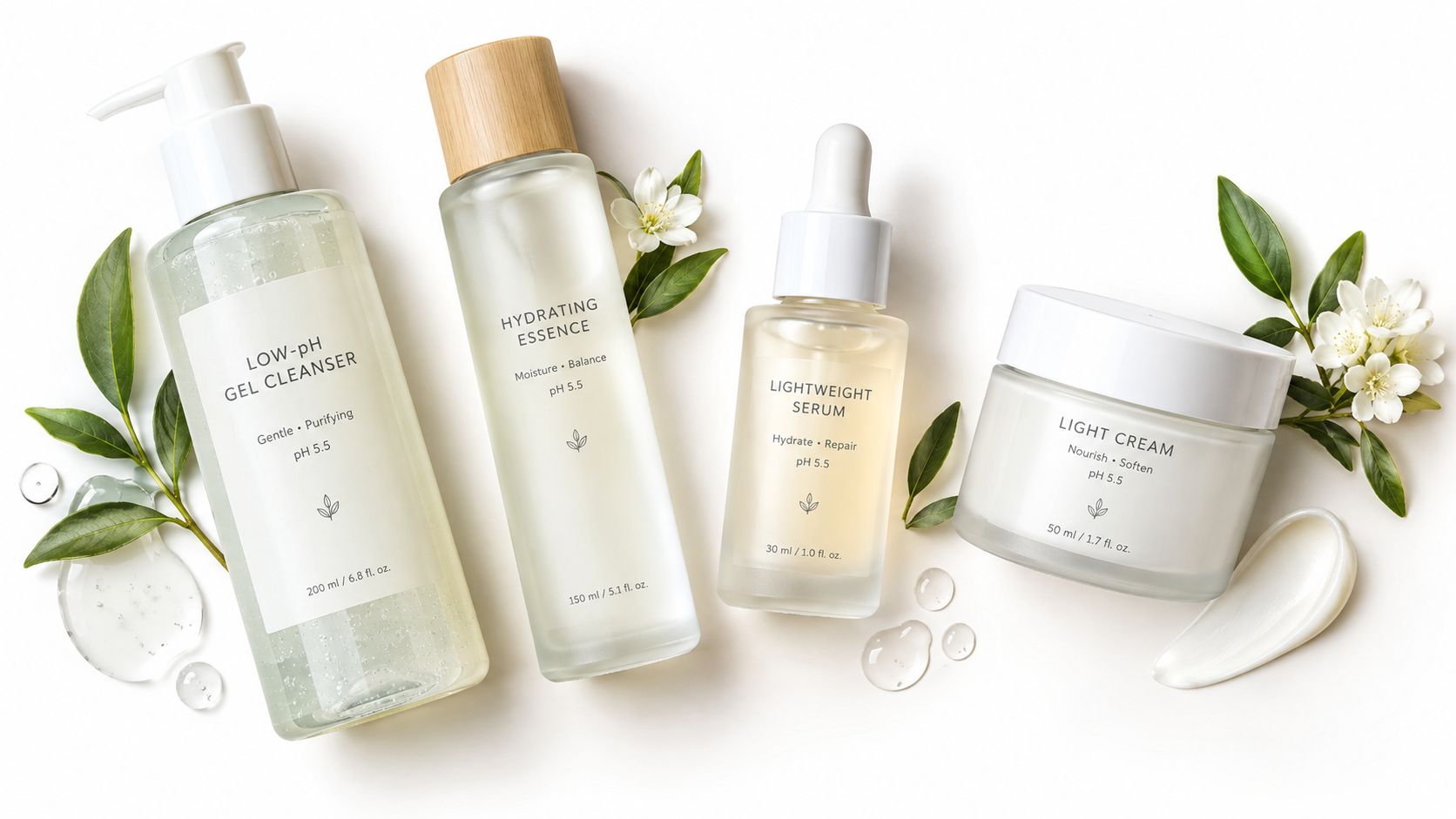
A complete routine doesn't need a crowded bathroom shelf. A well-matched set of four or five well-matched products can cover the essential sequence:
- Cleanse: Use a low-pH gel or another gentle cleanser that removes residue without leaving a tight finish.
- Hydrate: Apply a watery essence or lotion to add moisture before heavier products.
- Target: Add one serum only if the recipient has a clear concern and the formula suits their tolerance.
- Moisturize: Use a cream or emulsion to reduce moisture loss and support a comfortable finish.
- Protect: Finish the morning routine with a sunscreen labeled PA+++ or PA++++.
Why this order works
The sequence moves from cleansing to lighter water-based layers and then toward richer textures. Applying a cream before an essence can make the later watery product sit on the surface, while applying several treatment serums at once makes it harder to identify what causes discomfort.
Morning and evening don't need to mirror each other. In the morning, use a gentle cleanse or rinse, hydration, moisturizer if needed, and sunscreen. In the evening, remove makeup or sunscreen thoroughly, hydrate, apply a selected treatment, and moisturize.
Use a reset routine when skin feels overwhelmed
For sensitive or barrier-compromised skin, remove the targeted serum temporarily. Use only a gentle cleanser, hydrating essence, and ceramide-focused cream for about two weeks, then reintroduce one active at a time if the skin feels comfortable.
Layering rule: Apply the thinnest product first, keep water-based steps ahead of oil-rich products, and make sun protection the final morning step.
A gift doesn't need to include every category. A carefully selected cleanser, essence, and cream may be more useful than a larger assortment that duplicates ingredients or encourages over-layering. For a broader self-care occasion, you can also explore Japanese self-care gift sets, then choose skincare according to the recipient's routine rather than the set's size.
Understanding the PA Scale When Choosing a Japanese Sunscreen
SPF and PA answer different questions. SPF primarily indicates protection related to UVB, while PA communicates UVA protection through the Persistent Pigment Darkening system.
The PA scale runs from PA+ to PA++++. According to the Japanese sunscreen SPF and PA notification, the categories correspond to PPD ranges:
- PA+ corresponds to PPD 2 to 4.
- PA++ corresponds to PPD 4 to 8.
- PA+++ corresponds to PPD 8 to 16.
- PA++++ corresponds to PPD 16 or higher.
Why the extra plus matters
UVA contributes to persistent pigmentation and photoaging, so SPF alone isn't enough when you're choosing a daily facial sunscreen. Two products can display the same SPF while offering different UVA performance. For everyday facial use, I prefer PA++++ when available, with PA+++ as a reasonable option for lower-exposure days.
The label still isn't the whole decision. A sunscreen that feels greasy, pills under makeup, leaves an uncomfortable cast, or irritates the eyes may be applied inconsistently. Japanese sunscreens are often recognized for fluid, gel, milk, and essence-like textures, but the right finish depends on the recipient's skin and habits.
Choose compliance over novelty
Chemical and mineral filters can produce different textures and sensory experiences. Don't choose a filter category solely because it sounds more advanced. Choose the product the recipient will apply generously and reapply when needed.
For a gift, confirm the current label and intended market. Sunscreen regulations and available filters can differ between countries, so the packaging should be checked before use.
Skinimalism and Why Fewer Products Often Work Better
A shorter routine is not a compromise. It's often the more intelligent choice because every product has to justify its place.
First, a comfortable barrier can make skin less reactive to later treatments. Second, ingredient overlap is common. An essence, serum, and moisturizer may all contain niacinamide, hyaluronic acid, or ceramides, so buying three products for the same function can create redundancy rather than better results. Third, a smaller routine is easier to use consistently and easier to assess when something doesn't suit the skin.
Build around complementary jobs
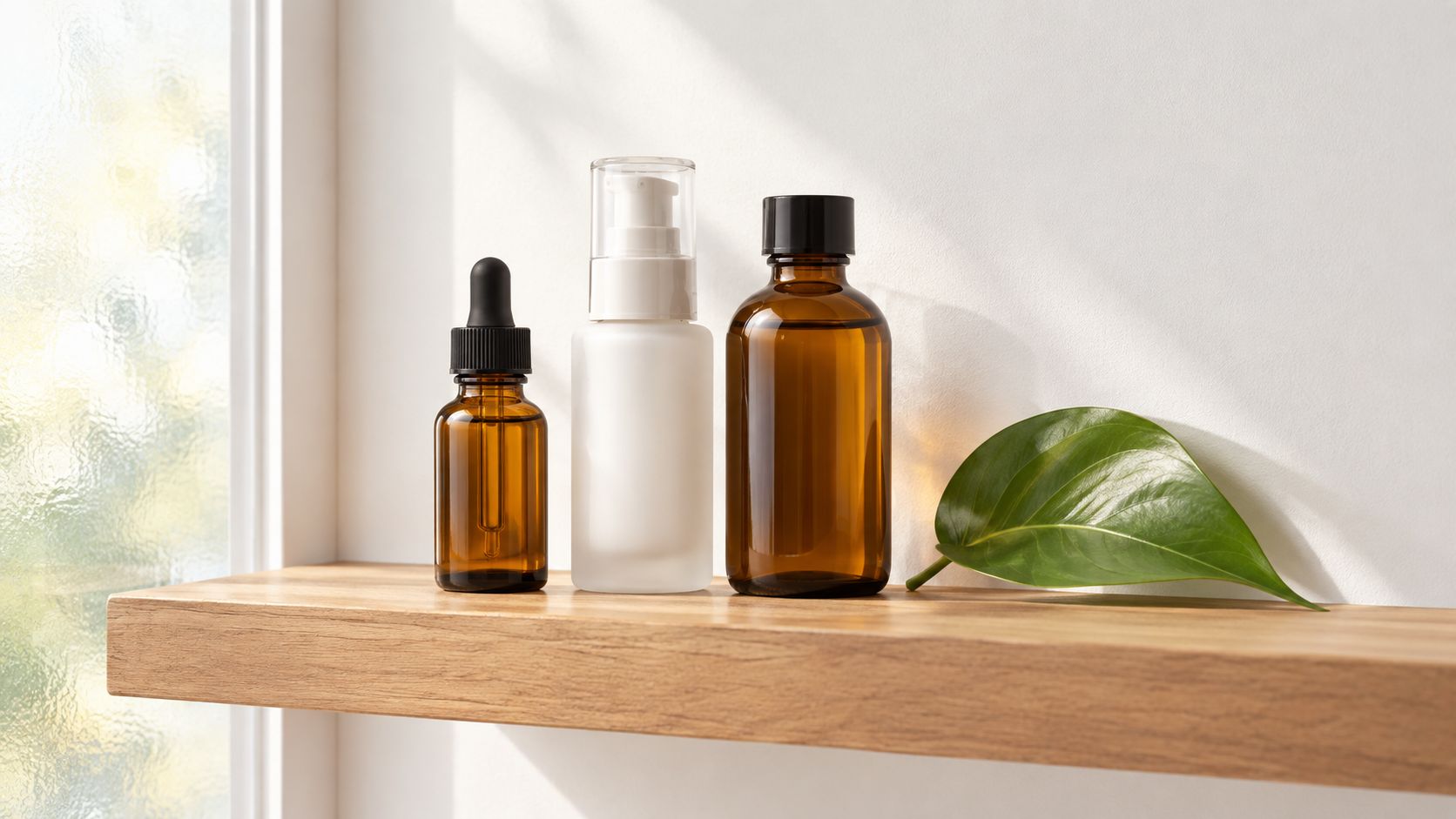
A good minimalist set usually follows this logic:
- Cleanser: Removes the day without leaving a stripped feeling.
- Hydrating lotion or essence: Supplies a light water-based step.
- Moisturizer: Adds comfort and helps reduce moisture loss.
- Sunscreen: Protects the morning routine from ultraviolet exposure.
- Optional serum: Addresses one concern without competing with every other step.
This is why curated Japanese skincare gifts can be useful for beginners. A coherent set removes some of the trial and error involved in choosing separate products, provided the contents and current product information are checked before purchase.
Gifting intelligence beats product hype
A recipient who enjoys a calm evening ritual may appreciate a hydrating set more than an aggressive treatment collection. Someone who travels often may prefer light textures and a simple sequence. Someone who already owns many products may value one well-chosen cream rather than another complete routine.
Gift Me Japan offers curated Japanese gift sets, beauty and skincare items, lifestyle products, and Japanese snacks sourced directly from Japan. Its selection can suit shoppers who want a combined traditional and modern Japanese gifting experience, but you should still review the current contents and product details before choosing a set.
The best Japanese skincare products aren't necessarily the most viral or expensive. They're the ones that perform a clear role, suit the recipient's preferences, and make daily use feel easy.
Choosing Curated Japanese Skincare Gifts With Confidence
Skincare is personal, which makes it a thoughtful gift and a potentially awkward one. You may not know whether the recipient has dry, oily, combination, or sensitive skin. You may also worry about fragrance, alcohol-heavy formulas, or giving them several boxes with no clear order of use.
A curated set can reduce that uncertainty when you inspect it carefully rather than treating “Japanese skincare” as a guarantee of suitability.
Use a four-question check
Before buying, ask:
- What is included? Confirm the exact products, sizes, quantities, variants, and packaging on the current listing.
- What concern does the set address? Hydration and barrier support are safer starting points than an aggressive treatment when you don't know the recipient's routine.
- Could the formula conflict with preferences? Check fragrance disclosure, alcohol content, texture, and any ingredients the recipient already avoids.
- Does the set have a usable sequence? A cleanser, lotion or essence, and cream make sense together. A set of several unrelated actives may create confusion.
Don't assume a listing includes gift wrapping, a message card, accessories, or a particular presentation unless the product page states it. Availability, promotions, prices, and delivery information can change, so verify them when you order.
Match the occasion to the experience
For a birthday or personal milestone, a hydrating set can feel intimate without requiring you to guess at a highly specific treatment. For a colleague or broader celebration, choose a simpler routine with broadly comfortable textures. For someone who already loves Japanese beauty, a set that introduces fermentation, ceramides, or a carefully designed sunscreen can make the gift feel considered.
Presentation matters, but the selection matters more. A smaller set chosen around dryness, sensitivity, lightweight textures, or a preference for simple routines feels more personal than a large assortment selected only because it contains many items. You can find additional guidance in this beginner's guide to Japanese skincare gifts.
Remember the central checklist: gentle cleansing, layered hydration, barrier support, one focused treatment at most, and high UVA protection in the morning. Patch testing is a sensible note to include when the recipient has sensitive skin, and current packaging should always take priority over general advice.
Gift Me Japan brings together curated Japanese gift sets, skincare, beauty, lifestyle products, and Japanese snacks sourced directly from Japan. Visit Gift Me Japan to explore a skincare set that matches the recipient's routine, skin preferences, and the occasion you're celebrating.
Share:
Japanese Gifts for Someone Who Has Everything