

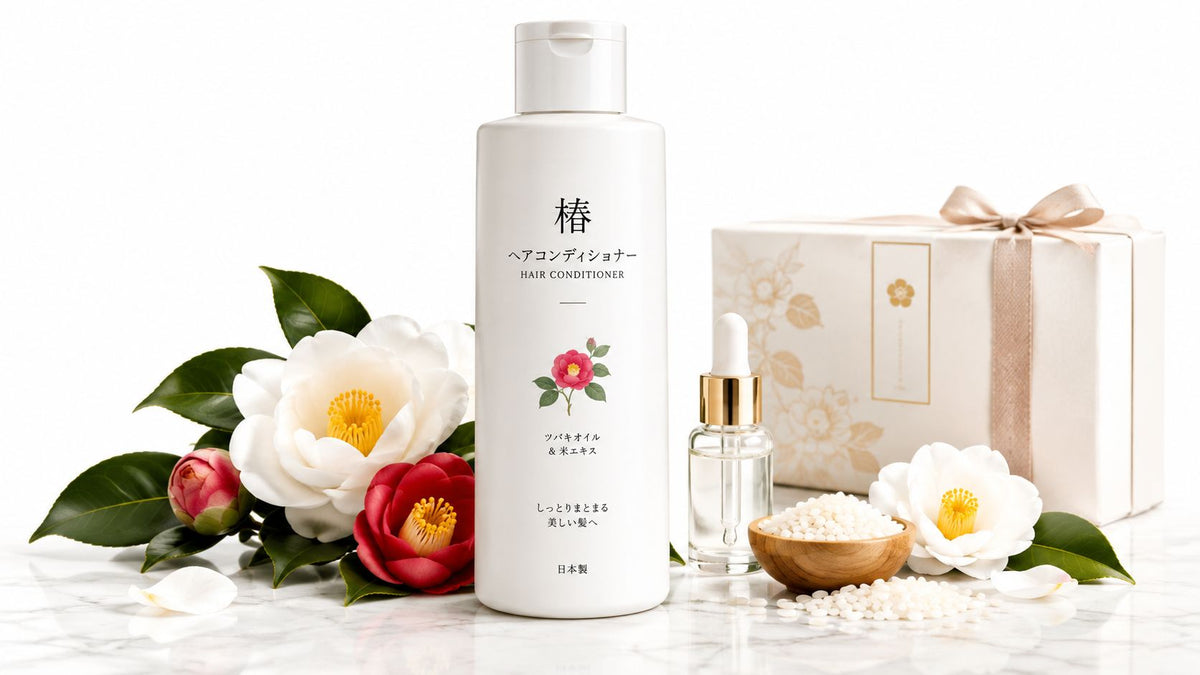
A lot of people arrive at Japanese hair care the same way. They've given a thoughtful beauty gift before, or they're building one now, and they want something that feels more distinctive than a generic bottle from a local shop. Then the confusion starts. The labels look elegant, the ingredient lists look long, and the words “moisture,” “repair,” and “shine” seem to be everywhere.
The question isn't whether a Japanese conditioner looks refined on a bathroom shelf. It's whether it suits the recipient's hair, routines, and sensitivity. That matters even more when you're shopping for someone else and want the gift to feel personal rather than random.
A Japanese hair conditioner can be a very good gift because it sits at the meeting point of function and familiarity. People already know how to use conditioner, but Japanese formulas often approach slip, rinse feel, and ingredient disclosure a little differently. That difference is where the category becomes interesting.
Why Japanese Conditioner Keeps Showing Up in Gift Boxes
A friend of mine in Sydney once asked for “one nice Japanese conditioner, nothing too fussy.” She loved Japanese beauty packaging and assumed the switch would be simple. Instead, her first reaction was practical: one formula felt cleaner-rinsing than she expected, another felt richer through the ends but too much near the roots, and a third made perfect sense only after she looked closely at the label.
That's a familiar moment for international gift shoppers. Japanese hair care often looks easy to decode from the outside, but the experience on hair can be a little different from what someone is used to in London, Toronto, or Melbourne. The bottle may seem familiar. The formulation logic may not.
Conditioners also happen to make unusually giftable beauty items. They're easy to understand, easy to pair with shampoo or a treatment, and they don't require the recipient to learn a whole new ritual. Japan's haircare market is also large enough that the category isn't niche or novelty driven. In 2023, Japan's haircare market generated about $4.54 billion in revenue and sold 407.7 million units, with a projection to reach $5.04 billion by 2028 at a 2.1% CAGR from 2023 to 2028 according to Research and Markets' overview of haircare in Japan.
What makes this category easy to gift
- Universal format: Most recipients already know where conditioner fits in a routine.
- Useful rather than decorative: It can feel indulgent, but it still solves an everyday need.
- Easy to bundle: It pairs naturally with shampoo, a hair treatment, or a broader self-care present.
A good hair gift doesn't need to feel exotic. It needs to feel considered.
One reason this category keeps reappearing in curated presents is that it works for different levels of familiarity. Someone deep into Japanese beauty may enjoy comparing ingredients and textures. Someone newer to it can still use it without any learning curve.
If you're choosing for another person, it helps to think less about trendiness and more about translation. What exactly is inside. How does it behave compared with the formulas they already know. Who tends to like it. And when does it make sense inside a more complete present, like the kinds of combinations explored in this guide to a Japanese gift set.
The Three Building Blocks of a Japanese Conditioner
Most effective conditioners, including many Japanese ones, aren't built around one miracle oil. They're built like a small team where each member has a different job.
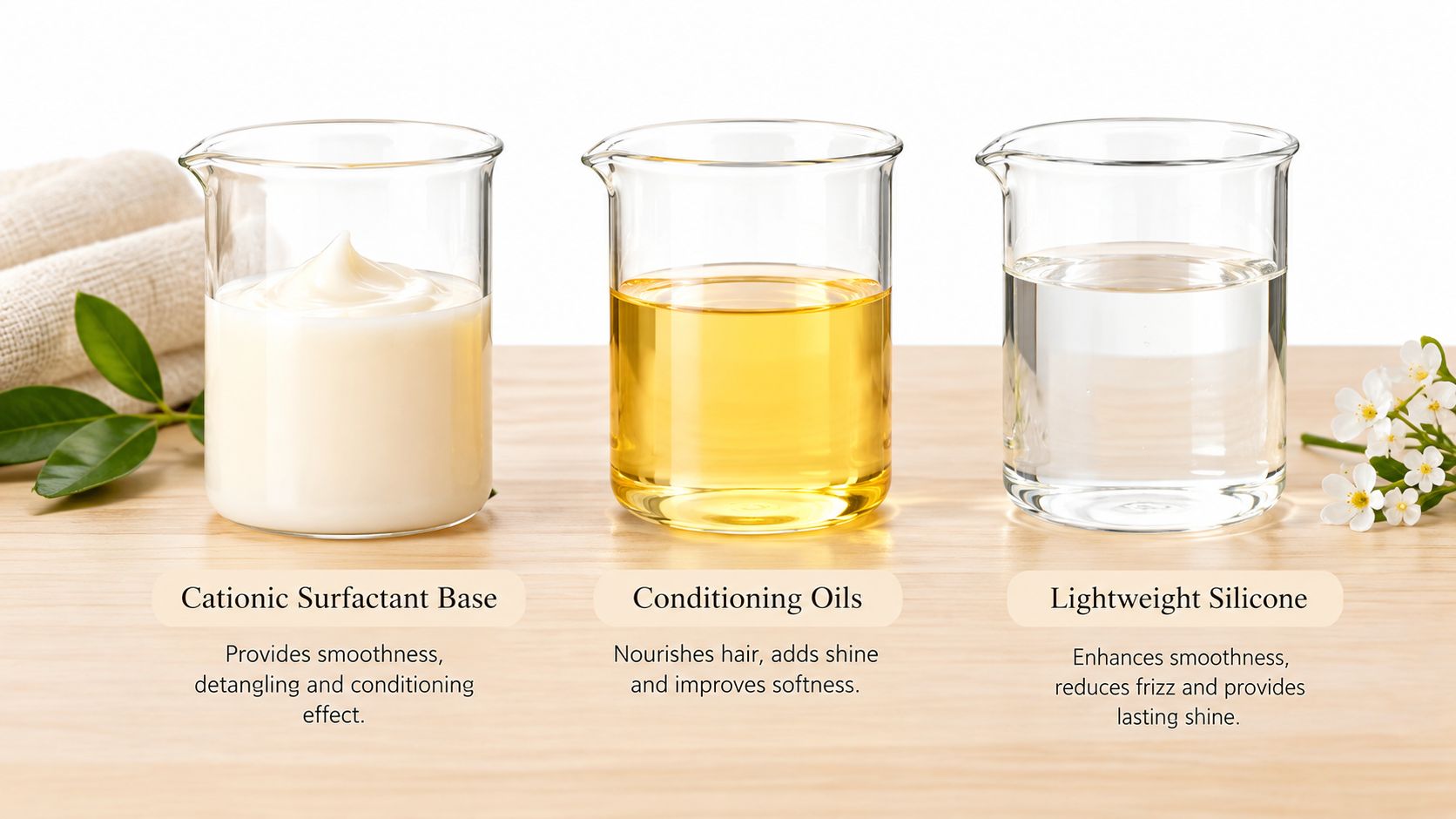
Think of the formula as a three-layer coat
The easiest way to picture a Japanese hair conditioner is as a coat with three layers.
The first layer is the cationic surfactant. Hair, especially damaged hair, carries a negative surface charge. Cationic ingredients carry a positive charge, so they're drawn to that damaged surface and deposit there. According to the hair-science review in the Journal of Cosmetic Science library article on hair conditioning, this electrostatic deposition is central to how conditioners reduce static and friction on hair fibers.
The second layer is the fatty alcohol base. Ingredients such as cetearyl or behenyl alcohol help create the creamy body of the product and support wet slip. This is part of why many Japanese conditioners feel silky in the shower without behaving like a heavy mask.
The third layer is the silicone phase. Silicones such as dimethicone help lower friction and improve combing, especially once the hair dries. In plain language, this is often what gives the hair that smoother, less snag-prone finish.
What each layer is doing
- Cationic surfactant: Binds to damaged, negatively charged areas of the hair surface.
- Fatty alcohol: Builds the conditioner's texture and improves glide during rinsing.
- Silicone: Smooths the cuticle surface and helps with shine and easier combing.
That's the structural base. The extras come later.
A lot of shoppers get distracted by hero ingredients on the front label. Camellia oil, hyaluronic acid, hydrolyzed silk, horse oil, or botanical extracts may all be present, and some Japanese formulas do combine several at once. One example product page shows a conditioner layering horse oil, camellia oil, glycerin, sodium hyaluronate, hydrolyzed silk, and quaternary conditioning ingredients in a single formula, which helps explain why these products are often positioned as softening and damage-care focused rather than as plain rinse-out moisturizers, as shown in this example Japanese conditioner listing.
Practical rule: If the front of the bottle highlights an oil, don't assume the conditioner works mainly like an oil. In most cases, the real performance still comes from the cationic base, the fatty alcohol network, and the smoothing film on top.
That same logic shows up across Japanese beauty categories. Texture, layering, and skin or hair feel often matter as much as the headline ingredient, which is one reason people who enjoy ingredient-led gifts often end up exploring adjacent categories through guides like this one on Japanese skincare gifts for beginners.
How Japanese and Western Conditioners Differ in Practice
The clearest way to compare conventions is to focus on what you can notice when you use them. Not which region is “better,” but what feels different in the hand, on the hair, and on the label.
Japanese vs Western Conditioner Conventions
| Attribute | Japanese Convention | Western Convention |
|---|---|---|
| Texture feel | Often creamy and smooth, with a clean-rinsing finish | Can range more sharply from very light lotions to rich buttery masks |
| Weight on hair | Often tuned for softness without too much residue | Some formulas aim for a more coating, linger-on-hair feel |
| Fragrance style | Frequently lighter and less persistent | Often broader range, including stronger long-lasting scents |
| Ingredient storytelling | Front label may highlight botanicals, but structure still tends to rely on conditioning architecture | Marketing may split more visibly between “natural,” “repair,” or “salon” identities |
| Label transparency | Ingredient lists are typically very useful for decoding the formula | Depending on market, labels may feel less straightforward to compare quickly |
| Recipient experience | Good for people who like polished texture without a heavy finish | Good for people who already know they prefer a very rich or very minimal format |
One important practical difference is disclosure. In Japan, cosmetics labeling rules require all ingredient names to be listed on the package in Japanese, and the list generally appears in descending order by quantity. That makes conditioner labels unusually useful for checking whether ingredients such as camellia oil, silicones, or hyaluronic acid are in the formula, according to the EU-Japan Centre guide to Japanese cosmetics rules.
The feel, not the flag, is what matters
A Japanese hair conditioner often lands in the middle of the texture spectrum. It may feel richer than a very light daily rinse, but not as mask-like as a dense treatment butter. For some hair types, that balance is exactly the appeal. For others, it can feel unexpectedly light or unexpectedly coating depending on their reference point.
Scent can also be a quiet dividing line. Many Japanese formulas keep fragrance more restrained, which some people appreciate if they wear perfume or don't want their hair care to dominate.
The useful takeaway is simple. Don't shop by geography alone. Shop by behavior. If the recipient likes clean slip, controlled fragrance, and labels they can inspect, a Japanese formula may make immediate sense.
Matching a Japanese Conditioner to Your Hair Type
The most helpful question isn't “Which Japanese conditioner is famous?” It's “What does this person's hair keep doing that they want it to stop doing?”
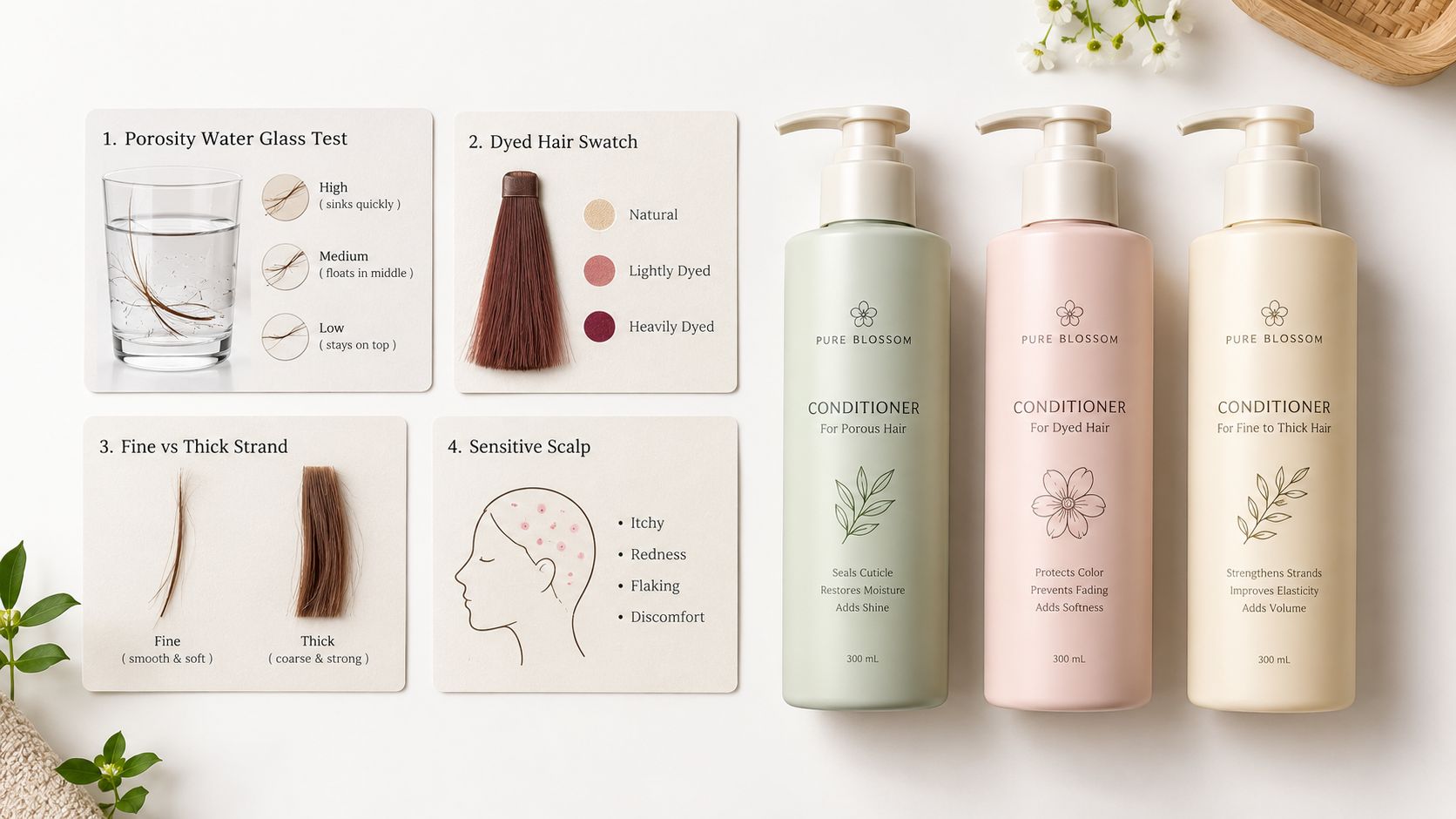
Start with four quick checks
Before picking a conditioner, think through these four points:
- Porosity: Does the hair absorb products quickly and still feel dry, or does product sit on top easily?
- Dye and bleach history: Has the hair been colored, lightened, or heat-styled often?
- Strand thickness: Is the hair fine, medium, or coarse?
- Scalp sensitivity: Does the person react easily to fragrance, cooling ingredients, or heavy residue near the roots?
These answers matter because conditioner performance changes with hair condition. Hair-surface research shows that on virgin hair, hydrophobic interactions often drive deposition, while on bleached hair, electrostatic attraction becomes the main driver because the surface is more damaged and more reactive. The same study also reported measurable adhesion values around 252 ± 31 and 150 ± 33 under different hair-surface conditions, illustrating how one formula can behave differently depending on the state of the fiber, as discussed in this advanced review of conditioner deposition and hair-surface behavior.
A simple matching guide
Dry or frizz-prone hair usually benefits from conditioners with a richer smoothing base, and generous fatty alcohols and silicones often help most.
Color-treated or bleached hair often responds well to repair-oriented formulas because damaged cuticles need friction control more urgently. These are the recipients who often notice a meaningful difference from a well-built Japanese conditioner.
Fine hair can be the trickiest. Rich formulas may feel lovely for one wash, then too much by the third. Lighter textures or lower-residue options often suit this group better.
Scalp-sensitive users usually do better when they keep conditioner away from the scalp and choose simpler fragrance profiles. Patch testing is sensible if they're reactive.
If you're buying for someone else, choose for the hair's main complaint, not the bottle's most attractive claim.
Don't chase the brand name first
Japan's market has also moved toward more treatment-focused and clean-label segmentation, but the right choice still depends on the user's priorities. Market coverage notes that bond-repair and protein-repair conditioners are growing quickly in the premium deep-conditioner segment, and that functional hair-health products command 1.5 to 2 times the price of standard daily-care shampoos in Japan, according to this Mordor Intelligence overview of the Japan hair care market.
That doesn't mean everyone needs a premium repair formula. It means the smartest gift choice starts with the recipient's hair state. Then you verify the ingredient order.
Reading a Japanese Conditioner Label with Confidence
The label is one of the biggest advantages of shopping this category carefully. Once you know what you're looking for, a Japanese conditioner becomes much easier to decode.
What Japanese labels tell you
Industry guidance from the Japan Cosmetic Industry Association states that cosmetics sold in Japan must display “all ingredients” so consumers can choose products more confidently, as described on the JCIA compliance guidance page. That sounds dry, but for a gift shopper it's helpful.
You can usually scan a list and separate the formula into functional groups:
- Conditioning base: Look for quaternary conditioning agents or related cationic ingredients.
- Texture builders: Fatty alcohols such as cetyl, stearyl, or cetearyl alcohol often sit high enough on the list to matter.
- Smoothing agents: Dimethicone and related silicones usually signal a more slip-focused finish.
- Signature extras: Camellia seed oil, hyaluronic acid, silk derivatives, or amino-acid style additions tell you more about the formula's personality.
Why this matters for gift shopping
Beginners often buy by front-label romance. “Camellia.” “Repair.” “Moist.” Those words can be useful, but they don't replace reading the ingredient list. A label lets you confirm whether the highlighted ingredient is present and whether the formula is likely to be rich, lightweight, or smoothing.
Japan also uses a safety framework that includes a negative list of prohibited ingredients and a restricted list for ingredients allowed only under defined conditions, with official materials noting 30 prohibited ingredients in the Japanese market. That framework helps explain why imported cosmetics often emphasize compliance and disclosure, according to the Japanese Ministry of Health, Labour and Welfare materials.
A readable label won't tell you everything about performance, but it can stop you from buying the wrong texture for the wrong person.
If you're shopping internationally and want a broader sense of what makes a beauty or personal care gift feel sourced rather than generic, this piece on authentic Japanese gifts online is a useful companion.
Getting the Best Results From a Japanese Conditioner
The product can be right and the result can still be disappointing if it's used like a heavy mask or rinsed off too fast.
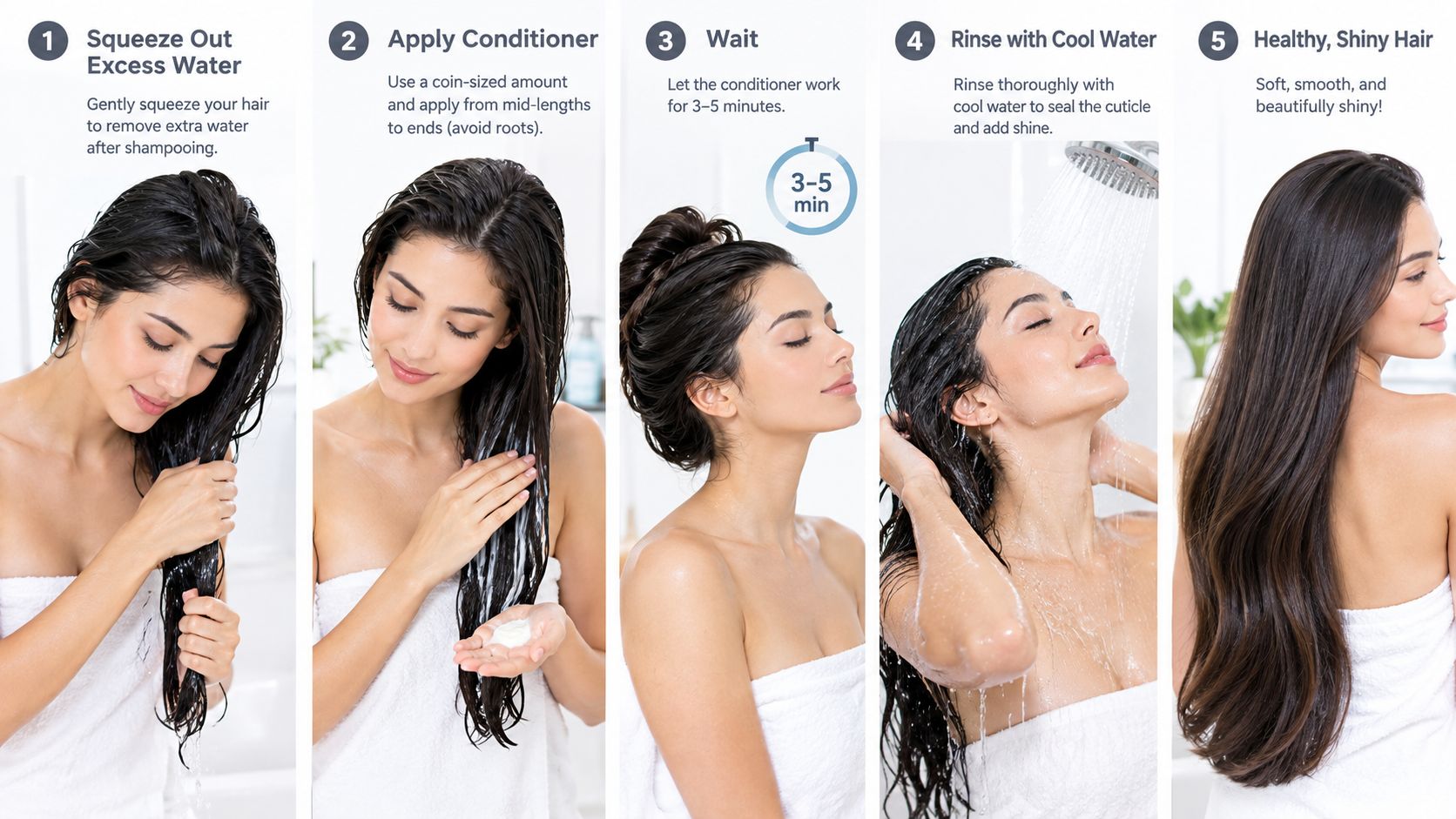
A simple application routine
Most Japanese conditioners work best with a fairly ordinary routine, just done carefully.
- Shampoo first: Clean hair gives the conditioning film a better surface to deposit onto.
- Squeeze out excess water: If the hair is dripping, the product gets diluted before it can spread properly.
- Apply through mid-lengths and ends: Conditioner isn't typically needed directly on the scalp.
- Give it a short pause: A minute or two is often enough for a standard rinse-out formula.
- Rinse with lukewarm water: You want softness left on the hair, not a waxy residue from under-rinsing.
A lot of recipients do best when they treat conditioner as regular maintenance, not as an occasional rescue step. If the formula is daily-use friendly, consistency usually matters more than using a very large amount.
Common mistakes
- Using too much near the roots: This is the fastest way to make fine hair feel flat.
- Rinsing immediately: Even a brief wait can improve spread and feel.
- Pairing with an overly stripping wash routine: If shampoo removes too much, the conditioner has to work harder to restore smoothness.
For readers building a broader comfort-themed present, conditioner often fits naturally with other slower, routine-based gifts, especially the kinds of combinations discussed in these self-care gift sets.
A short visual demonstration can also help if the recipient is new to this style of product use:
Gifting Japanese Conditioner Through Curated Sets
A single bottle can be thoughtful. A well-matched set usually feels more complete.
When conditioner is part of a curated hair-care gift, the value comes from the logic of the pairing. A shampoo and conditioner from the same line usually make sense for someone who wants a straightforward routine. A conditioner paired with a treatment suits someone who already knows their hair is dry, bleached, or regularly heat-styled. A smaller discovery-oriented bundle can work better for a curious recipient who doesn't want a full commitment yet.
Conditioner Set Styles and Best-Fit Recipients
| Set Style | Typical Contents | Best For | Occasion |
|---|---|---|---|
| Simple pair | Shampoo plus conditioner | Busy recipient who wants an easy routine | Birthday, thank-you, practical care package |
| Repair duo | Conditioner plus treatment or mask | Dry, damaged, or bleached hair | Recovery gift, winter self-care, post-travel reset |
| Discovery bundle | Smaller-format hair items or mixed beauty selection | Someone curious about Japanese hair care | First introduction to Japanese beauty |
| Broader self-care set | Conditioner alongside beauty or lifestyle items | Recipient who enjoys ritual and variety | Holiday gifting, celebration, personal milestone |
What to verify before you buy
For cosmetic gifts, details matter more than excitement. Check the current product page for exact contents, variants, and whether the set is hair-focused or mixed. Don't assume a box includes accessories, gift wrapping, or a note unless the listing says so.
This is also the point where Gift Me Japan fits naturally into the process. It presents curated Japanese gift sets sourced directly from Japan across beauty, skincare, lifestyle products, and snacks, which is useful for shoppers who want a conditioner-inclusive gift to sit within a broader Japanese gifting context rather than as a standalone bottle.
Recipient matching works better than trend matching
- Minimal routine person: Choose a simple matching pair.
- Hair-care enthusiast: A multi-step set makes more sense because they'll appreciate the differences between products.
- Someone dealing with dryness or bleach damage: Look for a conditioner-plus-treatment combination rather than a basic daily duo.
- Occasion-first shopper: If the present is part of a larger Japanese-themed gift, a mixed set may feel more balanced than a purely technical hair bundle.
The point isn't to make the gift more elaborate than necessary. It's to make sure the set feels usable the moment it arrives.
Choosing the Right Japanese Conditioner Gift
By the time you finish comparing labels, you realize the decision can be much simpler than it first looked.
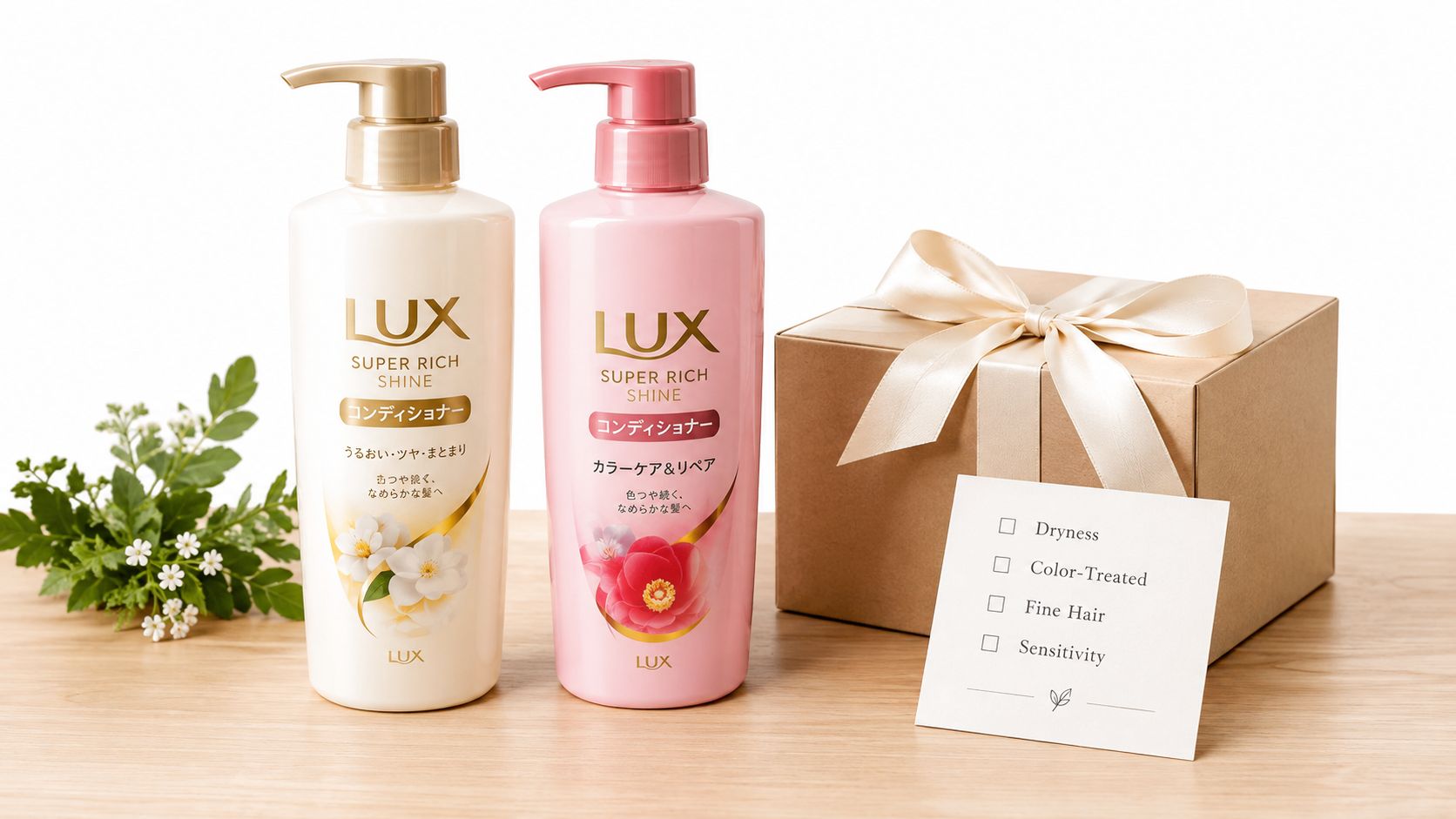
A quick final checklist
Start with the recipient's main hair concern.
- Dryness or frizz: Look for a smoothing, richer formula.
- Color-treated or visibly damaged hair: Lean toward repair-focused conditioning.
- Fine hair: Choose lighter textures and be cautious with very rich finishes.
- Sensitivity: Keep fragrance preferences and scalp reactivity in mind, and patch test when appropriate.
Then check the ingredient emphasis. Camellia oil may appeal to someone who wants shine and softness. Hyaluronic-acid style hydration cues may suit someone focused on moisture feel. Silk, keratin, ceramide, or similar repair language usually makes more sense for hair that has been processed.
One last market clue is pricing direction. Japan's conditioner price index rose from 83.1 in 2007 to 104.9 in 2024, with a notable peak of 106.3 in 2016, according to OpenGov Japan's hair conditioner CPI data. For gift shoppers, that long-run shift is a reminder that conditioner in Japan has moved firmly into the territory of a considered consumer staple, not just a cheap add-on.
If you're stuck between two options, choose the one that better matches the person's hair behavior, not the one with the prettier front label.
For anyone also thinking about presentation and the social side of giving, this guide to Japanese gift giving is a helpful next read.
A thoughtful Japanese hair conditioner gift doesn't need to be flashy. It just needs to be chosen with enough care that the recipient can feel the logic behind it.
Gift Me Japan brings together carefully curated Japanese gift sets sourced directly from Japan, combining beauty, skincare, lifestyle products, and snacks in a way that feels considered rather than generic. If you're choosing a Japanese hair conditioner for someone with dry, frizz-prone, or color-treated hair, it's a good place to explore curated options that sit naturally within a wider gifting experience at Gift Me Japan.
Share:
International Shipping for Gifts from Japan: What to Know