

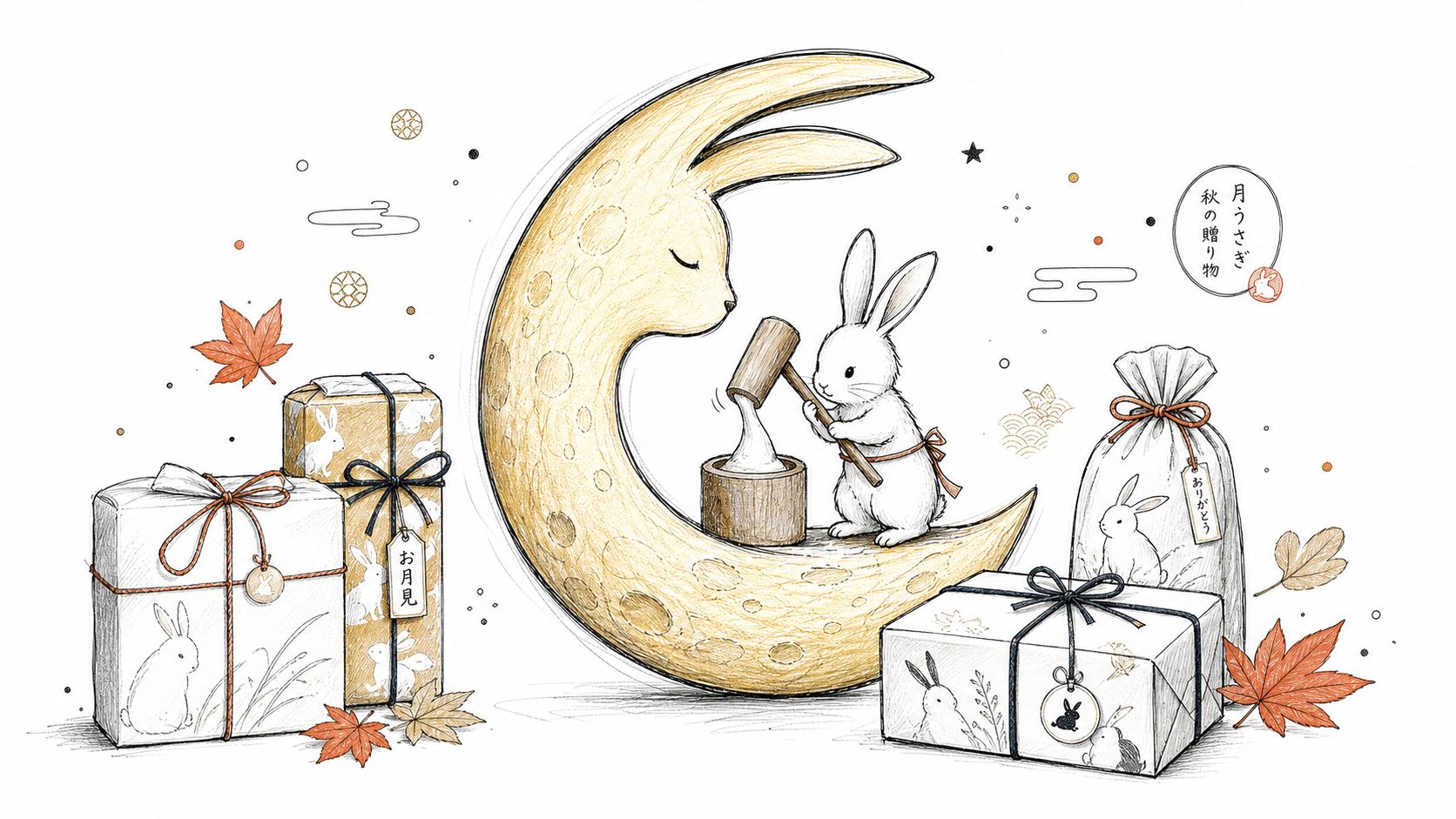
A shop assistant once handed over a neatly wrapped Japanese snack tin, and the rabbit on the lid did more than decorate the box. It told a story about the Moon, autumn, and the kind of gift people in Japan still recognize at a glance.
Table of Contents
- What the Moon Bunny Story Actually Is
- The Shape on the Moon and Why Cultures See a Bunny
- How the Legend Traveled From India to Japan
- What the Rabbit Symbolizes in Japanese Culture
- From Tsukimi Mochi to Modern Japanese Gifts
- Chinese Jade Rabbit vs Japanese Moon Bunny
- Why the Moon Bunny Story Still Shapes Gifting Today
What the Moon Bunny Story Actually Is
A rabbit on a mochi tin looks cute until you notice how much cultural work it's doing. In Japan, that image points to the moon bunny story, a family of moon legends that shows up in festival food, seasonal packaging, and gift boxes people choose for autumn gatherings. The image feels familiar because it's tied to a real visual pattern in the Moon, but the story itself has traveled and changed over time.

A story that keeps changing shape
The earliest Chinese evidence reaches back to the Chu Ci, a Western Han anthology reflecting the Warring States period, 475 BCE to 221 BCE, where a hare already appears on the Moon pounding herbs for immortals, which means the motif is more than 2,000 years older than later Japanese versions. In Japan, the earliest known written appearance is in the Konjaku Monogatarishū, a Heian-period collection of 1,000+ stories, so the Japanese form belongs to the medieval era rather than antiquity. That timeline matters because it shows the moon rabbit wasn't born as a single fixed folktale, it grew through repeated retelling. The long history of the moon rabbit motif
Why this matters for a gift box
When a brand places a rabbit beside moon imagery, it's often signaling autumn, moon-viewing, or a food tradition, not just adding a playful animal. The symbol can sit on wagashi, tea, skincare, or a seasonal assortment because the rabbit carries meaning that people already understand. A box with rabbit art can feel like a small cultural cue, telling the recipient, “this belongs to the season.”
Practical rule: if the rabbit is paired with moon motifs, round sweets, or muted autumn colors, the package is usually reaching for moon-viewing symbolism rather than random decoration.
That's why the moon bunny story keeps turning up in shelves, inboxes, and seasonal displays. It's not only a tale from the past, it's a visual language that still helps people identify what kind of gift they're looking at.
The Shape on the Moon and Why Cultures See a Bunny
A rabbit on the Moon begins with a face-like mistake the eye is happy to make. The bright disk gives you a blank field, and the dark patches inside it give the mind enough contrast to assemble something familiar. That habit is pareidolia, the way people turn irregular marks into a known shape. On the Moon, those dark areas are lunar maria, broad basalt plains formed by ancient volcanic activity, and their uneven outline gives the brain something to organize.
How the pattern works
Your visual system does not wait for a perfect picture before it names what it sees. It sorts edges, shadows, and open space into patterns it already knows, which is why one person sees a bunny, another sees a face, and another sees something else entirely. The rabbit appears most clearly where the maria line up in a way that suggests ears, head, and body at a glance. Viewing angle, hemisphere, and local custom can all shape what people report seeing. Why the Moon looks like a rabbit to so many observers
The Moon does not contain a rabbit. People supply the rabbit by recognizing patterns.
A practical rule helps here. If a shape seems easy to spot but hard to pin down, the mind is probably doing the organizing, not the object itself. That is useful whenever a culture turns a natural pattern into a repeated image, because the image can survive long after the original visual clue has been interpreted in different ways.
The same point explains a lot of the legend's staying power. If the shape were fixed and obvious, one reading would likely crowd out the rest. Instead, the Moon works like an ambiguous canvas, and different communities map their own familiar creatures onto it.
Why cultural variation makes sense
Once pareidolia is clear, the different moon animals stop feeling random. A rabbit is one answer to a shared visual puzzle, and it fits especially well with East Asian moon traditions because it can be tied to food, festivals, and lunar symbolism. The same dark patches can support different stories without the Moon itself changing.
That is also why the moon bunny story stays alive in popular memory. People do not need scientific proof to keep seeing the shape, they only need a stable enough pattern and a story passed along in the family, at school, or through seasonal packaging. The Moon becomes a cultural prompt, and the rabbit is one of the most durable ways people answer it.
How the Legend Traveled From India to Japan
The moon rabbit story didn't travel in a straight line. It moved through Buddhist storytelling, Chinese retellings, and Japanese seasonal custom, and each stop changed what the rabbit was doing. That's why the same moon shape can support a sacrifice tale, an immortality tale, and a mochi tale without any of them being “wrong.”
From sacrifice to immortality
In the Indian Buddhist version, a rabbit, monkey, and fox encounter a disguised deity. The rabbit sacrifices itself, and that act becomes the basis for its lunar image. Later Chinese retellings reworked the motif into the Jade Rabbit, tied to the moon goddess Chang'e and the elixir of life. The Chinese version keeps the rabbit close to cosmic immortality, while the moral center stays rooted in the rabbit's virtue. How the moon rabbit changed as it moved across Asia
From elixir to mochi
Japan then shifted the motif again. In Japanese tradition, the rabbit pounds mochi, not an elixir, and that change is more than a food swap. It pulls the legend into moon-viewing, seasonal eating, and the social world of autumn gifts. The story now belongs to a table as much as to the sky. That shift helps explain why the rabbit appears so often on packaged sweets and festival assortments rather than on ritual objects alone.
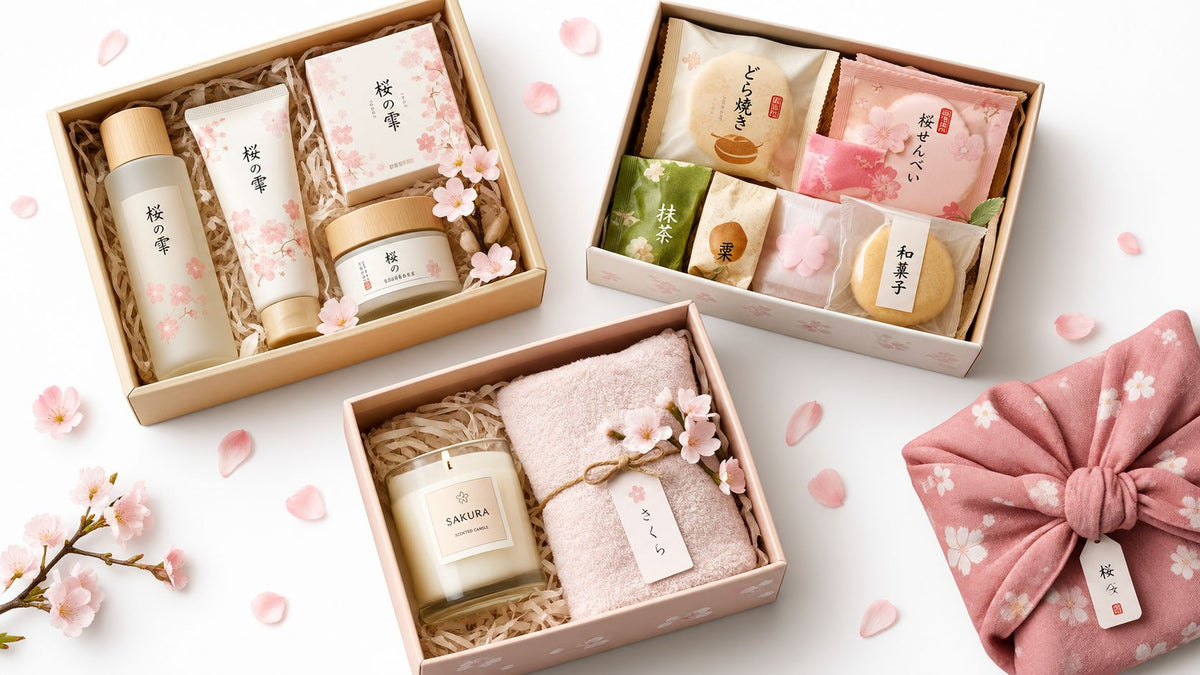
A modern gift set can echo that same logic. For example, Essential Japanese Skincare Gift Set (Cleanser, Lotion & Cream) is described as a customizable box where each item is packed individually and placed in a premium traditional-style gift box, which shows how Japanese presentation often turns a set of items into a single seasonal object.
Why the path matters
The legend's movement across India, China, and Japan shows how stories adapt to different religious priorities. Buddhist compassion, Daoist immortality, and Japanese seasonal food culture all leave their mark on the rabbit. The result isn't one pure origin, it's a chain of reinterpretations that stayed legible because the Moon itself kept offering the same ambiguous pattern.
That's the reason the moon rabbit still feels alive. It's a flexible symbol that can hold different meanings without losing its outline.
What the Rabbit Symbolizes in Japanese Culture
In Japan, the rabbit isn't just a moon figure, it's a compact sign of several good things at once. It can suggest fertility, avoiding misfortune, smooth progress, and seasonal renewal, which gives it a broader role than “cute mascot.” When you see a rabbit on a box, the designer may be drawing from that whole symbolic cluster, not only the moon story.
A symbol that moves beyond bedtime tales
Rabbit imagery has practical value in Japanese visual culture because it can carry luck without becoming heavy-handed. A rabbit charm, a moon-viewing motif, or a package decorated for autumn can all suggest gentle momentum and safe passage through the season. That's one reason rabbit symbols show up in places where people want a gift to feel thoughtful rather than generic. For a beginner-friendly overview of how these motifs are chosen in skincare and related gifts, this guide is useful: Japanese skincare gifts and how to choose them
Practical rule: when rabbit imagery appears near autumn, the message is usually seasonal goodwill, not just visual sweetness.
Why food and fortune sit together
The moon rabbit's connection to mochi matters because Japanese seasonal eating often turns symbolism into something you can serve. Moon-viewing traditions link the rabbit to round rice treats, so the image can stand for shared food, harvest gratitude, and the ritual of gathering together. That's a very different feeling from a purely decorative animal illustration.
The symbol also fits autumn because it naturally belongs to the calendar. As the season shifts, brands lean on the rabbit to evoke calm, abundance, and a familiar festival mood. The same motif can work on sweets, tea, packaging paper, and small charms because the association is already established in the culture.
What to notice when shopping
When a Japanese product uses a rabbit motif, ask what kind of feeling it's trying to send. Is it moon-viewing, a harvest message, a gentle luck charm, or an invitation to share food? Once you can name the symbolic layer, the design becomes easier to read.
That matters for gifting because the right rabbit motif can make a present feel seasonally grounded instead of randomly themed. It gives the recipient a quiet cultural cue that says the gift was chosen with the calendar in mind.
From Tsukimi Mochi to Modern Japanese Gifts
Tsukimi is where the moon bunny story enters daily life. During moon-viewing season, the rabbit appears beside mochi, round sweets, and autumn foods that echo the Moon and the harvest. The image does not stay inside a museum label, it shows up on items people place on tables and pass to one another.
How the motif works on seasonal shelves
A rabbit on a snack box tells shoppers that the contents belong to autumn, moon-viewing, or gift-giving in that period. That is why rabbit art feels so natural on wagashi, tea pairings, and packaged sweets, it points to a known seasonal moment rather than creating one from nothing. In modern Japanese retail, the rabbit helps turn ordinary food into a seasonal experience with a clear time and mood.
The same logic appears in curated boxes that combine presentation with cultural timing. A retailer may use moon imagery, soft autumn colors, or rabbit motifs to make a set feel suited to the season instead of interchangeable with any other month. That is how the moon bunny story shapes what goes into the box.
Tsukimi, food, and gifting
The connection between the rabbit and mochi is especially strong because the story gives the food symbolic weight. Mochi functions as both a snack and a visual echo of the moon, nodding to the rabbit's traditional role. That is why moon-viewing products often use round shapes, pale colors, and packaging that feels calm and ceremonial.
The same seasonal logic can guide gift selection. If you are choosing a Japanese present in autumn, a rabbit motif can help you identify products that fit moon-viewing, harvest thanks, or a gentle festival mood. That includes snack boxes, sweets assortments, and lifestyle gifts that use rabbit iconography to signal the season.
For a close look at how this appears in packaged food gifts, Japanese snack box options without a subscription show how seasonal design can be built into a ready-to-gift format. One example is Essential Japanese Snacks 13 Items (8 Snacks + 5 Coffee/Tea), a curated collection that combines snacks, coffee, tea, and small decorative touches in a ready-to-gift format. It shows how Japanese gifting often blends variety, hospitality, and presentation into one seasonal package.

Why the story still sells well
The reason this works is simple. The moon bunny story already connects an animal, a season, and a food tradition, so it gives brands a ready-made framework for building gift sets that feel culturally rooted. Shoppers do not have to decode the meaning from scratch, they can recognize the moon-viewing cue instantly.
If you want to see how seasonal storytelling also shapes corporate and group gifting, this overview is a useful companion: Japanese corporate gifting ideas. The same principle applies, a culturally legible motif makes the present easier to remember and easier to place in the right season.
Chinese Jade Rabbit vs Japanese Moon Bunny
The Chinese and Japanese versions are related, but they're not the same story. The difference is easiest to see when you compare the rabbit's task, the companion figure, and the cultural setting side by side.
| Element | Chinese Jade Rabbit | Japanese Moon Bunny |
|---|---|---|
| Rabbit's task | Pounds the elixir of life | Pounds mochi |
| Main companion figure | Chang'e, the moon goddess | Moon-viewing and Tsukimi tradition |
| Core emphasis | Immortality and lunar transcendence | Seasonal food, harvest, and togetherness |
| Cultural mood | Cosmic, Daoist-inflected, tied to the moon goddess | Festive, autumnal, tied to shared food and gifting |
The table makes one thing clear. The Chinese Jade Rabbit belongs to a story world where the moon is linked to immortality and divine medicine, while the Japanese rabbit belongs to a story world where the moon is part of seasonal gathering and food preparation. That's why the same rabbit silhouette can support such different products in each place.
In practical terms, this distinction matters when you're reading packaging or buying a gift. A Chinese-style moon rabbit image may point toward a more mythic or celestial mood, while a Japanese moon bunny image usually leans into mochi, moon viewing, and autumn hospitality. Both are valid, but they do different cultural work.
The stronger takeaway is that the Moon provides the shape and culture provides the meaning. Once you know that, you can stop treating the rabbit as a single fixed mascot and start reading it as a living motif that changes by region, ritual, and season.
Why the Moon Bunny Story Still Shapes Gifting Today
The moon bunny story keeps influencing gifts because it solves a real problem for shoppers. It gives them a symbol that already carries season, food, and luck, so a package can feel coherent without needing a long explanation. That's why the motif still shows up on curated sets, snack assortments, and autumn products that need a cultural anchor.
A living seasonal signifier
The story moves from folklore into retail logic. A rabbit on a gift box tells the buyer that the item belongs to moon-viewing season, harvest time, or a Japanese autumn mood. That makes the design useful, not just attractive. The motif helps brands and gift curators create objects that feel timely and culturally specific.
A strong seasonal gift doesn't need to shout. It needs one clear symbol that the recipient already understands.
That's the role the moon rabbit plays today. It doesn't replace the product inside the box, it frames it. A snack set, skincare assortment, or company gift feels more thoughtful when the outside already signals the season and the cultural context.
How to spot a well-chosen rabbit motif
Look for a few clues. Rabbit plus moon usually points to Tsukimi or autumn moon-viewing. Rabbit plus round sweets suggests mochi or moon-shaped food. Rabbit plus soft seasonal colors often means the product is trying to evoke calm, hospitality, and a gift-ready mood.
If you're shopping for colleagues, clients, or family, that can save time. A retailer that understands these visual codes can assemble a set that feels grounded in Japanese seasonal tradition instead of just being loosely “Japan-themed.” Gift Me Japan organizes curated sets across skincare, snacks, and seasonal collections, which shows how presentation and cultural timing can work together in one place.
The moon bunny story lasts because it's flexible enough to travel and specific enough to recognize. That combination is rare, and it's exactly why a children's moon tale still decides what ends up in gift boxes today.
If you want a gift that feels rooted in Japanese seasonal culture, browse Gift Me Japan for curated snack boxes, skincare sets, and seasonal assortments that make the moon bunny's symbolism easy to share. Their ready-to-give packaging helps turn a cultural motif into a present that feels thoughtful, timely, and simple to send.


Share:
Japanese Snack Box No Subscription: A Complete Guide
Japanese Gift Set Guide: Curated Ideas for Every Occasion