

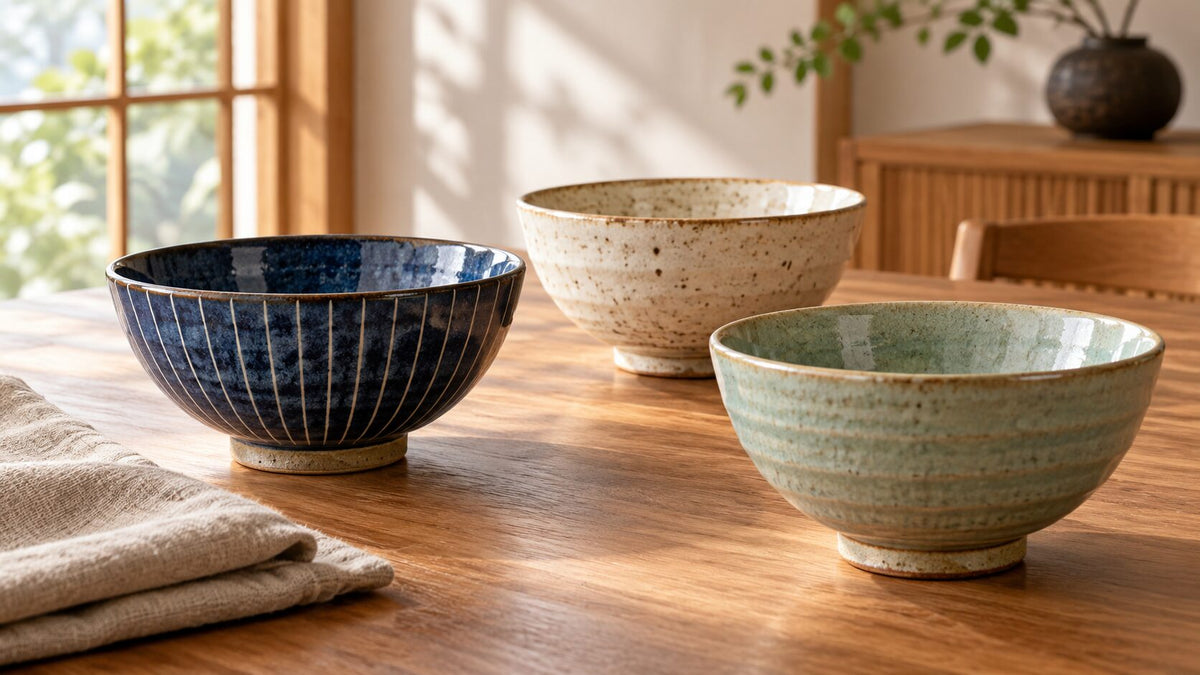
Mino Ware Japanese rice bowls make practical gifts because they combine everyday function with a wide range of shapes, glazes, and patterns. The most useful choice is not necessarily the most ornate bowl. It is the one that feels comfortable in the recipient’s hands and suits the meals they actually eat.
What Is Mino Ware?
Mino Ware is a broad tradition of ceramics associated with the Mino region of Gifu Prefecture. It is not one single visual style. Mino-made tableware can be rustic or refined, matte or glossy, plain or patterned. That variety is part of its appeal, but it also means shoppers should read the individual product description rather than expecting every Mino Ware bowl to look handmade in the same way.
Terms such as Shino or Oribe may refer to recognizable ceramic traditions, but a gift buyer does not need specialist knowledge to choose well. Shape, dimensions, weight, glaze, and care instructions matter more in daily use.
Choose the Right Size and Shape
Japanese rice bowls are generally smaller than Western cereal or serving bowls, but exact dimensions vary. Check the listed diameter and height rather than relying on photographs.
- Around 11–12 cm: A compact personal bowl suited to smaller rice portions or side dishes.
- Around 13 cm: A versatile everyday size for rice, small donburi-style portions, soup, or side dishes, depending on depth.
- Wider or deeper bowls: Better for larger portions, toppings, or foods with more liquid.
Look at the foot ring and wall shape too. A distinct foot can make a warm bowl easier to hold, while a gently flared rim may feel more open and relaxed. For a recipient with limited grip strength, avoid choosing solely for appearance; weight and shape deserve equal attention.
How to Choose the Finish
Glossy porcelain often feels smooth and is easy to coordinate with existing tableware. Dark or textured finishes can create stronger contrast with white rice. Blue-and-white patterns are versatile, while multicolor designs can feel more decorative.
Small variations in glaze, color, or pattern may be normal, especially on ceramics finished with hands-on processes. However, do not treat every irregularity as proof of craftsmanship. Use the maker or retailer’s current description for material, origin, and production details.
Three Active Mino Ware Bowls
The live Gift Me Japan catalog includes several active Japanese rice bowls. These three are explicitly described as Mino Ware and offer different visual directions.
Japanese Porcelain Rice Bowl Black Stone with Blue Waves Interior Pattern 13cm
This 13 cm bowl uses a dark exterior and blue interior pattern for strong contrast. It is a good option for someone who prefers contemporary tableware and darker finishes.

Japanese Porcelain Rice Bowl Blue & Beige Lotus Root Pattern 13cm
The blue-and-beige lotus-root pattern gives this 13 cm bowl a lighter, more playful character. Consider it for someone who enjoys patterned tableware without a highly formal look.

Japanese Mino Ware Porcelain Rice Bowl Blue Sendan Tokusa Pattern 13cm
This 13 cm bowl features a classic blue Sendan Tokusa pattern. Its restrained palette makes it easier to combine with other blue-and-white dishes and suitable for someone who prefers a more traditional visual direction.

Single Bowl or Matching Set?
A single bowl can be a personal gift when the pattern clearly suits the recipient. A pair makes sense for a couple, a housewarming, or someone building a coordinated table setting. The bowls do not need to be identical: complementary colors or patterns can make each person’s place setting easy to recognize.
Before buying a set, confirm the exact number of bowls and whether their sizes match. Some Japanese tableware sets intentionally pair different dimensions or designs.
Care and Everyday Use
Follow the care instructions on the current product listing. Do not assume every ceramic bowl is suitable for a microwave, dishwasher, oven, freezer, or sudden temperature changes. Gold or metallic decoration may require particular caution.
To reduce chipping, avoid stacking bowls carelessly and do not knock the rims against hard surfaces. Let hot bowls cool before washing, and dry them fully before storage. If the glaze is textured or crackled, follow the maker’s guidance rather than applying generic ceramic-care advice.
Giving Tableware Internationally
Ceramics require protective packaging. Check the store’s current packing and delivery information, and order early for a fixed occasion. The recipient may also need to pay duties or taxes depending on the destination.
Review Gift Me Japan’s current shipping policy before ordering. For more ideas, see the guide to unique gifts made in Japan.
Final Checklist
- Is the bowl’s diameter and depth suitable for the recipient?
- Will the weight and shape be comfortable to hold?
- Does the pattern work with their existing tableware?
- Are the material, origin, and care instructions clearly stated?
- Is it a single bowl or a set, and exactly what is included?
- Have you checked current shipping details for fragile items?
A well-chosen Mino Ware rice bowl should be easy to use, pleasant to hold, and visually at home on the recipient’s table. Start with practical dimensions and care requirements, then choose the glaze or pattern that makes the gift feel personal.
Share:
How to Choose Japanese Incense for the Right Gift
Imabari Towel Gift Set Guide: What to Check Before Buying